Georgia Law student Madison Graham featured in National Jurist magazine

University of Georgia School of Law 2L Madison L. Graham was featured in National Jurist regarding her experience studying abroad. During her 1L summer in 2023, Graham participated in both the Global Governance Summer School and the Global Externships Overseas initiative, administered by the Dean Rusk International Law Center. She reflects on her experiences in the National Jurist article titled “Studying Abroad Can Be Life Changing” written by Trevor Mason and published in the magazine’s Winter 2024 edition.

Graham discusses the impact of participating in international opportunities as a law student. Graham began her summer with the Global Governance Summer School, a 10-day study abroad presented through a partnership between Georgia Law and KU Leuven’s Centre for Global Governance Studies through which students study in Belgium and the Netherlands:

“As someone already interested in international law, it was really special to see other people who didn’t think that they were interested in it start to challenge their own perspectives, start to realize how ‘international’ law pervades domestic practice, and the scope of international opportunities that exist in the American legal context.

Also, I think it is really important for American law students to recognize and remember that there is an entire world out there handling the same legal challenges we are, and often in a different way. 

To have the opportunity to learn from specialists in the field, and step into the courts and government offices of the legal systems we spend semesters learning about, was an incredible opportunity. Getting to do all of that and make new friends along the way was an experience I could not be more thankful for. 

The opportunities it provides from an educational and professional perspective are unlike ones I have seen at any other law school, and something every student should consider doing.”

Upon completion of Global Governance Summer School, Graham started a legal externship placement at Van Bael & Bellis through the Global Externships Overseas initiative. Georgia Law alumni David Hull (J.D., ’83) and Porter Elliott (J.D., ’96) facilitate placements and supervise law students at this Brussels-based firm. Van Bael & Bellis specializes in domestic Belgian law matters, mergers and acquisitions, and focuses heavily on EU competition law, EU data privacy, and international trade law. Graham’s summer work focused on the latter three categories, assisting senior associates and partners prepare client memos, regulatory updates, research new EU and US legislation, and proofreading legal documents as a native-English speaker.

“Being challenged to understand a new law-making process helped me not only adapt my research skills to be able to learn what I need to about a ‘foreign’ legal framework, but also better understand effects on US legislative process and domestic policy, generally. Further, I was fortunate to be in a firm with lawyers from 20 different countries, so I was constantly being exposed to different ideas, cultural norms, problem-solving approaches, and even legal backgrounds (given those people that were coming from Civil Law-based countries).

My GEO helped me solidify and reaffirm my aspirations about possibly working abroad if I get the opportunity, and hopefully working in a public sector position. Further, though, it helped me improve my skills researching laws and regulations from other countries and legislative systems, which will benefit me no matter what international-law-focused position I could possibly end up in.

This experience also built my confidence in being able to move to a new place, make new friends, and succeed in a new professional environment. That is a big step for a lot of people post-grad, so having a trial period in an exceptionally new environment is a great trial experience and confidence booster. I also think that anytime you can work around people with that many different personal, cultural, and educational experiences will humble you in the very best way, by forcing you to challenge your preconceived notions about the world. I have always appreciated that challenge, but it’s so easy to forget. This summer was a great reminder and time of reflection for me, and one I think every law student needs.”

***

To learn more about international opportunities at the University of Georgia School of Law, visit our website here.

Center’s Visiting Researcher Daesun Kim reflects on his year at Georgia Law

One of the Dean Rusk International Law Center’s Visiting Researchers for 2023, Daesun Kim, Esq., recently concluded his research year at the University of Georgia School of Law under the supervision of Associate Dean for Academic Affairs & J. Alton Hosch Professor of Law Kent Barnett. Below are some of Kim’s reflections on his research findings regarding the impact of the Covid-19 pandemic on foreign investment projects in Vietnam and his overall experience at Georgia Law.

As a Korean legal professional with a U.S. law license, providing legal services for cross-border transactions in Vietnam has exposed me to myriad challenges stemming from legal, cultural, and linguistic disparities. My research at the University of Georgia School of Law’s Dean Rusk International Law Center focused on a comparative legal analysis of the material adverse impact of the Covid-19 pandemic on foreign investment projects in Vietnam. Throughout various project milestones, such as providing legal due diligence reports, offering second-party legal opinions or lender’s legal opinions to enhance project credibility, negotiating contracts, addressing implementation stage issues, and handling disputes, clients, especially those from the U.S. and Korea, increasingly seek insights from a common law perspective. However, providing clear answers to their queries has proven challenging, leading to a collective impasse when practitioners convene and even causing a temporary standstill when representing clients in local courts or arbitration panels.

As expected, Vietnam, alongside other Southeast Asian nations, is witnessing a surge in investors seeking a new production base, mirroring the rise of a second China. Notably, the country has rapidly ascended as a crucial player in the global value chain, boasting well-established production infrastructure in sectors like electronics, automotive, batteries, and textiles.

Over the past 15 years, global enterprises from the United States, South Korea, Germany, Japan, Australia, Russia, and the United Kingdom have established a significant presence in Vietnam. The competition is particularly intense among nations like Korea, Japan, and Singapore, vying for the top spots in foreign direct investment. Cities like Ho Chi Minh and Hanoi host numerous Korean law firms and accounting firms handling the legal and tax aspects of business operations, reflecting the growing interest and investment in the region.

Recent analyses underscore the evolving opportunities and risks faced by Vietnam due to the rapid escalation of global tensions, the rollback of globalization, and shifts in the global value chain, all intricately connected. Investors are increasingly scrutinizing the status and evaluation of supply chains, encompassing not only their subsidiaries but also their suppliers, considering comprehensive assessments, including human rights and environmental considerations. Moreover, challenges in obtaining approval for international arbitration decisions from Vietnamese courts and the lack of clear legal grounds in judgment documents contribute to the complexities faced by international investors, emphasizing the need for thorough preparation within the local legal system.

Reflecting on my experience entering the Vietnamese legal landscape seven years ago to contribute to cross-border M&A deals, I vividly recall the unfamiliarity of concepts commonplace in legally advanced countries like the U.S., Korea, Singapore, or Hong Kong. Tasks involved explaining and bridging the gap in understanding with local counterparts and regulatory authorities, presenting both a formidable and rewarding aspect of the work. Issues such as (i) offshore loans using stand-by LCs issued by local banks as a security for foreign-owned companies with a 51% or more stake in Vietnam, (ii) the issuance of perpetual bonds by foreign-invested enterprises, (iii) the feasibility of establishing a security on the residual assets of the mortgagor, (iv) issuance of a business license for the E-wallet of a payment gateway company, (v) whether a local Vietnamese company can provide its listed shares as collateral for the repayment of mezzanine debts, such as convertible bonds, when issuing to foreign-based private equity funds, and so on presented novel challenges requiring creative problem-solving beyond conventional legal education.

In addition, navigating through intricacies like land-use rights instead of ownership, foreign ownership restrictions in certain business sectors, and unique political and legal constraints became part of the routine. For instance, (i) when a foreign-invested company in Vietnam receives an offshore loan from a foreign lender to cover operational expenses, addressing issues related to the establishment of land use rights as collateral on the commercial & residential building complex owned by the company for loan repayment, and (ii) in cases where Vietnamese securities laws impose foreign investment ownership percentage limits on public and private companies, determining whether the same constraints apply unconditionally when issuing preference shares or dividend preference shares during repayment.

As foreign lawyers practicing in Vietnam and other developing nations provide legal services for foreign investors, a dynamic daily routine must be anticipated. Challenges range from the use of Vietnamese as the primary legal language, reliance on local lawyers proficient in the language, to the heavy reliance on the skills of local attorneys in drafting contracts and legal documents in the local language.

Despite the inherent difficulties and challenges, Vietnam remains a nation full of promise. With an ever-changing legal landscape, an influx of substantial investments amounting to approximately 36.61 billion USD in 2023, and a population characterized by a significant youth demographic and high domestic purchasing power, Vietnam stands as a beacon of development. As I encounter and contribute to these advancements daily, I am determined not to lose sight of the pride associated with making small but meaningful contributions to Vietnam’s progress.

Having spent the past year as a visiting researcher at the Dean Rusk International Law Center, I have observed the legal dynamics of the world’s leading nation, the United States, and the pivotal role it plays in international law. The experience has further amplified the stark differences in language, nationality, culture, and legal knowledge encountered during my legal practice in Vietnam. Notably, the U.S. legal system’s meticulous handling of the Covid-19 pandemic through clear precedents and statutes provides a stark contrast to the legal landscape in Vietnam, instilling hope for a future where such advanced legal systems and accumulated experiences emerge in developing countries like Vietnam.

I express my deepest gratitude to all those who have facilitated my research period at the Dean Rusk International Law Center. I am sincerely thankful to every individual involved for their consideration in providing me the opportunity to conduct research at this prestigious hub of international law. During my brief stay, I have sensed the scholarly dedication, efforts, support, and contributions of the faculty, scholars, and staff here. Thanks to their collective endeavors, practitioners like myself can find solid academic foundations in international law, enabling us to deliver comprehensive legal services to our clients.

***

Daesun Kim, Esq., was one of the four 2023-2024 Visiting Researchers at the Dean Rusk International Law Center. Kim is a foreign attorney practicing law in Vietnam who specializes in cross-border M&A, foreign investment, and public-private partnerships (PPP), with a focus on construction & real estate development projects and mezzanine project financing in Southeast Asian countries. He primarily represents Korean corporate clients and common-law jurisdiction clients (Singapore, Hong Kong, USA) investing inbound in Vietnam. He is a member of the International Construction & Energy Law Society, South Korea, and the Chartered Institute of Arbitrators. Previously, Kim worked at top-tier Korean firms such as Shin & Kim LLC and Yulchon LLC, representing Korean PEFs, conglomerates, banks, construction/engineering contractors, and developers in outbound investment. He also worked as in-house counsel at POSCO E&C, where he was in charge of contentious and non-contentious legal services encompassing overseas engineering, procurement, and construction works in power plants, oil & gas refinery plants, steel-making projects, project financing, and related international arbitration disputes.

Read more about the University of Georgia School of Law’s Visiting Researcher initiative here.

Clete Johnson (J.D., ’04) discusses TikTok and national security at Georgia Law

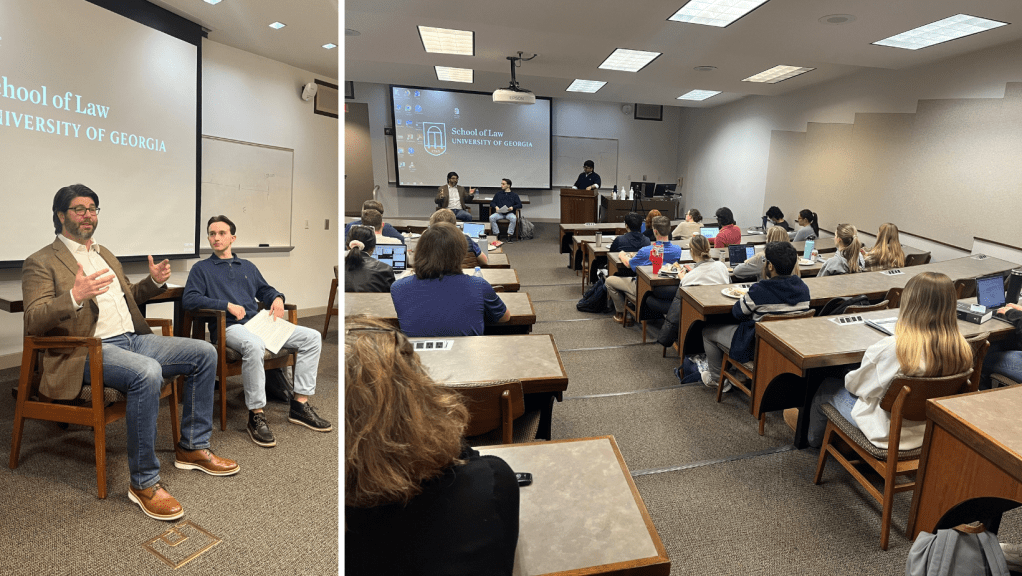
University of Georgia School of Law alumnus Clete Johnson (J.D., ’04), Partner at Wilkinson Barker Knauer LLP and non-resident senior fellow with the Strategic Technologies Program at the Center for Strategic and International Studies (CSIS), recently spoke to students about TikTok and its national security implications at an event hosted by the Dean Rusk International Law Center, the International Law Society, and the Privacy, Security, and Technology Law Society.

Johnson discussed how being in law school during 9/11 galvanized his interest in national security law. After graduation, he moved to DC and was able to gain experience in a wide variety of national security and cybersecurity leadership roles. His work in these national security and intelligence communities, in the regulatory arena, and in the Executive Branch now inform his advocacy to improve the efficiency of government-industry collaboration. Johnson stated that we are at an inflection point: incredible breakthroughs in technology and connectivity have the potential to solve the grand challenges of our time, but, as large holders of data, they can pose dangers to our freedoms.

Johnson was most recently the senior adviser for cybersecurity and technology at the U.S. Department of Commerce, where he coordinated the department’s cybersecurity initiatives and support for the Commission on Enhancing National Cybersecurity. He was also the department’s representative for National Security Council staff deliberations on cybersecurity, encryption, and other policy issues at the intersection of technology and security. Previously, Johnson was appointed by the Federal Communications Commission (FCC) chairman as the FCC’s first chief counsel for cybersecurity. In that position, he helped develop the FCC’s cybersecurity mission, focusing on creating new legal mechanisms for government collaboration with private sector stakeholders to improve the security and reliability of communications infrastructure. He was also the primary drafter of the charter for the Cybersecurity Forum for Independent and Executive Branch Regulators, a coordinating body of regulatory agencies presently chaired by the FCC. Prior to his time at the FCC, Johnson was Senator John D. Rockefeller IV’s designated counsel on the Senate Intelligence Committee and counsel for defense, foreign policy, and international trade. In those roles, he was a leading staffer on bipartisan Senate cybersecurity initiatives and the primary staff drafter of the legislation that codified the National Institute of Standards and Technology’s collaborative process to work with industry to develop and update the Cybersecurity Framework.

Before his government service, Johnson worked for a major Washington-based law firm, where he practiced in the areas of international trade, defense, and security. Earlier, he served as a U.S. Army officer in Germany, Korea, and the Balkans. He is a graduate of the University of Georgia School of Law, where he was editor-in-chief of the Georgia Journal of International and Comparative Law, and he received a master of science degree in international relations from the London School of Economics and Political Science. He received his bachelor’s degree from Harvard University, where he graduated cum laude, cross-enrolled at the Massachusetts Institute of Technology for service as executive officer of its Army ROTC Paul Revere Battalion.

American Branch of the International Law Association shares reflections of Georgia Law LL.M. student Bohdan Krivuts

University of Georgia School of Law Master of Laws (LL.M.) student Bohdan Krivuts was recently featured in the American Branch of the International Law Association‘s blog. Krivuts, who served as one of ABILA’s Student Ambassadors for their 2023 International Law Weekend (ILW), writes about the panel discussion, “Global AI Regulation (Mis)Alignment Challenge.”

Moderated by Thomas Streinz and featuring panelists Adele BarzelayNathalie Smuha, and Yirong Sun, the panel addressed Artificial Intelligence, specifically the challenges and importance of regulatory schemes that address the risks associated with AI. 

As stated by Krivuts:

“…the uncontrolled usage of AI technologies poses numerous risks to users, governments, and society at large. However, when subjected to appropriate regulations, the use of AI may be beneficial. In today’s world, we can observe how AI technologies have already permeated various aspects of our lives, much like the invention of the internet reshaped the course of human progress decades ago. Therefore, to ensure the effective, and more importantly, safe utilization of AI technologies, international organizations and foreign nations should collaborate in the development of comprehensive AI regulations.”

Krivuts attended ABILA’s ILW along with 7 other Georgia Law students through the support of Louis B. Sohn Professional Development stipends, detailed in a prior post (here). Krivuts’ full blog post can be accessed here

Georgia Law 2L Erin Nalley shares her Global Externship experience in New Zealand

Today, we welcome a guest post by Erin Nalley, a member of the University of Georgia School of Law class of 2025. Through the Global Externships Overseas (GEO) initiative, Erin was able to extern with the Department of Conservation in Wellington, New Zealand in summer 2023.

When I first landed in New Zealand last summer, I was both exhausted and excited for what the next few months would bring me. I had just finished the University of Georgia School of Law’s Global Governance Summer School, and I was worn out from the travel from Amsterdam to Atlanta to Auckland to my final destination of Wellington, New Zealand. Wellington is where I would spend the rest of my summer as a legal extern with the Department of Conservation through the Global Externships Overseas initiative.

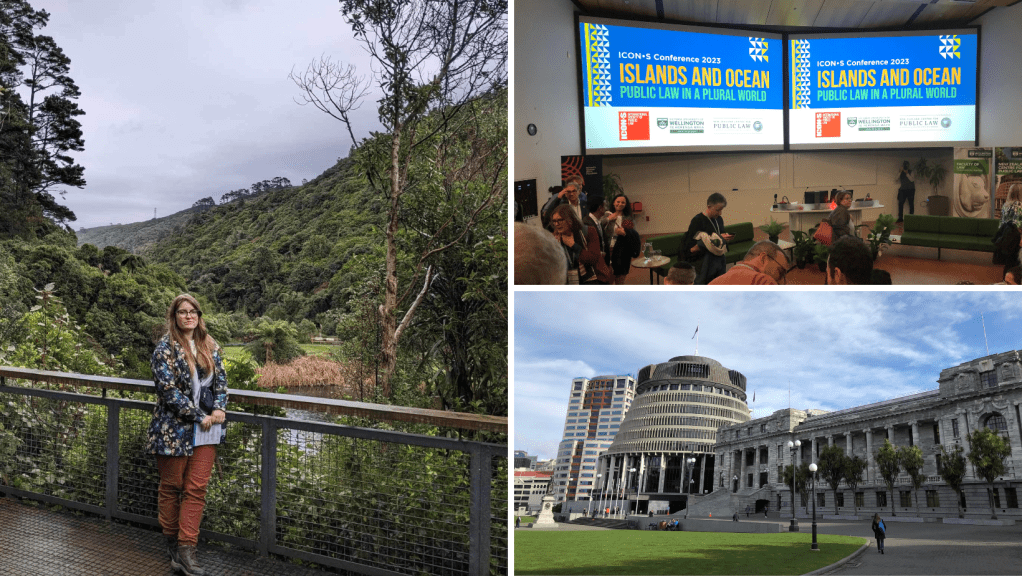
My work in New Zealand involved picking apart the World Heritage Convention text. Specifically, I evaluated what language made the text binding and what policy documents and case law were made binding by the text itself. I also worked with case studies involving New Zealand land that was in conservation under the World Heritage Convention. I worked alongside lawyers within my department, lawyers who worked in foreign affairs, and even those who worked directly with the New Zealand Parliament. I designed my research to act as a guide for the international team at the Department of Conservation to assist in keeping New Zealand in compliance with the World Heritage Convention. As part of my externship, I was able to visit the New Zealand Parliament and observe members debating new legislation. I was also given the opportunity to attend the ICON-S Public International Law conference held in Wellington.

Along with my work experience, I had the opportunity to engage in the culture of my host community. I was in New Zealand during Matariki, the Māori New Year. Here, I saw a haka, a ceremonial performance within the Māori culture that is often performed at important events. I visited the Te Papa Tongarewa Museum and learned about the history and culture of the people of New Zealand. I tried yellow kiwi fruit, manuka honey, Wellington chocolate, and New Zealand pies. I also visited Zealandia, where part of the forest is fenced in to keep predators out and to provide the native birds within the sanctuary a place to thrive and recover their populations. Finally, one of my favorite parts of the trip was a drive to Hobbiton, where they filmed The Shire scenes in Lord of the Rings films. It was surreal being able to step inside a hobbit hole and have a drink at the Green Dragon Inn.

My Global Externships Overseas experience was everything I had hoped for and even more than I expected. I walked away from my 1L summer with significant international legal experience, new cultural understandings and appreciation, and even a tattoo of a New Zealand silver fern, an important indigenous plant that serves as a symbol of the country’s national identity.

***

Applications are now open for summer 2024 Global Externships Overseas (GEO). This initiative places University of Georgia School of Law students in four-to-twelve week international placements each summer, where they gain substantive, hands-on experience in diverse areas of legal practice. Over the last fifteen years, more than 200 Georgia Law students have completed a GEO in law firms, government agencies, corporate legal departments, intergovernmental organizations, and nongovernmental organizations around the world. Current 1Ls and 2Ls are encouraged to apply for summer GEOs. All applicants should reference this instructional video for step-by-step information regarding how to create and successfully complete an application for GEOs in UGA’s Study Away Portal by the March 10th deadline. For more information, email: ruskintlaw@uga.edu

Georgia Law LL.M. Students Take Professional Development Trip

Earlier this month, the University of Georgia School of Law Master of Laws (LL.M.) class of 2025 traveled to Atlanta for a professional development trip organized by the Dean Rusk International Law Center’s director of international professional education, Dr. Laura Tate Kagel, and Mandy Dixon, international professional education manager.

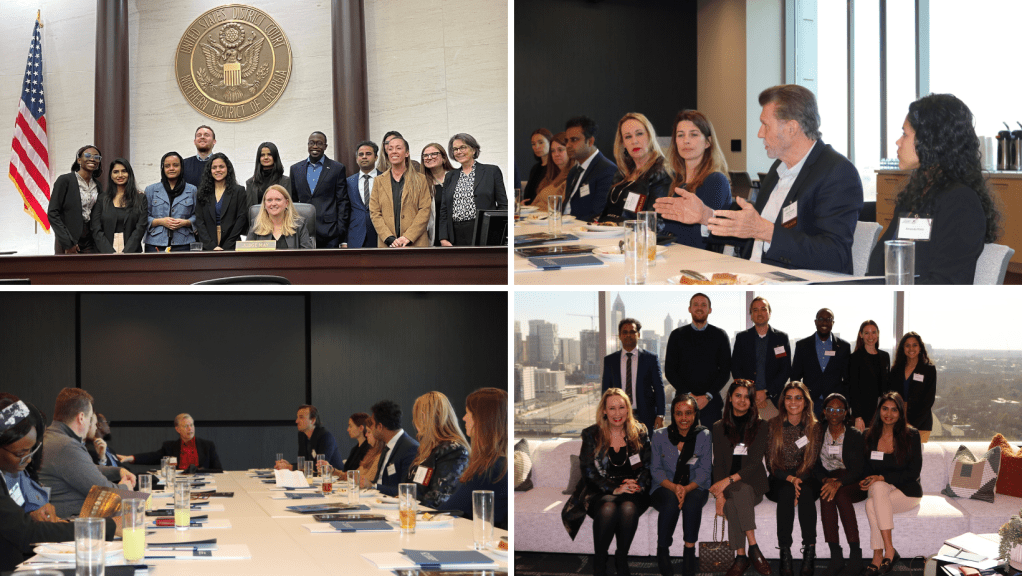
The students began their day by visiting the U.S. District Court for the Northern District of Georgia, where they observed a sentencing hearing. They were hosted by the Honorable Leigh Martin May (J.D., ’98), who answered questions about the hearing, the federal judiciary, and her career path. 

The group of foreign lawyers then visited the law offices of Arnall Golden Gregory, LLP, where over lunch they heard about a variety of practice areas. Teri Simmons (J.D., ’89), a partner and chair of the firm’s International Immigration & Global Mobility practice and an adjunct professor of law at UGA, and her team members Matt Ohm (LL.M., ’14) and Dorothea Hockel, discussed the role of lawyers in helping foreign businesses bring their operations to the U.S. Glenn Hendrix a partner in AGG’s Healthcare Group, familiarized the visiting foreign lawyers with international arbitration practice and related the origins of Atlanta’s arbitration center, AtlAS. Jeffery Y. Lewis (J.D., ’82), discussed his work as a partner in AGG’s Litigation Practice and contrasted it with international arbitration. And Michael Burke, a partner in the Corporate and Finance Practice, shared his thoughts about issues facing lawyers in the international corporate arena.

Professional development trips are among many opportunities offered to Georgia Law LL.M. students to foster career connections and gain insight into potential career paths. 

To read about one of our past professional development trips for LL.M. students, click here (2019). 

To learn more about the LL.M. program, click here.

Community HeLP Clinic receives pledge from Thorpe family

The University of Georgia School of Law has announced the creation of the Community Health Law Partnership Clinic Fund. The Thorpe family, which includes 2014 alumnus Benjamin W. “Ben” Thorpe and his mother Dr. Barbara Williams, has pledged $350,000 to enable the clinic to build on its tradition of interdisciplinary advocacy at the intersection of immigration status and health.

Under the direction of Associate Dean for Clinical Programs and Experiential Learning and J. Alton Hosch Associate Professor of Law Jason A. Cade, more than 100 individuals received legal services from the clinic last year. This included clients who were granted asylum, secured immigration relief, and those challenging the abuses they endured while in U.S. immigration detention.

The clinic’s first post-graduate fellow, Thomas Evans, will join the Community HeLP team in July, 2024. Evans is a 2022 magna cum laude graduate of the law school who participated in both the Community HeLP clinic and the Jane Wilson Family Justice Clinic and received the Ellen Jordan Award for Outstanding Public Interest Student. He is currently a staff attorney in the pro se office at the 11th Circuit Court of Appeals.

To learn more about the Community HeLP Clinic and their advocacy work in immigration, click here.

Ellen Clarke (J.D., ’14), security counsel at Google, speaks at Georgia Law

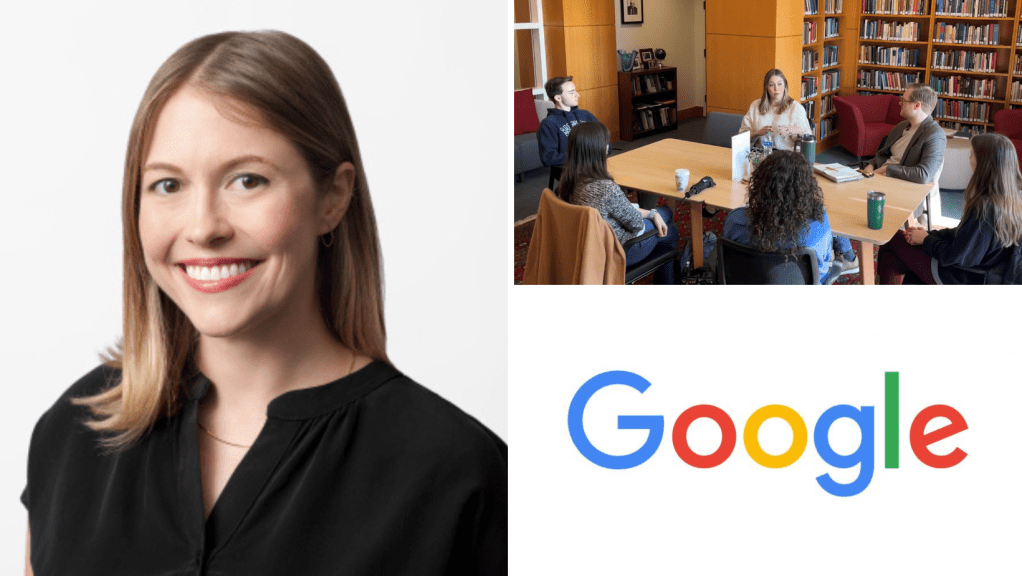
University of Georgia School of Law alumna Ellen Clarke (J.D., ’14), security counsel at Google, recently spoke to students about her career in data protection law at the Dean Rusk International Law Center’s Louis B. Sohn Library.

Students from Georgia Law’s International Law Society and Privacy, Security, and Technology Law Society attended the talk. Clarke began by discussing her professional background and explaining how her experience prosecuting white collar crime at the U.S. Department of Justice provided her with the skills and experiences to successfully transition into her current role at Google. As security counsel, Clarke advises on global data security and law enforcement issues. Students asked Clarke about her opinions on Artificial Intelligence, her decision to become a licensed solicitor in England and Wales, and about the realities of her day-to-day work at Google.

Before joining Google, Clarke prosecuted competition crimes as a trial attorney in the Washington Criminal I Section of the Antitrust Division of the U.S. Department of Justice. She joined the DOJ through the Attorney General’s Honors Program. Clarke previously served as a law clerk to Judge Richard W. Story of the U.S. District Court for the Northern District of Georgia. She received an Advanced Diploma in Data Protection Law from the Honorable Society of King’s Inns, a J.D. degree magna cum laude from the University of Georgia School of Law, and a B.S. in Foreign Service from Georgetown University. She is licensed as an attorney in Georgia and Washington, D.C., as registered in-house counsel in California, and as a solicitor in England and Wales. Clarke is currently an Adjunct Professor of Law at Georgia Law, where she teaches a mini-course entitled Cybercrime.

Georgia Law 3L Andrew Arrington reflects on significance of his Global Externship in Estonia

Today, we welcome a guest post by Andrew Arrington, a member of the Georgia Law class of 2024. Through the Global Externships Overseas (GEO) initiative, Andrew was able to extern with Sorainen, an international business law firm based in Tallinn, Estonia.

I vividly remember my first day at Sorainen, tidying my hair anxiously in the reflection of the gold elevator. It was not only the first day of my 1L summer job, but it was my first time working abroad, and I did not know what to expect. I was relieved that my apartment was only a five-minute walk from my office, but I still got there so early that I ordered breakfast and coffee in a quiet, ultramodern café next door.

As the elevator counted down to the lobby floor, I mumbled the phrase, “Tere. Mina olen Andrew,” to myself over and over, unsure if my pronunciation was even intelligible. With a ding, I was warmly greeted by the woman at the front desk. I watched my soon-to-be coworkers passing by my conference room, putting up their coats and bags in the cloakroom next door, while I waited for my boss to arrive. My anxiety finally melted when Katriina, who interviewed me months earlier, saw me sitting in the office and burst in to give me a hug. It was then I knew I was in for a special summer.

The Global Externship Overseas initiative was a moonshot for me. What I originally imagined as a substitute for not studying abroad in undergrad turned out to be the best career decision I made during law school because of the depth of legal work and client interaction I had over the span of two short months. Through the tireless work of staff at the Dean Rusk International Law Center, including Sarah Quinn and Catrina Martin, my description of a hypothetical dream placement working on data privacy in Europe, possibly in Estonia, became a reality. This request was the result of being a first-generation law student who had just graduated from Georgia Tech; at this point, I was really only familiar with the field of data privacy law after taking a class with Professor Swire and Dr. Anton at my undergraduate institution. I had my sights set on Estonia because I was familiar with the country’s leadership in technology innovation and entrepreneurship in Europe. 

I was proudly the first American intern in a couple of decades at Sorainen. During my summer there, I gained contracting skills, including with software as a service (SaaS) contracts, data protection agreements, and other standard GDPR privacy agreements. I was also able to research national security implications, genetic material requirements, and the brand new EU sanctions on Russia. I wrote memos on the effects of the then-nascent Digital Services Act and Digital Markets Act. When my time in the office came to a close, I was asked if I would like to work for a client full-time as the designated trainee to a general counsel for Pactum while I worked remotely from my home in the US. This was another great experience of implementing GDPR requirements through vetting vendors and researching the impact of US state privacy laws on a dual US-EU business.

By the end of my summer at Sorainen, I had colleagues who not only translated meetings in English for me, but also translated our nights out at the local museum. These are colleagues I am still in touch with and exchange Christmas cards with two years later.

Because of my decision to pursue a GEO, I fell in love with a place I would have never visited otherwise. I became a local at the bakery around the corner ordering rhubarb pastries in Estonian. I knew I reached local status when a new clerk working asked me a question about change in Estonian. I ate pine needle ice cream on walks by myself after work along cobblestone streets, and I was driven out of the city to Viru Bog by my fellow summer interns to visit one of the most beautiful natural parks I have ever been to. I had coworkers go out of their way to give me visits of their hometown during the weekends, and I also had an unforgettable office outing playing cards on the rooftop under the midnight sun. 

I cannot recommend enough to my fellow students the professional value of not only being able to work in a legal environment abroad but also the memories that Georgia Law and the Center made possible through the GEO program. This opportunity increased my contract drafting and editing abilities tremendously, provided opportunities to interact directly with clients, and exposed me to data privacy and compliance work. Now every time I interview, it is the topic that people most want to talk about, and I not only have a wealth of legal experiences to draw upon but also a reminder of the summer of a lifetime.

***

Applications are now open for summer 2024 Global Externships Overseas (GEO). This initiative places University of Georgia School of Law students in four-to-twelve week international placements each summer, where they gain substantive, hands-on experience in diverse areas of legal practice. Over the last fifteen years, more than 200 Georgia Law students have completed a GEO in law firms, government agencies, corporate legal departments, intergovernmental organizations, and nongovernmental organizations around the world.

Current 1Ls and 2Ls are encouraged to apply for summer GEOs. All applicants should reference this instructional video for step-by-step information regarding how to create and successfully complete an application for GEOs in UGA’s Study Away Portal by the March 1 deadline. For more information, email: ruskintlaw@uga.edu

Georgia Law Professor Diane Marie Amann presents on Nuremberg woman defendant at conference in memory of FIU Law Professor Megan A. Fairlie

University of Georgia School of Law Professor Diane Marie Amann spoke last week at a conference which paid tribute to Professor Megan A. Fairlie (1971-2022), an international criminal law scholar who had presented her own work at our law school’s Dean Rusk International Law Center.

Most recently, Dr. Fairlie had taken part in a 2019 symposium entitled “International Criminal Court and the Community of Nations,” and she published her presentation, “Defense Issues at the International Criminal Court,” in the Georgia Journal of International and Comparative Law symposium issue.

In recognition of Fairlie’s scholarship on persons accused by international criminal tribunals, Amann chose to present “Inge Viermetz, Woman Acquitted at Nuremberg,” at Friday’s conference.

Entitled “Perspectives on the International Criminal Court and International Criminal Law and Procedure: A Symposium in Memory of Megan Fairlie,” the conference took place at Miami’s Florida International University College of Law. Dr. Fairlie had taught there from 2007 – the same year she earned her Ph.D. in International Human Rights Law from the Irish Centre for Human Rights, National University of Ireland-Galway – until her death in December 2022.

Amann, who is Regents’ Professor of International Law, Emily & Ernest Woodruff Chair in International Law, and Faculty Co-Director of the Dean Rusk International Law Center here at Georgia Law, has published frequently on women professionals during the post-World War II trials at Nuremberg and elsewhere.