Georgia Law alumnus Robert Dilworth co-authors article on SEC rules

Developments at the U.S. Securities & Exchange Commission are the focus of a lead article that a distinguished University of Georgia School of Law alumnus has co-authored for a leading securities law journal.

The alum, Robert J. Dilworth (JD 1982), is Managing Director and Associate General Counsel at Bank of America/Merrill Lynch in New York at Bank of America / Merrill Lynch, representing the firm’s global over-the-counter equity derivatives business. His co-authors on the SEC article are two attorneys at Morrison & Foerster LLP: Julian E. Hammar, Of Counsel in the firm’s Washington, D.C., office, and David B. Lichtstein, Associate in New York.

Their article is entitled “The SEC’s Long-Awaited Security-Based Swaps Rules May Be Approaching,” appears (behind paywall) in vol. 50, no. 7 of The Review of Securities & Commodities Regulation. The article concerns timing and sequencing related to anticipated SEC rules pursuant to the Dodd-Frank Wall Street Reform and Consumer Protection Act. Referring as well to the Commodity Futures Trading Commission, or CFTC, the abstract states:

“The SEC has proposed all of its major Title VII rules regulating the security-based swaps market. The authors discuss the current status of this and related rulemakings, the relief the SEC has granted, and the provisions of the rules. They then turn to the timeline for implementation in view of the new administration, preparation for required registration of security-based swap entities, and business conduct standards for registered entities. At each point, they compare the SEC’s approach with that of the CFTC.”

Un petit part de la part de la planète

This essay, reflecting on yesterday’s presidential announcement of intent to withdraw from the Paris Agreement on climate change,  is cross-posted from the website of Georgia Law Professor Diane Marie Amann)

Do Your Part,” Allied posters proclaimed during World War II. Women were urged to join the U.S. Army Auxiliary to work at defense plants, families were pressed to keep farms producing, and all were advised to keep their mouths shut. This coming-together defeated Axis enemies and gave rise to unprecedented postwar intergovernmental cooperation.

That 72-year-old global infrastructure is under threat. Last week saw fractious meetings at NATO headquarters (where I’m due to bring students later this month) and Taormina (just 75 miles north of the Siracusa summer school where I was then teaching). Today it’s the President’s invocation of the provision permitting U.S. withdrawal, in about 4 years, from the 2015 Paris Agreement on climate change, to which 195 – nearly all – the countries in the world have agreed.

The news spurs reflection on the very small part I played in the development of the Paris Agreement.

As with most international accords, this one did not happen on the spur of the moment. Rather, countries had engaged in consultations and negotiations for years before the summit. France was especially active, eager to accomplish something significant in October-November 2015, when it would host COP21, the 21st Conference of the Parties to the 1992 U.N. Framework Convention on Climate Change.

Thus in June 2015 I joined French and American colleagues at a symposium entitled “Le Changement climatique, miroir de la globalisation (Climate Change, Mirror of Globalization),” a pre-summit preparatory meeting whose cosponsors included the Collège de France and Fondation Charles Léopold Mayer pour le Progrès de l’Homme. Our interventions aided thinking about the impending summit.

My own contribution, “Le changement climatique et la sécurité humaine,” reprised a chapter published in Regards croisés sur l’internationalisation du droit : France-États-Unis (Mireille Delmas-Marty & Stephen Breyer eds., 2009). As indicated in the English version, “Climate Change and Human Security,” the essay demonstrated that litigation would not proved a fruitful method for combatting climate change. It thus advocated a human security approach, one drawn from U.S. legal traditions like the 1941 Four Freedoms speech of President Franklin Delano Roosevelt and the 1945 Statement of Essential Human Rights of the American Law Institute.

The essay concludes:

“Emphasis on state duty carries with it an assumption that legislative and executive officials will assume their obligation to avoid harm from occurring. Such officials may not assume, as seems the wont of some who operate under a litigation model, that they may act as they wish unless and until a court steps in to order some belated and imperfect sanction for the wrongs they have committed. A state that endeavors to achieve human security, moreover, is likely to fashion comprehensive, before-the-fact remedies. That is preferable even in isolated cases; in other words, we would rather have an agent of the state eschewed torture than have to compensate a victim after she has suffered state torture. This comprehensive, before-the-fact framework is even more preferable with regard to human insecurities that have communitywide, even planetary consequences – to name one, the threat to human security posed by climate change.”

Theories like these undergird the agreement reached in fall 2015. They yet may maintain a firm hold in these next 4 years.

Associate Dean Amann named Spring 2018 Research Visitor and Visiting Fellow at University of Oxford, England

The University of Oxford, England, will host Georgia Law Associate Dean Diane Marie Amann during her research-intensive Spring 2018 semester. In the Hilary and Trinity Terms – March through June – she will be a Research Visitor at Oxford’s Bonavero Institute of Human Rights hosted by the Faculty of Law and a Visiting Fellow at its Mansfield College, where the Institute is based.

Amann joined the University of Georgia School of Law faculty in 2011, taking up the Emily & Ernest Woodruff Chair in International Law. She also has served, since 2015, as the law school’s Associate Dean for International Programs & Strategic Initiatives.

While at Oxford, Amann (right) plans to continue her research on “Women at Nuremberg,” which explores the many roles women played in post-World War II international criminal trials in Europe, as prosecutors, defense counsel, journalists, witnesses, staffers, and defendants.

As a Research Visitor, she also will have the opportunity to take part in Bonavero Institute activities, and will benefit from Oxford’s libraries, seminars and lectures, and other offerings.

The Bonavero Institute was founded in 2016 as a unit of the Oxford Faculty of Law, under the direction of Professor Kate O’Regan, a former judge on the Constitutional Court of South Africa. Construction of the institute building, located at Mansfield College, is expected to be completed in early autumn.

Amann’s research visit in England will follow a January 2018 stint as the inaugural Breslauer, Rutman and Anderson Research Fellow at the Center for Advanced Genocide Research at the University of Southern California Shoah Foundation in Los Angeles.

Georgia Law students sweeping the planet as Summer 2017 Global Externs

This summer, twenty law students will earn practice experience through our Global Externship initiative. Most will be GEOs, or Global Externs Overseas, while a couple are GEAs, or Global Externs At-Home. Some will complement this experience with participation in our Global Governance Summer School in Belgium and the Netherlands.

Administered by our Dean Rusk International Law Center, University of Georgia School of Law, the decades-old Global Externship enables Georgia Law students to gain practice experience via placements at law firms, in-house legal departments, government agencies, and nongovernmental organizations around the world. Thanks to generous donations, virtually all Global Externs receive financial support from law school funds; a few receive funds from their placement. (Posts about last year’s Global Externs here and here.)

This year’s class of rising 2Ls and 3Ls will work in Africa, North America, Asia, Europe, and the Middle East. The class includes twelve students in business-law placements, in practice areas including intellectual property, finance, environment, and trade:

Taryn Arbeiter, U.S. Court of International Trade, New York, New York
► Casey Callahan – Buse Heberer Fromm, Frankfurt, Germany
► James Cox – PSA Legal, New Delhi, India
► Nicholas Duffey – GÖRG, Cologne, Germany
► Brian Griffin – PwC, Milan, Italy
► Karen Hays – Fererro, Luxembourg
► Matt Isihara – MV Kini, New Delhi, India
► George Ligon – PwC, Milan, Italy
► Nils Okeson – Maples Teesdale, London, England
► Matt Poletti – Araoz & Rueda, Madrid, Spain
► Nicholas Steinheimer – PSA Legal, New Delhi, India
► Ezra Thompson – Al Tamimi & Co., Dubai, United Arab Emirates

The remaining eight students will be in public interest law placements, working on issues such as international criminal law, international child law, and international human rights:

► Jeremy Akin – Research Assistant for Professor William A. Schabas, Middlesex University, London, England
► Lauren Brown – War Child, Amsterdam, The Netherlands
► Jennifer Cotton – Global Coalition to Protect Education from Attack / Human Rights Watch, New York, New York
► Wade Herring – Open Society Justice Initiative, The Hague, The Netherlands
► Zack Lindsey – Women in Law and Development in Africa, Accra, Ghana
► Lyddy O’Brien – No Peace Without Justice, Brussels, Belgium
► Azurae Orie – Global Coalition to Protect Education from Attack / Human Rights Watch, remote research from Athens, Georgia
►Rebecca Wackym – Legal Unit of the Hebron Rehabilitation Committee, Israel

Join us in congratulating them on their success and wishing them a great summer!

Thoughts on ASIL annual meeting, by Sohn Fellow Johann Ebongom

Johann Ebongom, one of several Georgia Law students who traveled to Washington last month as Louis B. Sohn Professional Development Fellows, reflects below on that experience. This Saturday Ebongom, a lawyer from Cameroon, will receive his Master of Laws (LL.M.) degree at our commencement ceremony.

From April 12-15, I, along with University of Georgia School of Law classmates, volunteered at the 111th annual meeting of the American Society of International Law in Washington, D.C. What a great networking occasion for young students interested in the legal management of international affairs and the development of a stronger and more efficient international rule of law.
I was so excited to be offered an opportunity to be a privileged observer of one the world’s biggest and most prestigious international law gatherings, particularly in a time when most nations have adopted new policies towards the protection of their interests and the security of their citizens. With the Brexit in Europe, the Syrian crisis in Middle East, the North Korean nuclear tests, the relationship between African countries and the International Criminal Court, and the recent foreign-policy-related decisions of the current President of the United States of America, no need to say that this year’s ASIL meeting was a decisive one! As an LL.M. student at Georgia Law who has a keen interest in global affairs, I could not ask for a better way to strengthen my analysis and understanding for future research.

For three days, I had the great fortune to listen and interact with experts, scholars, judges, and practitioners coming from various institutions, such as the United Nations, the World Bank, the International Criminal Court, and the U.S. Department of State, among others. Several people shared with me valuable career advice. This experience was further highlighted by an in-depth exchange with Fatou Bensouda, Prosecutor of the ICC, on the inevitable collaboration between the ICC and the soon-to-be-established African Court of Justice, which will lead to a reform of the current hierarchical organization of the international criminal justice system. Also, I enjoyed meeting Georgia Law alums – whom I’ve found always willing to assist.

The conference principally questioned the values of international law at a time when the world is subject to several events that might well compromise the value of international frameworks most nations had once believed in. The main highlighted issue seems to reside in the application or implementation of international law principles. Nations usually sign and ratify international conventions; however, these are far from being implemented, precisely in countries that are powerful enough to bypass the international order to preserve their interests.

It was an honor and privilege to represent Georgia Law as an LL.M. student. Being present for this year’s annual meeting was an inspiration for me, to one day enter the conversation in the hopes of creating a more just, more livable, and more connected world. I am very grateful to the Dean Rusk International Law Center for all its efforts and support in ensuring we have an unforgettable and fruitful time at the University of Georgia School of Law.

For other international law-minded Georgia Law students: Participating in an ASIL annual meeting is a good start to meet the international law community and benefit from invaluable advice! Do not hesitate to join next time.

(Cross-posted); prior Exchanges of Notes posts for which Johann Ebongom was a co-author here and here)


Alum Jon Smibert, U.S. Justice attaché in E. Europe, honored for public service

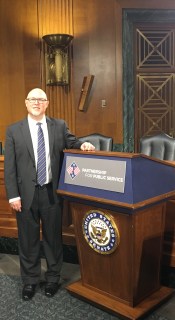
A distinguished University of Georgia School of Law alumnus, Jon R. Smibert (JD 1996), has been honored as one of the United States’ top federal employees. The honor was celebrated this month at a breakfast at the Dirksen Senate Office Building in Washington, D.C.

Smibert serves as Resident Legal Advisor for the U.S. Department of Justice at the U.S. Embassy in Tirana, Albania. As reported in the Washington Post, he is one of 26 finalists for a 2017 Samuel J. Heyman Service to America Medal, also known as a “Sammie,” awarded by the Partnership for Public Service. Smibert is a finalist in National Security and International Affairs; the medalwinners will be chosen later in the year.

In addition to this U.S. recognition, Smibert recently received a medal from  from the President of Albania. In that country, he has worked to assist in overhauling the legal system, with the particular aim of reducing public corruption. Smibert helped to redraft about a third of Albania’s constitution and more than a dozen statutes. Innovations included vetting requirement for judges and prosecutors, as well as establishment of a Constitution-level body dedicated to investigating and prosecuting corruption.

Of Smibert’s work, Donald Lu, U.S. Ambassador to Albania, said:

“A lot of Albanians consider him a hero. The Albanian prime minister has called this ‘the most important reform since the fall of communism. Jon Smibert has a real passion for what he does, not only for representing the U.S., but in making Albania better.”

Before his posting in Albania, Smibert served in Pristina, Kosovo. In addition to helping to establish independent prosecution offices and to draft Kosovo’s Criminal Procedure Code, Smibert helped to launch the Kosovo Specialist Chambers, a war crimes court that sits at The Hague in the Netherlands.

Smibert began his career as a federal prosecutor in Atlanta, Georgia, and later in Cleveland, Ohio. His publications include a 240-page book, Principles of Evidence (2014).

International Jurist features LLM study at University of Georgia School of Law

The Master of Laws (LL.M.) curriculum at the University of Georgia School of Law is featured in the latest edition of The International Jurist, described as “the magazine for foreign attorneys studying in the U.S.”

Our curriculum is highlighted on page 8 of the issue entitled “Best LL.M. Programs.” The item pays particular note to last year’s winning Georgia Law LL.M.-J.D. team in the Southeast Model African Union, as well as  the many experiential learning opportunities and skills-based courses available. It states:

“For example, an LL.M. student from Bangladesh assigned to Magistrate Court conducts legal research, writes memos and observes trials.”

More information and the Georgia Law LL.M. brochure are available here, or by e-mailing Dr. Laura Tate Kagel, Director of International Professional Education at the law school’s Dean Rusk International Law Center, at LLM@uga.edu.

Applications now welcome for 2017 Global Governance Summer School, presented by Georgia Law & Leuven Centre for Global Governance Studies

We at the Dean Rusk International Law Center at the University of Georgia School of Law, are proud to partner with the Leuven Centre for Global Governance Studies at the University of Leuven, to present our 2017 Global Governance Summer School. The Summer School’s core events will take place June 26-30 in Belgium.

Georgia Law students will join at Leuven a target audience of: advanced students in international law, international relations, international political economy, and international and European studies; and practitioners and policy experts who wish to update their knowledge on developments in global governance and international law. We partner institutions welcome applications from such individuals; register here.

International_Court_of_Justice.jpg

Peace Palace at The Hague in the Netherlands, home of the International Court of Justice

Our Georgia Law students will begin their European journey with a 3-day professional development trip to The Hague, site of many international legal institutions. Plans include attendance at the trial  of Prosecutor v. Ongwen at the International Criminal Court, touring the Peace Palace and a briefing at the International Court of Justice, and an audience with a judge and legal advisers at the Iran-U.S. Claims Tribunal.

Our students then will travel to the centuries-old University of Leuven, one of Europe’s premier research institutions, to take part, alongside other participants, in the Belgium-based Global Governance Summer School. The program is as follows:

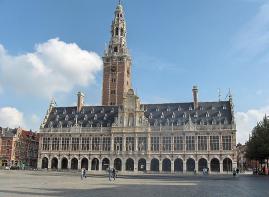
universiteitsbibliotheek.jpg

University Library, University of Leuven, Belgium

► June 26-28, participants will attend classroom seminars on issues of international law and global governance, including global economic and trade governance and global human rights, rule of law, and security governance. Instructors include the Summer School’s co-directors, Georgia Law Associate Dean Diane Marie Amann and Leuven Professor Jan Wouters, along with others from both universities: from Georgia Law, Professor Harlan Cohen and Kathleen A. Doty, our Center’s Director for Global Practice Preparation; from Leuven, Dean Bart Kerremans, Professors Horst Fischer, Dominik SteigerGeert Van Calster, Drs. Matthieu Burnay and Nicolas Hachez, and Senior Researcher Philip De Man.

► Next, on June 29, Summer School participants will participate in International Law and Global Governance in a Turbulent World, an expert conference featuring three panels composed of scholars and practitioners from around the world:

  • Global Governance of Human Rights. How to enforce universal values in contested world?
  • Global Governance of Democracy and Rule of Law in international perspective.
  • Global Economic and Trade Governance in Protectionist Times. Will we see the emergence of trade wars in the coming years?
20150127_sg_report-2014-photo-7.jpg

Headquarters of the North Atlantic Treaty Organization, Brussels, Belgium

► The Summer School will conclude on June 30 with a professional development trip in Brussels, where students will visit the headquarters of the North Atlantic Treaty Organization and the office of the global law firm Sidley Austin LLP.

Further information here; registration for the Belgium-based components of the Summer School here.

On World Trade Day, alum Bill Poole earns Global Leadership Award

Very pleased to congratulate our distinguished alumnus William M. Poole (JD’73), recipient of the Global Leadership Award bestowed by the World Trade Center Atlanta.

The Center bestowed the award during its World Trade Day celebration on May 2, in order to recognize Poole’s

“exemplary service to the facilitation of international trade and investment between Georgia and the rest of the world.”

Poole, who goes by Bill, is Of Counsel at Atlanta’s Nelson Mullins Riley & Scarborough LLP. Serving as head of the office’s International Practice, Poole, whose expertise includes transnational tax law, focuses on transnational business and investment matters.

He’s taught international business transactions law as an adjunct professor here at his alma mater. While a law student, he was Editor-in-Chief of the Georgia Journal of International & Comparative Law and took part in our Jessup International Moot Court and Brussels Seminar initiatives. After earning his undergraduate degree from the U.S. Military Academy at West Point, Poole served in Vietnam and Germany.

Through its World Trade Day event, the World Trade Center Atlanta brought an array of leaders to discuss issues of trade and investment. In Georgia last year, this sector accounted for more than $157.2 billion in imports and exports.

Georgia Law profs Cohen and Cade win interdisciplinary research seed grants

Two University of Georgia School of Law professors will take part in transnationally focused research projects, recent winners in a universitywide funding competition.
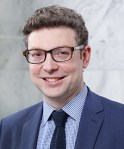
The 2 projects were among a dozen funded by the University of Georgia  Presidential Interdisciplinary Seed Grant Program. More than 150 faculty teams submitted proposals.

The Georgia Law award-winners are:

Harlan G. Cohen, who holds the Gabriel M. Wilner/UGA Foundation Professor in International Law, will take part in research on “Forecasting the threat of cyber attacks, nation by nation.” Also on the team for this project are faculty from the university’s Franklin College of Arts & Sciences and School of Public & International Affairs, plus a political scientist from the State University of New York-Albany.

Jason A. Cade, Assistant Professor of Law and Director of the law school’s Community Health Law Partnership Clinic. He will collaborate on “Building a network of cultural liaisons to improve the health and well-being of Athens-area Latinos.” The research project’s team also includes faculty from the university’s College of Education, College of Family & Consumer Sciences, College of Pharmacy, College of Public Health, School of Social Work, Latin American & Caribbean Studies Institute, and J.W. Fanning Institute for Leadership Development.