Update from Nigeria: attorney Chukwudi Ofili, LLM Class of 2018, reflects on his post-graduation year

This is one in a series of posts by University of Georgia School of Law LLM students, writing on their participation in our LLM degree and about their post-graduate experiences. Author of this post is alumnus Chukwudi Ofili, a member of the Class of 2018.
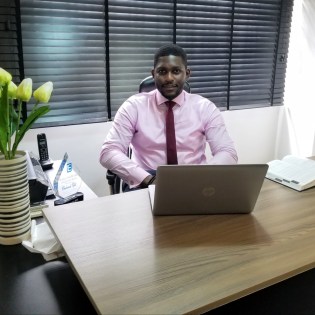
Chudi photoIt has been an eventful year for me. In January 2018, during my last semester at the University of Georgia, I began a corporate in-house counsel externship – an experiential learning opportunity open to qualified Georgia Law LLM students – at Coca-Cola headquarters in Atlanta There, I had the opportunity to work on issues such as cybersecurity, imports, and Office of Foreign Assets Control compliance.

Following graduation, I took the New York bar examination in July.  When I learned that I had passed, I was in London, participating in the highly selective International Lawyers For Africa (ILFA) 2018 Flagship Secondment Programme (IFSP), which each year places lawyers from various African jurisdictions at highly reputed international law firms and corporations for a period of three months. I was placed with Trinity International LLP, a niche project and corporate finance firm focusing on energy, infrastructure, resources, and industry. During my secondment, I worked on some international transactions, with focus on financing power and infrastructure projects across the African continent.
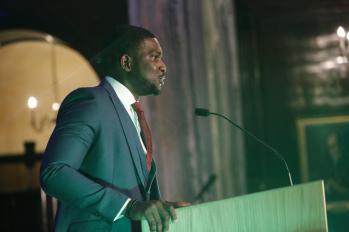
Chudi speechIFSP was an enriching and exciting experience. It included training programs and networking events that introduced the participants to some of the brightest minds in the international legal market, in diverse practice areas. In particular, the networking opportunities were immense and may not be replicated in our lives on such a scale. I was pleased to selected to deliver the valedictory address for the London IFSP cohort at the ILFA Gala Night, which marked the end of the program.

I am now happy to be back in Nigeria at Bloomfield Law Practice, in the Corporate, Securities, and Finance practice group. I was recently interviewed for an article in THISDAY Newspaper Nigeria Legal Personality of the Week. In the interview, I expressed my hopes for good prospects in 2019. The year is already off to a good start: I’ve just completed a co-authored article,  Recognition and Enforcement of Cross-Border Insolvency; Nigeria in Perspective.

I came to Georgia Law after working with my firm, Bloomfield Law Practice, having graduated with first-class honors from Babcock University in Nigeria. At Georgia Law, I was the recipient of a prestigious graduate research assistantship, and participated in the Business Law Society.

I will always recommend the Georgia Law LLM curriculum, as it is tailored to each student’s career goals; for example, preparing to sit for a U.S. bar exam, or pursuing a concentration. Plus, students come to find out that Athens (which is just about an hour away from Atlanta) is a lovely place for studies, with friendly people.

Delivering prestigious Gresham College Fulbright Lecture in London, Georgia Law Professor Lori Ringhand analyzes laws regulating online election campaign spending in US and UK

Pleased today to welcome back Lori A. Ringhand, J. Alton Hosch Professor of Law here at the University of Georgia School of Law, and, this Spring 2019 semester, a Fulbright Distinguished Chair at the University of Aberdeen, Scotland. In connection with her US-UK Fulbright award, Professor Ringhand gave a prestigious lecture this past Tuesday, April 2, in London. Her account of that lecture – available on video – is below.

I recently had the pleasure of delivering the Gresham College Fulbright Lecture at the Museum of London. Gresham College has been offering free public lectures to residents of London for more than 400 years, and has been offering Fulbright lectures in partnership with the US/UK Fulbright Commission for decades.  Recent Gresham lecturers include eminent public law scholar Vernon Bogdanor,  historian and author Timothy Garton Ash, and current Speaker of the House of Commons, John Bercow.

My lecture focused on the challenges faced by lawmakers in the United States and the United Kingdom as they try to ensure that campaign finance laws remain relevant in the age of widespread online electioneering. As both nations have discovered, our existing regimes are not built for a world in which political advertising spreads, rapidly, organically, and often anonymously, through online social media platforms.

Regulators in the US and the UK nonetheless rarely look to each other’s experiences to inform their own thinking in this complex area. The election law systems of each country are seen as so fundamentally different that comparative consideration seems pointless.

As I explained in my Gresham Lecture, I disagree.

The differences in regulatory approaches certainly are real, and significant:

  • In the UK, political spending is limited, and most of it runs through political parties and regulated third-party campaigners, with outside or unregulated groups historically playing little role.
  • In the US, in contrast, political spending is increasingly dominated by outside groups, which can both raise and spend unlimited amounts of money, often entirely outside of the federal regulatory system.

But in regard to regulating online election activity, the similarities between the two nations are much more meaningful than the differences. As I laid out in the talk, the regulatory challenges presented by online electioneering difficult in both principle and practice, but they are fundamentally the same in each country. Consequently, there is a great deal we can learn from each other in this area.

I hope my lecture helps us take a necessary first step in that direction.

UK Consul General Andrew Staunton addresses Brexit at Georgia Law

IMG_7503.2

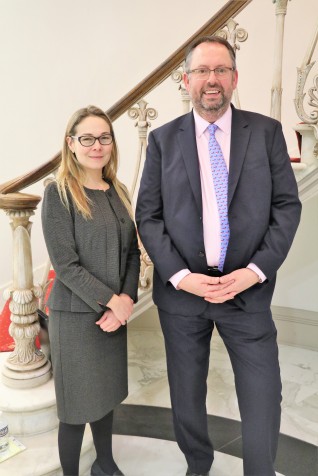
Andrew Staunton, Consul General of the United Kingdom pictured with Kathleen A. Doty, Director of Dean Rusk International Law Center

Last week, the Consul General of the United Kingdom Andrew Staunton delivered a lecture at the University of Georgia School of Law, “Leaving the EU: Impact on U.K.-U.S. Relations.” The event was the most recent installment of the Dean Rusk International Law Center’s ongoing Consular Series. The Consular Series presents students, staff, and faculty with global perspectives on international trade, cooperation, development, and policy.

In his lecture, Consul General Staunton described the political and economic context surrounding the British exit from the European Union and outlined the primary areas currently under negotiation. Describing the situation as “trying to take a raw egg out of a baked cake,” the Consul General nevertheless stressed that the United Kingdom will continue to work collaboratively with Europe and the United States to address international concerns. He emphasized that the United Kingdom will remain a strategic trading partner with the United States, and particularly with the Southeast.

Consul General Staunton has been a part of the United Kingdom’s diplomatic service since 1987. Prior to his current post as the Consul General in Atlanta, he served as Deputy Head of Mission and Economic Counsellor at the British Embassy in Athens, Greece. He was also Deputy Head of Mission at the British Embassy in Dublin, Ireland. Prior to these postings, Consul General Staunton served overseas in China, France, Romania, and Canada.

Watch the full lecture, including an introduction by Professor Diane Marie Amann, below:

UK Consul General Andrew Staunton to speak on Brexit at Georgia Law

The Dean Rusk International Law Center at the University of Georgia School of Law will welcome Consul General Andrew Staunton to campus on Tuesday, February 12, 2019. He will give a lecture, “Leaving the EU: Impact on UK-US Relations.”

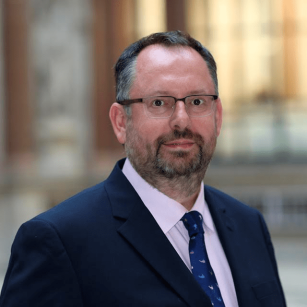
Andrew Staunton Pic

Staunton is the United Kingdom’s Consul General in Atlanta. He took up the position in June 2018, after serving for four years as the Deputy Head of Mission and Economic Counselor at the British Embassy in Athens, Greece. He also served as Deputy Head of Mission at the British Embassy in Dublin from 2009 to 2013. His time in Greece and Ireland coincided with critical points in each countries respective economies.

A career diplomat since 1987, Staunton has also held posts in China, France, Romania and Canada.

This event is presented as part of the Dean Rusk International Law Center’s Consular Series, which brings to campus perspectives on international trade, development, policy, and cooperation during the 2018-2019 academic year. The Consular Series is co-sponsored by the International Law Society, Georgia Law’s chapter of the International Law Students Association.

This installment of the Series coincides with the Center’s long-standing tradition of celebrating the birthday of another career diplomat – former Secretary of State and our Center’s namesake, Dean Rusk. In honor of Dean Rusk’s 110th birthday, lunch and celebratory cupcakes will be served.

Details here.

Georgia Law Professor Harlan Cohen presents at European Society of International Law annual meeting in the UK

cohen2017Medium-logo_esil

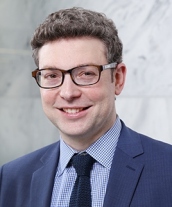
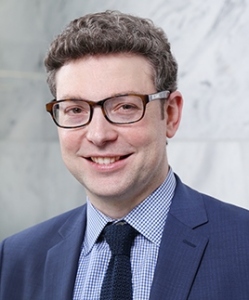
Harlan Grant Cohen, the Gabriel M. Wilner/UGA Foundation Professor in International Law and Faculty Co-Director of the Dean Rusk International Law Center here at the University of Georgia School of Law, recently presented at the annual meeting of the European Society of International Law in Manchester, United Kingdom.

Cohen presented his paper, entitled “What is International Trade Law For?” as part of the International Economic Law Interest Group Roundtable, “The Multilateral Trading System in Trouble.”

Known by its acronym ESIL, the goals of the European Society of International Law “are to contribute to the rule of law in international relations and to promote the study of public international law.”

Law in Practice International Interns from Sheffield Hallam University visit the Dean Rusk International Law Center for training

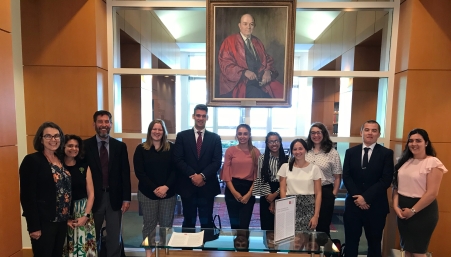
Group Photo RuskLast week, the Dean Rusk International Law Center was pleased to co-present a training with Sheffield Hallam University on criminal law and human rights for eight law students from the United Kingdom. Organized by Dr. Laura Kagel, Associate Director for International Professional Education at the Dean Rusk International Law Center, and Michael Edwards (J.D. ’93), Senior Lecturer in Law and Criminology at Sheffield Hallam University, the four-day training was designed to prepare the students for summer internships they will undertake in the United States.
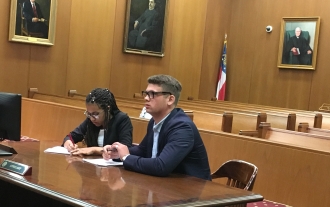
Faculty from both universities lectured on relevant topics. These included Georgia Law professors: Anne Burnett on legal research methods; Andrea Dennis on evidence; and Russel Gabriel on criminal procedure. From Sheffield Hallam University Michael Edwards lectured on international human rights and civil rights law, and Christopher Riley presented an introduction to the student internships.

IMG-1797

In addition to coursework, while in Athens, the students observed court proceedings and met with local prosecutors and court officials to hear about treatment and accountability courts. Organized by Assistant District Attorney Paige Otwell (J.D. ‘88), this discussion was particularly engaging, as England currently only has one court of this type. Students also spent a day learning more about advocacy and civil rights in Atlanta. The students prepared and presented mock oral arguments at the Supreme Court of Georgia, toured the State Capitol, and visited the Martin Luther King, Jr. National Historical Site. They also visited the Southern Center for Human Rights, where Tiffany Williams Roberts, Community Engagement and Movement Building Counsel, discussed the work of the non-profit law firm.

The Sheffield students are now off to begin their internships; we wish them an enriching summer!

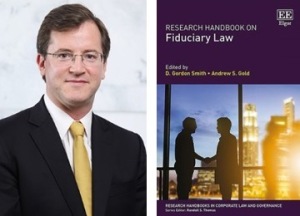
Professor Bruner compares UK, US business practices in new “Research Handbook on Fiduciary Law”

Christopher M. Bruner, J. Alton Hosch Professor of Law here at the University of Georgia School of Law, has just published “Opting Out of Fiduciary Duties and Liabilities in U.S. and U.K. Business Entities.” It appears as a chapter in a 2018 Edward Elgar volume, entitled Research Handbook on Fiduciary Law, and edited by D. Gordon Smith, Dean and Glen L. Farr Professor of Law at Brigham Young University’s J. Reuben Clark Law School,  and Andrew S. Gold, Professor of Law at DePaul University College of Law.

Here’s the SSRN abstract for Bruner’s contribution:

This chapter explores the extent of contractual freedom to opt out of fiduciary duties and liabilities in U.S. and U.K. business entities, including the U.S. corporation, general partnership, limited partnership, limited liability partnership, and limited liability company, and the U.K. limited company, general partnership, limited partnership, and limited liability partnership.

Discernible commonalities emerge from this comparative analysis. Notably, corporate law readily permits reducing liability exposure for breaches of duty in each jurisdiction, yet provides only quite limited capacity to carve back at the substance of the duties themselves. Meanwhile, unincorporated entities in each jurisdiction offer substantially greater latitude to limit the duties themselves, in some cases resulting in purely contractual business relationships.

Yet substantial differences are also apparent. U.S. corporate law permits greater insulation from liability exposure, and U.S. unincorporated entities generally provide clearer and more extensive latitude to eliminate default duties of loyalty and care outright (particularly in Delaware). One cannot comprehensively declare that U.S. law universally deviates further from the “fiduciary” governance paradigm, however, because the U.K. limited liability partnership has gone further by providing an entity form in which no such general default duties apply at all.

The analysis raises some complex comparative questions, and the chapter closes with brief reflections on why such trends, commonalities, and divergences may have arisen.

Professor Cohen’s AJIL essay on “Multilateralism’s Life-Cycle” at SSRN

Harlan Grant Cohen, the Gabriel M. Wilner/UGA Foundation Professor in International Law and Faculty Co-Director of our Dean Rusk International Law Center at the University of Georgia School of Law, has posted a chapter entitled “Multilateralism’s Life-Cycle,” which will appear in a forthcoming issue of volume 112 of the American Journal of International Law.

The manuscript, which forms part of our Dean Rusk International Law Center Research Paper Series at SSRN, may be downloaded at this SSRN link.

Here’s the abstract for this essay by Professor Cohen, an expert in global governance and member of the AJIL Board of Editors:

Does multilateralism have a life-cycle? Perhaps paradoxically, this essay suggests that current pressures on multilateralism and multilateral institutions, including threatened withdrawals by the United Kingdom from the European Union, the United States from the Paris climate change agreement, South Africa, Burundi, and Gambia from the International Criminal Court, and others, may be natural symptoms of those institutions’ relative success. Successful multilateralism and multilateral institutions, this essay argues, has four intertwined effects, which together, make continued multilateralism more difficult: (1) the wider dispersion of wealth or power among members, (2) the decreasing value for members of issue linkages, (3) changing assessment of multilateral institutions’ value in the face of increased effectiveness, and (4) members’ increased focus on relative or positional gains over absolute ones. Exploring how each of these manifests in the world today, this essay suggests that current stresses on multilateralism may best be understood as the natural growing pains of an increasingly mature set of institutions. The open question going forward is what form the next stage of development will take. Will strategies of multilateralism continue or will they be replaced by smaller clubs and more local approaches?

Global migration topic of 2-day AILA event our alumna’s helping organize

On behalf of a member of our Dean Rusk International Law Center Council, we’re pleased to announce an upcoming event:

The American Immigration Lawyers Association Global Migration Section  will host a conference entitled “Global Immigration in a Protectionist World” June 20-21, 2017, in New Orleans, Louisiana.

Panel topics include: the future of immigration law from a global perspective, running a global practice, consular processing, European Union immigration directives in light of Brexit, cybersecurity, and global mobility options for LGBT clients.

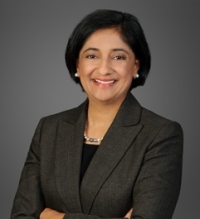
Alumna and Council member Anita E. J. Ninan (above), who is Of Counsel at Arnall Golden Gregory LLP in Atlanta and Advocate, Bar Council of Delhi, India, serves on the conference committee for this group – which, she writes, is

“the global outbound immigration section of AILA and includes foreign attorneys and legal practitioners as its members.”

Registration (early bird rates end May 10) and further details here.

Belgian Consul General de Baets featured at Global Atlanta luncheon

willem

Pictured at front, from right: Belgian Consul General William de Baets and Phil Bolton and Trevor Williams, respectively, publisher and managing editor of Global Atlanta.

For decades, we at the University of Georgia School of Law have welcomed collaboration with Belgium and its people and institutions. Even before 1978, when Belgium’s national airline became the 1st foreign carrier to fly nonstop to Atlanta, a Belgian attorney became the 1st foreign-trained lawyer to earn Georgia Law’s Master of Laws (LL.M.) degree. And thanks to the hard work and generosity of Georgia Law professors like Gabriel Wilner and our Center’s namesake, former U.S. Secretary of State Dean Rusk, we’ve partnered with leading Belgian universities to offer summer seminars on issues related to international  law and policy, often with a focus on European Union and transatlantic cooperation. That tradition will continue via this summer’s global governance school at the home of our partner, the Leuven Centre for Global Governance at the University of Leuven, one of Europe’s premier research institutions.

Thus it was a special pleasure to attend last Friday’s “Consular Conversations: Luncheon Interview With Belgium’s Consul General,” held at the Atlanta office of Miller & Martin, where Tom Harrold, Georgia Law alumnus and member of our Dean Rusk International Law Center Council, leads the International/World downloadLaw practice group. The event was part of a series of conversations sponsored by another Center partner, Global Atlanta.

Guest of honor was William de Baets, who’s served since last April as Belgium’s top diplomat in the Southeastern United States. In a wide-ranging conversation with Phil Bolton and Trevor Williams, Global Atlanta’s publisher and managing editor, de Baets explained he’d joined Belgium’s foreign service following 9 years as a Navy officer. Postings before his arrival at Atlanta included deputy head of mission in Côte d’Ivoire, Ethiopia, and Venezuela, and political counselor at Belgium’s embassy in Washington, D.C.

De Baets said that his office provides consular services and also engages in public and economy diplomacy; Friday’s conversation fulfilled the latter role. He spoke to a full house – a testament to the fact that Belgium ranks among the top 10 foreign investors in Georgia, which is home to more than 70 Belgian companies and more than 5,000 Belgian nationals.

Asked about Belgium’s renown as the home of Tintin and the Smurfs, not to mention 20th C. surrealists like René Magritte, de Baets recalled an artistic tradition that reaches back to the 16th C. Flemish master, Peter Paul Rubens. Additionally, Belgium did not gain independence until 1830; before that “the territory kept changing hands and was ruled by other people,” he noted. “We couldn’t speak up too much. We were saying yes and thinking no, or saying yes and doing what we wanted to do. It was a source of our humor – we couldn’t take ourselves too seriously.”

Again answering a question, de Baets spoke of his father’s participation in the resistance during Germany’s occupation of Belgium during World War II.

Flags of the 28 NATO member countries

Conversation then turned to Belgium’s role in contemporary matters. Regarding Brussels-based NATO (right), the defense alliance established 68 years ago by the North Atlanta Treaty, de Baets noted apparent disagreement within the new U.S. administration. Indeed, earlier in the week the South Carolina Governor tapped to become U.S. Ambassador to the United Nations, Nikki Haley, had called NATO “important.”

Although the United States can defend itself without NATO, Europe cannot, and so de Baets advocated strengthening the European Union’s security pillar to offset any weakening of NATO. Such alliances are essential for countries like Belgium and its neighbor, Luxembourg. Yet de Baets acknowledged difficulty in achieving the goal, given disagreement among EU member states – including Britain, even before its people voted in favor of Brexit.

Dubbing compromise a “Belgian export,” de Baets indicated that his country could a key role in aiding Europe’s efforts to resolve crises in financial and security sectors, as well as migration. The goal, he said, is to “strengthen our security without giving up our values.”