Center officer to visit China as World Affairs Council Young Leaders Fellow

kate - CopyPleased to announce that Kathleen A. Doty, our Center’s our Associate Director of Global Practice Preparation, has just been chosen as a World Affairs Council of Atlanta Young Leaders China Fellow.

She and nine other area professionals under forty will take part in an expenses-paid, ten-day journey to four cities in China: Beijing, Shanghai, Suzhou, and Hangzhou.

Selection criteria for this Fellowship included global leadership qualities and ability to contribute to U.S.-China relations. Accordingly, during the October 2016 trip, Fellows will engage with media and business leaders, government agencies, and universities, in addition to touring cultural attractions like the pavilionGreat Wall and the China Pavilion at right, which was constructed for Shanghai World Expo 2010.

Doty, pictured at top, joined our Center in October after several years practicing international law in Washington, D.C. She was Assistant Counsel for Arms Control and International Law at the Office of the General Counsel, Strategic Systems Programs, U.S. Department of the Navy, and before that, Attorney-Editor at the American Society of International Law and Managing Editor of the Society’s American Journal of International Law.

At Georgia Law, Doty’s portfolio includes conceptualization and administration of: the Center’s Global Governance Summer School, a partnership with the Leuven Centre on Global Governance Studies in Belgium; Global Externships Overseas and At-Home; and research projects and academic-year programming. Her Fellowship thus promises both to strengthen our Center’s ties with our community and to make connections that will help us enhance our students’ global practice experience.

Our newest Masters of Laws

Saturday was the University of Georgia School of Law commencement, and we were very pleased to welcome to our community of nearly 500 LLM graduates the 15 talented lawyers pictured below. Congratulations to our newest Masters of Laws!

IMG_7955

Our LLM Class of 2016 posed on Graduation Day for a photo with Laura Tate Kagel, our Center’s Director of International Professional Education (bottom right). From left, the new alums are: top, Elisha Atulomah, Miguel David Medina Cordoba, Mahemud Tekuya, and Fazle Rabbi Chisty; middle, Huajin Tang, Kun Wang, Simon Wolffram, Xiao Zhang, and Deborah Nogueira-Yates; bottom, Ekaterina Knapik, Gladys Ashiru, Nastasja Spee, Socorro Moctezuma Flores, Tingting Tang , and Oluwakemi Kusemiju.

Summer 2016 GEOs: Georgia Law students ready to take on the world

GEO blog post photoThis summer, ten law students will benefit from international placements through the Global Externship Overseas, or GEO, administered by Georgia Law’s Dean Rusk International Law Center.

These students have been awarded funding to enable them to earn legal training in law firms, in-house legal departments, government agencies, and nongovernmental organizations around the world. Practice areas span a range, including refugee law, property law, criminal law, corporate law, and cultural heritage law.

2016 GEO participants include several rising 3Ls, who are headed to Europe and Asia:

► Bradley Dumbacher – GÖRG, Cologne, Germany
► Shirley Kathryn Griffis – Maples Teesdale, London, United Kingdom
► Brenny B. Nguyen – Boat People SOS, Bangkok, Thailand
► Jianan Zhang – Lenovo & Han Kun Law, Beijing, China

Numerous rising 2Ls also will be working ’round the world:

► Megan Alpert – GÖRG, Cologne, Germany
► Victoria Barker – DLA Piper, St. Petersburg, Russia
► Decker McMorris – Tosetto, Weigmann e Associati, Milan, Italy
► Claire Provano – Studio Legale Associato Rossini, Turin, Italy
► Carson Stepanek – Tosetto, Weigmann e Associati, Milan, Italy
► Hannah Mojdeh Williams – Department of Intangible Cultural Heritage, Ministry of Culture and Fine Arts, Phnom Penh, Cambodia

We congratulate them all on their GEO acceptance, and wish them an enriching summer. Can’t wait to hear travel notes!

Cade comments on immigration ruling

Cade_JasonOct15 - CopyGeorgia Law Professor Jason A. Cade was among the immigration law scholars providing media commentary on a decision that the U.S. Supreme Court issued on Thursday.

At issue was the interpretation of a term in the federal immigration statute: “aggravated felony.” An undocumented immigrant found to have been convicted of a crime that amounts to this type of felony is to be removed from the United States. In the case under review, Luna Torres v. Lynch, a 5-member Court majority construed the term in a way that eases prosecutors’ burden of establishing that the crime of conviction was “aggravated.”

Professor Cade (above) is an immigration law expert who leads Georgia Law’s Community HeLP Clinic and also serves on our Dean Rusk International Law Center Council. Regarding the judgment in in Luna Torres, Cade said in a Bloomberg BNA: Criminal Law Reporter article:

“I think it’s fair to say that the majority was simply uncomfortable with an interpretation of the aggravated felony provision that would have made it more difficult for the government to remove some very serious noncitizen offenders.”

The article is available in PDF here; the Court’s decision, in PDF here. Professor Cade’s publications may be accessed here.

UN affiliate CIFAL Atlanta: Our new International Judicial Training partner

Cifal AtlantaBeginning this year, Georgia Law’s annual International Judicial Training will be offered in partnership with CIFAL Atlanta, an affiliate of the United Nations Institute for Training and Research, or UNITAR.

UNITAR_Vertical_Logo_35mm_Blue-Pantone279C-01-pngCIFAL Atlanta joins an International Judicial Training partnership forged in the late 1990s by Georgia Law’s 2016IJT_fullDSDean Rusk International Law Center and the Institute of Continuing Judicial Education of Georgia. For nearly 20 years, the trainings have provided provided a high-level learning experience to foreign judges. Included are seminars with distinguished Georgia Law faculty and visits to a variety of courts around the state.

As one of several training centers across the globe linked to UNITAR, CIFAL Atlanta works to build capacity among local governments and civil society leaders, with particular emphases on economic and infrastructure development, fair trade, and good governance.

The 2016 International Judicial Training, to be held November 27 to December 10, will advance Goal 16 of the United Nations 2030 Agenda for Sustainable Development, which is

E_SDG_Icons-16“dedicated to the promotion of peaceful and inclusive societies for sustainable development, the provision of access to justice for all, and building effective, accountable institutions at all levels.”

Leaders of the new collaboration, which extends the trainings’ global outreach, include two Georgia Law graduates: Chris Young, CIFAL Executive Director, and Laura Tate Kagel, Director of International Professional Education at the Dean Rusk International Law Center. They work alongside Richard Reaves, Executive Director of the Institute of Continuing Judicial Education of Georgia, who brings decades of experience in organizing continuing education seminars for judges. Reaves’ extensive contacts throughout Georgia create opportunities for informative exchanges between the international judges and their U.S. counterparts. In Kagel’s words:

reaves

In Georgia Law’s James E. Butler Courtroom, Richard Reaves talks with foreign judges during an International Judicial Training

“The International Judicial Training is more than simply an educational program. It can lead to significant reforms in terms of effective administration of justice and stimulate cross-cultural relationships that can bear fruit for years to come.”

Providing an example of this is Fernando Cerqueira Norberto, Secretary-General of ENFAM, the governing body of Brazilian judicial colleges. According to Cerqueira, Brazilian judges’ longstanding participation in the International Judicial Training correlates to the adoption in his country of innovations such as small claims courts, mediation procedures, and drug courts.

Judges and court personnel from all countries are welcome to apply for the 2016 International Judicial Training; further details and registration are available here.

Former Nigeria prosecutor’s LLM year features US practice experience

IMG_0526.Gladys ASHIRU_2_fb

Among the many talented foreign-trained lawyers set to earn Georgia Law’s Master of Laws (LLM) degree this month is Gladys Ashiru, who arrived with considerable experience as a prosecutor in Nigeria. She’s enriched this experience this year: in addition to her academic studies and a professional development trip, Gladys has worked as a volunteer prosecutor here in Athens.

Having immigrated to the United States, Gladys chose to put her career back on track by pursuing an LLM at Georgia Law. She says she was impressed by the collegiality she encountered during a visit to campus, and swayed by LLM graduates who spoke glowingly of their experience here.

Gladys’ strong interest in criminal law prompted Laura Tate Kagel, our Center’s Director of International Professional Education, to connect her with the Athens-based Office of the District Attorney for the Western Judicial Circuit, whose staff includes a number of Georgia Law alums. Assistant District Attorney Paige Otwell (JD 88) became Gladys’ mentor and introduced her to District Attorney Ken Mauldin (JD 80). After Gladys enrolled in Mauldin’s Spring 2016 Trial Practice course, he offered her the opportunity to observe and help out in the D.A.’s office. With the semester now at an end, Gladys recounts:

“It was an amazing experience for me. The internship broadened my horizons and exposed me to perspectives different from mine, especially in areas relating to jury selection and trials.”

After commencement on May 21, Ashiru plans to take the Georgia and New York bar exams, and also hopes to contribute to legal reform in Nigeria. Although she says that Georgia Law was challenging, she also found it rewarding, and calls it

“the best choice I made!”

Emerging security challenges require norm development, State lawyer says

IMG_5540At first blush, today’s security challenges may seem familiar. Yet they are new – emerging, in U.S. State Department parlance – because of the novel ways in which those challenges present themselves.

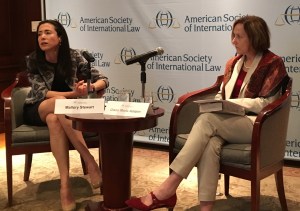
So explained Mallory Stewart (near right), Deputy Assistant Secretary of State for Emerging Security Challenges & Defense Policy, during her fascinating talk Monday at Tillar House, the Washington, D.C. headquarters of the American Society of International Law. We at Georgia Law’s Dean Rusk International Law Center were honored to join ASIL’s Nonproliferation, Arms Control & Disarmament Interest Group in cosponsoring Stewart’s talk, “Common Challenges to Diverse Security Threats.” (For the event video, see here.)

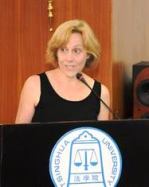
Stewart’s talk followed introductions by Kathleen A. Doty, Interest Group Co-Chair and our Center’s Associate Director for Global Practice Preparation, as well as opening remarks by yours truly (above, at right) respecting Dean Rusk’s arms control legacy.

Stewart pointed to technological change, in outer space and elsewhere, as one of the emerging challenges. Within this category was what is essentially garbage; that is, the debris left in outer space by state actors and, increasingly, nonstate/commercial actors, whose celestial flotsam and jetsam continue to orbit and present hazards to active satellites, space stations, and the like.

Another challenge is dual-use technology. Items as seemingly innocent as chlorine – a chemical essential to everyday cleaning – can become a security threat when deployed as a weapon, as is alleged to have happened during the ongoing conflict in Syria.

Yet another is ubiquity, the reality that technologies, such as cyber capabilities, are, literally, everywhere, and thus not easy to contain.

Containment – regulation – thus is difficult both to design and to effectuate. With regard to dual-use technologies, for instance, Stewart posed questions of intent: How, exactly, does one define and identify the moment that an innocent item is transformed into a weapon? What about attribution – in areas like cyberwarfare, how can the perpetrator be identified? How can attacks waged with such weapons be prohibited in advance?

Stewart gave due respect to the 20th C. arms control treaties that form the core portfolio of State’s Bureau of Arms Control, Verification & Compliance, where she practices. Nevertheless, stressing global interdependence, she stressed the need for more nimble forms of international lawmaking. To be precise, she looked to mechanisms of soft law, such as codes of conduct, as ways that states and other essential actors might develop norms for responsible behavior in the short term. In the longer term, if the internalization and implementation of such norms should prove successful, eventually legally binding treaties may result.

(Part 2 of a 2-part series; Part 1 is here.)

At Center event in D.C., reviewing namesake Rusk’s arms control legacy

outerspaceVisitors to Tillar House, the Washington, D.C., headquarters of the American Society of International Law, were treated yesterday to a superb overview of emerging security challenges by the U.S. State Department lawyer who leads that portfolio, Mallory Stewart. I was proud both to have Georgia Law’s Dean Rusk International Law Center cosponsor, and also to serve as discussant for this important event. This post and another tomorrow will outline the proceedings. (For the event video, see here.) Today’s post consists of my opening remarks, which aimed to to reacquaint the audience with to the role that our Center’s namesake, Dean Rusk, played in building the arms control framework within which Stewart and her colleagues work.

. . .

Everyone knows, of course, about Dean Rusk and Vietnam – of his role in championing a foreign conflict that claimed more than a million American and Vietnamese lives between 1965 and 1974. Everyone knows, too, of his pivotal role in averting nuclear catastrophe during the Cuban Missile Crisis of 1962, when Rusk famously said,

“We are eyeball to eyeball, and the other fellow just blinked.”

What may be less well known – or been forgotten – is likewise significant. That is Rusk’s role in the design and implementation of the international arms control regime that has prevailed since the United States dropped atomic bombs on Japan seven decades ago. An Army officer who served in Asia and then in the War Department in D.C., Rusk, like many of his generation, did not fault the military decision. Yet in his memoir, As I Saw It, he wrote (p.122):

“[W]e made a mistake with the Manhattan Project from its inception. We should have built in a political task force to consider the ramifications of using the bomb.”

That position is consistent with Rusk’s own work, first as a State Department diplomat who championed the United Nations, NATO, and other multilateral postwar efforts, and ultimately as the head of that Cabinet department, for the entirety of the Kennedy and Johnson administrations.

As Secretary of State, Rusk oversaw the establishment of the U.S. Arms Control and Disarmament Agency, a forerunner of the Bureau for which our principal speaker, Mallory Stewart, now works. Moreover, Rusk was instrumental in the drafting, negotiation, conclusion, or implementation of at least seven major arms control treaties.

ltbtruskOne was the 1963 Limited Test Ban Treaty, about which Rusk wrote (p. 259):

“[A]fter the Cuban missile crisis, it was important to demonstrate that the United States and Soviet Union could coexist. The test ban required careful and extensive negotiations, but we and they did sign a major agreement on the heels of the most horrendous crisis the world has seen. … Such is the legacy of what President Kennedy felt was his proudest achievement.”

The other treaties were the Antarctic Treaty, the Outer Space Treaty, the Treaty of Tlatelolco, the Nuclear Non-Proliferation Treaty, the Seabed Arms Control Treaty, and the Anti-Ballistic Missile Treaty. Many of them remain at the core of the U.S. arms control portfolio to this day. Yet with the same modesty that pervades his memoir, Rusk wrote (p. 353):

“On the whole, our record on arms control under Lyndon Johnson was respectable.”

He did allow himself a light pat on the back (p.353):

“In reviewing the accomplishments of the Kennedy-Johnson years, I claim only one for myself: that with the agreements negotiated and our constant talking with the Soviets, my colleagues and I helped add eight years to the time since a nuclear weapon has been fired in anger.”

Rusk’s commitment to extending that time continued long after he left government, in 1969, and joined the faculty at the University of Georgia School of Law. Professor Rusk spoke often about arms control, with students, with the larger community, and with the stream of colleagues who consulted with him at his new home. Indeed, as late as 1985 – less than a decade before his death – Rusk welcomed to Athens, Georgia, former British Prime Minister Edward Heath, former Secretary of Defense McGeorge Bundy, former Secretary of State Alexander Haig, and others for a televised discussion entitled “Forty Years Since Hiroshima: What Next for Mankind?”

Rusk’s 1990 memoir returned to that question. In the final chapter, entitled “Dean Rusk’s Message to the Young,” he wrote (p. 630):

“Your generation will discover in the decades ahead whether mankind can organize a durable peace in a world in which thousands of megatons are lying around in the hands of frail human beings. A world in which collective security – what my generation used to try to curb the obscenity of war – is withering away, and we are not even discussing what shall take its place.”

We are here today to put the lie to that last line – that is, to discuss those very issues of global security. I look forward to Ms. Stewart’s remarks.

(Tomorrow: Outline of Mallory Stewart’s remarks. Credit for photo at top, of Rusk signing the Outer Space Treaty; credit for photo above of Rusk, standing just to the left of the portrait as President Kennedy signs the Limited Test Ban Treaty)

May 2 Event in DC: Common Challenges to Diverse Security Threats: A Conversation with Mallory Stewart

On Monday, May 2, at 5:30 p.m. at Tillar House in Washington D.C., the Dean Rusk International Law Center will co-sponsor “Common Challenges to Diverse Security Threats: A Conversation with Mallory Stewart.”

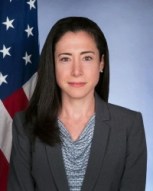
Mallory_Stewart_8x10_200_1The event will feature remarks by Mallory Stewart, Deputy Assistant Secretary for Emerging Security Challenges and Defense Policy at the U.S. Department of State. She is responsible for the management of the Office of Emerging Security Challenges and the Office of Chemical and Biological Weapons Affairs. Prior to this position, she served as an attorney in the Legal Adviser’s Office. In that role, she represented the United States before the Iran-U.S. Claims Tribunal, served on the U.S. delegation that negotiated the Ballistic Missile Agreements with Poland and Romania, and acted as the lead lawyer on the 2013 U.S.-Russian Framework for the Elimination of Syrian Chemical Weapons.

Stewart will explore the challenges common to the areas of space, cyber security, and chemical and biological weapons affairs, and the relevance of legal and/or political frameworks.tsinghua

Acting as moderator and discussant will be Diane Marie Amann, the University of Georgia School of Law’s Associate Dean for International Programs & Strategic Initiatives, Emily & Ernest Woodruff Chair in International Law.

The event, also sponsored by the Nonproliferation, Arms Control & Disarmament Interest Group of the American Society of International Law, that I chair, will have a reception following the substantive discussion. We welcome those in the DC area to join us. The event is free and registration is not required, but appreciated.

A world of issues addressed in new edition of Georgia Journal of International & Comparative Law

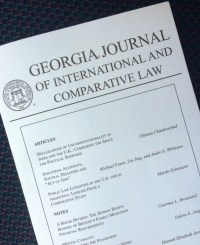
IMG_1031Four more than 4 decades, important articles on international, transnational, and comparative law and policy have found a publication home at Georgia law’s Georgia Journal of International and Comparative Law. Volume 43 Issue 2, the latest edition of GJICL, has just been released and is available online.

The volume begins with three articles, by five scholars from Asia, Europe, and South America:

31th_chintan

Declarations of Unconstitutionality in India and the U.K.: Comparing the Space for Political Response, by Chintan Chandrachud (left), candidate for Ph.D. in Law, University of Cambridge, England

faureIndustrial Accidents, Natural Disasters and “Act of God”, by: Professor Michael Faure (right), Professor of Comparative & International Environmental Law at Maastricht University’s Maastricht European Institute for Transnational Legal Research and Professor of Comparative Private Law & Economics at the Rotterdam Institute of Law and Economics, Erasmus liuSchool of Law, both in the Netherlands; Dr. Liu Jing (left), postdoctoral researcher in Research Institute of Environmental Law, School of Law, Center of Cooperative Innovation for Judicial Civilization, Wuhan University, China, and Behavioral Approach of Contract & Tort at Erasmus andriUniversity Rotterdam; and Dr. Andri Wibisana (right), Lecturer at the Faculty of Law Universitas Indonesia in Jakarta

oynPublic Law Litigation in the U.S. and in Argentina: Lessons From A Comparative Study, by Professor Martín Oyhanarte (left), Professor of Law at Universidad Austral and Universidad del Salvador  in Buenos Aires, Argentina

Three Notes, by alums who received their Georgia Law J.D.s in 2015, also appear in the volume:

broussardA House Divided: The Human Rights Burden of Britain’s Family Migration Financial Requirements, by Courtney L. Broussard (right), Staff Attorney, U.S. Court of Appeals for the Eleventh Circuit

jangMental Capacity: Reevaluating the Standards, by Eulen E. Jang (left), PSJD Fellow, National Association for Law Placement, Washington, D.C.

jarrellsHistory, TRIPS, and Common Sense: Curbing the Counterfeit Drug Market in Sub-Saharan Africa, by Hannah Elizabeth Jarrells (right), Associate Attorney at the Atlanta law firm of Ferrer Poirot Wansbrough Feller Daniel & Abney