Role of “commentaries” key to significance of ICRC project

The role of “commentaries” in the shaping of contemporary international law proved a recurring question in the just-concluded morning public plenary of today’s conference, “Humanity’s Common Heritage: 2016 Commentary on the First Geneva Convention.”

img_0266First broaching the issue was the keynote, Jean-Marie Henckaerts (right). A Georgia Law alumnus, he’s the Legal Adviser at the International Committee of the Red Cross who’s leading the ICRC’s multiyear effort to produce 21st C. commentaries on the meaning of the core instruments of international humanitarian law; that is, the four Geneva Conventions of 1949 and their subsequent Protocols Additional. Joining him were participants in the panel that followed: speakers Major-General Blaise Cathcart, Judge Advocate General of the Canadian Armed Forces, NYU Law Professor Ryan Goodman, Emory Law Professor Laurie R. Blank, and Oxford Law Professor Dapo Akande, plus the moderator, yours truly, Associate Diane Marie Amann. I’ve the honor of serving as director of the Dean Rusk International Law Center at the University of Georgia School of Law, which is sponsoring the event along with the ICRC and the Georgia Journal of International & Comparative Law.

Soon to appear in print, the 2016 Commentary is available online here. At that website, the 2016 Commentary is situated alongside an earlier version, published in the 1950s by ICRC jurist Jean Pictet – and there’s a rub.

“Commentaries are not unusual,” Henckaerts remarked, adding that tomes exist commenting on nearly all the world’s treaties. Though true, the observation pretermits the sui generis status of the author of the 2016 Commentary – the ICRC, since 1863 a Geneva-based private organization that has led developments related to the shaping and compliance with international humanitarian law.

The earlier volumes “are ‘capital C,’ or maybe all caps,” Blank said. Others agreed, pointing not only to the ICRC’s unique status, but also to the fact that the Pictet commentaries  occurred when the intentions of the negotiating states parties – to quote Goodman, “what the framers had in mind” – were well within memory. Continuing her analogy, Blank said she regarded the 2016 effort as a “small c” commentary –  an extraordinary collection of expert analysis, but not exactly the same thing” as the Pictet effort.

Akande broadened the conversation, examining the ICRC commentaries within the context of public international law and treaty interpretation. Pictet’s work may enjoy “unjustifiable authority,” he said, adding that the constitutive nature of the new effort might outweigh any resulting loss of authoritative status. He then called upon the ICRC consistently to be “upfront” about how and why it arrived at its interpretive conclusions.

The points provoked multiple questions: How are treaties to be interpreted? What individuals or entities have authority to engage in interpretation? What weight do interpretations of states parties deserve – and with regard to universally ratified treaties like these, which states parties? What weight to a private organization like the ICRC? Nongovernmental organizations? And what about the victims of armed conflict – do their voices matter in this interpretive effort, and if so, how can victims be given voice?

The search for answers to these and many other questions continues this afternoon. In 3 consecutive closed sessions, about 2 dozen experts are discussing: (1) the Common Article 1 obligation to “ensure respect” for the Geneva Conventions; (2) protection of the wounded, sick, and other specially protected persons; and (3) classification of armed conflict.

President taps Georgia Law alum for Cultural Property Advisory Committee

President Barack Obama is appointing Georgia Law alumnus James K. Reap to the U.S. Department of State Cultural Property Advisory Committee, according to a White House announcement issued Friday.

reap_web-150x150Reap, a Professor in the University of Georgia College of Environment + Design and affiliated faculty member of the university’s African Studies Institute, is a globally renowned expert on issues of cultural property and the protection of cultural heritage amid armed conflict and similar threats. He coordinates the university’s Master’s degree in Historic Preservation, as well as the dual J.D./M.H.P. Reap frequently takes part in initiatives of our Dean Rusk International Law Center; indeed, he’ll serve as an expert at this week’s Georgia Law-International Committee of the Red Cross conference entitled “Humanity’s Common Heritage: The 2016 Commentary on the First Geneva Convention.”

The many professional activities of Reap, a former Fulbright Scholar, include leadership positions in the International Council of Monuments and Sites, as well as the Lawyers’ Committee for Cultural Heritage Preservation and the U.S. Committee of the Blue Shield. He’s been active on preservation issues in Eastern and Southern Europe, Central Asia, Africa and the Middle East, and the Caribbean.

“Humanity’s Common Heritage”: Georgia Law-ICRC conference on Geneva Conventions Commentaries

gjicl_confposter

Humanity’s Common Heritage – norms codified in international humanitarian law treaties to which all countries of the world belong – will be the topic of a conference this Friday, September 23, at the University of Georgia School of Law in Athens, Georgia.

The conference title derives from this observation about those treaties, the four 1949 Geneva Conventions, by Peter Maurer, President of the International Committee of the Red Cross:

“We know that the values that found expression in the Geneva Conventions have become an essential part of our common heritage of humanity, as growing numbers of people around the world share a moral and legal conviction in them. These contradicting realities challenge us to act: to react to the suffering and violations of the law, and to prevent them from occurring in the first place.”

At the core of this daylong event will be the Commentaries on which the ICRC is now working. Published online earlier this year was the initial Commentary, covering the Convention (I) for the Amelioration of the Condition of the Wounded and Sick in Armed Forces in the Field, as well as the articles common to all 4 Conventions. (Prior posts here, here, and here.) Experts will examine this 2016 Commentary and its role in the development, promotion, and implementation of contemporary international humanitarian law.

thumbnail_p1130913We’re honored that the Georgia Law alumnus leading that project, Geneva-based ICRC legal adviser Jean-Marie Henckaerts (LLM 1990), will keynote our conference, and also that the ICRC is cosponsoring the conference, along with our Center and our Georgia Journal of International & Comparative Law. This student-run review, which celebrates its 45th anniversary this year, will publish papers by the assembled experts and Georgia Law student rapporteurs.
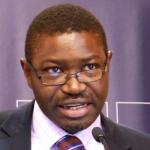
akandeDr. Henckaerts will be part of a public panel from 9:15 a.m.-12 noon in Georgia Law’s Hatton Lovejoy 0042401-14ABCourtroom. Speaking in that morning session will be: Oxford Law Professor Dapo Akande; Emory Law Professor Laurie R. Blank; Major-General Blaise Cathcart, Judge Advocate General of the Canadian Armed Forces; New York University Law Professor Ryan Goodman; and cathcartmoderator Diane Marie ryan_goodman_photo_horizontalAmann, Associate Dean for International Programs & Strategic Initiatives and Emily & Ernest Woodruff Chair in International Law at Georgia Law, and also the International Criminal Court Prosecutor’s Special Adviser on Children in & affected by Armed Conflict.

Joining them in closed sessions during the afternoon will be additional international humanitarian law experts experts: Georgia Law Professor Harlan G. Cohen; Houston College of Law Professor Geoffrey S. Corn; American University Law Professor Jennifer Daskal; Jonathan Davis, a University of Georgia international affairs graduates and U.S. Department of State Attorney-Advisor; Kathleen A. Doty, our Center’s Director of Global Practice Preparation; Julia Grignon, Université Laval Law; Rutgers Law Professor Adil Haque; Christopher Harland, Legal Adviser at the ICRC’s Washington, D.C., office; Eric Jensen, U.S. Department of Defense; Michael Meier, U.S. Army Judge Advocate General Corps; Naz K. Modirzadeh, Harvard Law; Nicholas W. Mull, U.S. Marine Corps Judge Advocate General Corps (ret.); Vanderbilt Law Professor Michael A. Newton; Sasha Radin, U.S. Naval War College; Professor James K. Reap (JD 1976) of the University of Georgia, who’s just been named to the State Department’s Cultural Property Advisory Committee; Georgia State Law Professor Shana Tabak; and Creighton Law Professor Sean Watts.

Full description and details about the conference here.

Former ambassador to talk on foreign policy and US Presidential election

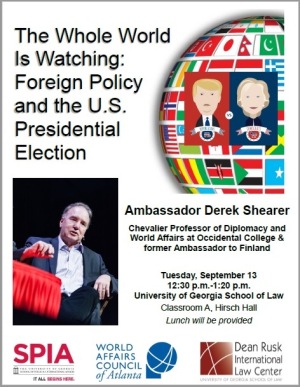
untitledIssues of foreign policy and national security remain foremost in many voters’ minds as the 2016 U.S. Presidential election has entered its final, post-Labor Day lap. We’re thus delighted to be welcoming an expert in this areas to our Athens campus next week:

Fresh from recent lectures in Oxford, Auckland, and Berlin, Ambassador Derek Shearer will deliver a public talk entitled “The Whole World Is Watching: Foreign Policy & the U.S. Presidential Election” at 12:30 p.m. this Tuesday, September 13, at the University of Georgia School of Law. Sponsoring the talk is Georgia Law’s Dean Rusk International Law Center; cosponsors are the World Affairs Council of Atlanta and the University of Georgia School of Public & International Affairs.

Shearer, whom I’ve long been privileged to call a colleague, is Chevalier Professor of Diplomacy and World Affairs at Occidental College in Los Angeles who served as an economics official in the U.S. Department of Commerce, and then as U.S. Ambassador to Finland from 1994 to 1997. He’s the author of several books and a frequent writer on and contributor to public policy discussions;  his articles have appeared in The New York Times, Wall Street Journal, and International Herald Tribune.

In addition to the talk, Shearer will speak to students in Election Law and Strategic Intelligence courses.

toigoWe’re also very pleased to welcome Sue Toigo (left), Chairman of Fitzgibbon Toigo Associates and Shearer’s wife. She’ll discuss corporate responsibility with Georgia Law Business Ethics students.

For additional details, e-mail ruskintlaw@uga.edu.

(Cross-posted from Diane Marie Amann)

Georgia Law’s annual Advocate magazine features our Center

SAs_Spr16

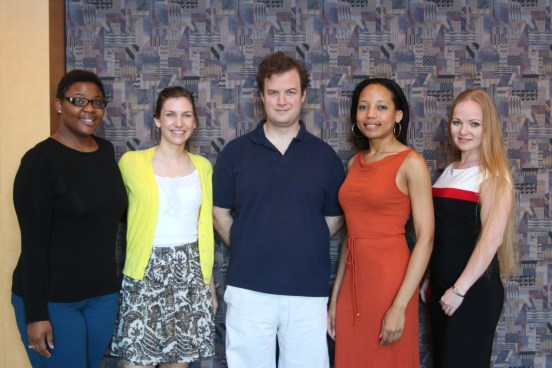
This Spring 2016 photo depicts Pedro Dorado, our Center Fellow, who earned his LLM in 2015 and is a candidate for the Georgia Law JD degree in 2017, and 4 of our Student Ambassadors. At left are Danielle Glover and Taryn Arbeiter, both now 2Ls; at right are Chanel Chauvet, now a 2L, and Olga Gambini, who earned her Georgia Law LLM in 2014 and JD in 2016.

Very pleased that our Dean Rusk International Law Center is featured in the just-released Advocate, the annual magazine of the University of Georgia School of Law. Highlights of the volume include the May 2016 commencement address of alumna Sally Yates, now Deputy Attorney General of the United States, and much more. The article recounting our 2015-16 achievements – “Center undergoes exciting changes” – appears at page 24, along with a version of the photo above. It’s reprinted here in full.

Georgia Law’s 38-year-old Dean Rusk International Law Center continues to expand its collaborative efforts and increase opportunities for both students and faculty to focus on global legal issues.

Led by Associate Dean for International Programs and Strategic Initiatives & Woodruff Chair in International Law Diane Marie Amann, the center itself has a new, modernized look that also acknowledges the rich history of international scholars who have greatly influenced the direction of the law school. Artwork is a focal point, including portraits of former U.S. Secretary of State and Sibley Professor of International Law Emeritus Dean Rusk, the center’s namesake, and the inaugural holder of the Woodruff Chair in International Law, Louis B. Sohn, namesake of the center’s Sohn Library on International Relations.
At an October rededication ceremony, Kannan Rajarathinam (LL.M.’88), who serves as head of office for the United Nations Assistance Mission for Iraq, delivered a keynote address titled “The United Nations at 70: Pursuing Peace in the 21st Century.”

New to the center this year are Director of Global Practice Preparation Kathleen A. Doty, Administrative Assistant Martica Marín and Executive Administrator Elena Williams. They join Amann and Director of International Professional Education Laura Tate Kagel (J.D.’06). Assisting them are second-year student Pedro Dorado, the Dean Rusk International Law Center Fellow, and about one dozen other student ambassadors, who provide research and other support.

In addition to hiring new staff, the center broadened its adviser base. The Dean Rusk International Law Center Council, comprising faculty, alumni/alumnae and counselors, includes lawyers practicing in a variety of international and transnational law subfields throughout the world.
Center initiatives include study abroad in Europe and opportunities to obtain practice experience through the Global Externship At-Home and Global Externship Overseas. GEA offers placements within the United States in legal departments, government offices and nongovernmental organizations, while GEO offers summer placements in a variety of law-office settings around the world.

Numerous events are planned for the 2016–17 academic year. Among them is a Sept. 23 conference – sponsored by the center, the Georgia Journal of International & Comparative Law and the International Committee of the Red Cross – at which experts will examine the new Geneva Convention Commentary edited by ICRC Legal Advisor Jean-Marie Henckaerts (LL.M.’90).

Georgia Law Professor Milot calls on global drugs regulators to focus on athlete health, not punishment

Milot profileSports doping is much in the news with the start of the Olympics and Paralympics at Rio de Janeiro, Brazil. Numerous commentators call for stricter regulations; staking out a different position is Georgia Law Professor Lisa Milot, formerly a high-level junior cyclist and now a scholar on law and performance-enhancing drugs. In a Vice Sports article by Patrick Hruby entitled “The Drugs Won: The Case for Ending the Sports War on Doping,” Milot says:

“Athletes are risk-takers. There’s no way to get to the international level of sports without being willing to put your body on the line on a regular basis.”

The article discusses Milot’s position, advanced in her 2014 article “Ignorance, Harm, and the Regulation of Performance-Enhancing Substances,” published in the Harvard Journal of Sports & Entertainment Law. She argues that regulators should concentrate on reducing the harm from substances, rather than banning them altogether. She tells Hruby:

“What we should be doing now is gathering information in order to understand how these substances work on healthy bodies. Focusing on that, rather than punishment.”

On punishment, current news indicates that even international organizations charged with regulating global sports appear to disagree:

► The Montreal-based World Anti-Doping Agency, “established in 1999 as an international independent agency composed and funded equally by the sport movement and governments of the world,” issued a report calling for a blanket ban on Russian athletes at the Olympic Games, which opened Friday and go through August 21.

► The International Olympics Committee, the 122-year-old organization headquartered in Lausanne, Switzerland, has taken a much more measured approach, banning some but by no means all such athletes.

► The International Paralympic Committee, based in Bonn, Germany, banned Russia’s team en masse from its event, set to begin on September 7, no long after the Olympic Games wrap up.

► Meanwhile, athletes from a host of countries have been cited for positive drug tests, or tarred with suspicion that their achievements have been chemically enhanced.

This tangle makes both Hruby’s article and Milot’s scholarship must-reads.

GJICL publishes “Children and International Criminal Justice” issue

gjicl43_3

Very pleased to announce that papers from a Georgia Law conference “Children & International Criminal Justice” have just been published by our Georgia Journal of International & Comparative Law.

The conference was cosponsored by Dean Rusk International Law Center and the Georgia Law Project on Armed Conflict & Children, as well as the university’s African Studies Institute, the Planethood Foundation, and the American Society of International Law-Southeast.

About 2 dozen experts came to Athens, Georgia, from as far as Doha and Kinshasa, to discuss the topic at hand. In so doing, they assisted in the preparation of the International Criminal Court Office of the Prosecutor Policy on Children. As detailed in recent posts, available here and here, the public comment period for the draft of that Policy continues through August 5, 2016, with launch of the final document set for mid-November.

bensouda_me2_28oct14cropA keynote speech by ICC Prosecutor Fatou Bensouda (at right) highlighted our conference, and the text of her speech headlines the edition. Other writings link the work of the ICC to the 1989 Convention of the Rights of the Child, examine the experiences of children in armed conflict and similar situations. Student rapporteurs’ accounts of expert breakout sessions additionally treat a range of issues. All these papers contributed significantly to the Policy process.

The edition concludes with students’ notes apart from the conference; one of these, for which I was honored to serve as faculty adviser, examines the issue of child marriage.

Here, in full, is the table of contents for Volume 43, issue 3, with PDF links to each article:

Children and International Criminal Justice Conference

“Convening Experts on Children and International Criminal Justice,” by yours truly, Diane Marie Amann (above, at left), Associate Dean for International Programs & Strategic Initiatives and Emily & Ernest Woodruff Chair in International Law, and also Prosecutor Bensouda’s Special Adviser on Children in & affected by Armed Conflict

“Children and International Criminal Justice,” by Fatou Bensouda (above, at right), Prosecutor of the International Criminal Court

malone“Maturing Justice: Integrating the Convention on the Rights of the Child into the Judgments and Processes of the International Criminal Court,” by Linda A. Malone (right), Marshall-Wythe Foundation Professor of Law and Founding Director of the Human Security Law Center, William & Mary Law School

drumblm“Children, Armed Violence and Transition: Challenges for International Law & Policy,” by Mark Drumbl (left), Class of 1975 Alumni Professor of Law and Director of the Transnational Law Institute at Washington & Lee University School of Law

“Child Protection in Times of Conflict and Children and International Criminal Justice,” by Kerry L. Neal neal(right), Child Protection Specialist, Justice for Children, UNICEF, New York

“Expert Workshop Session: Regulatory Framework,” by Ashley Ferrelli, Eric Heath, Eulen Jang, and Cory Takeuchi (all Georgia Law graduates, who were members of GJICL)

“Expert Workshop Session: Child Witnesses: Testimony, Evidence, and Witness Protection,” by Chelsea Swanson, Elizabeth DeVos, Chloe Ricke, and Andy Shin (now Georgia Law graduates, all then were members of GJICL)

“Expert Workshop Session: The Global Child,” by Haley Chafin, Jena Emory, Meredith Head, and Elizabeth Verner (all Georgia Law graduates, who were members of GJICL)

Student Notes

“Changing the Game: The Effects of the 2012 Revision of the ICC Arbitration Rules on the ICC Model Arbitration Clause for Trust Disputes,” by Colin Connor

“Water, Water Everywhere, But Just How Much is Clean?: Examining Water Quality Restoration Efforts Under the United States Clean Water Act and the United States-Canada Great Lakes Water Quality Agreement,” by Jill T. Hauserman

“REACHing for Environmental and Economic Harmony: Can TTIP Negotiations Bridge the U.S.-EU Chemical Regulatory Gap?,” by Ashley Henson

“Child Marriage in Yemen: A Violation of International Law,” by Elizabeth Verner

(Cross-posted from Diane Marie Amann)

Rusk Councilmember Teri Simmons (JD89) elected to Sister Cities board

Simmons4282_Headshot_520x282Very pleased to congratulate Teri Simmons, a distinguished Georgia Law alumna and member of our Dean Rusk International Law Center Council, on her recent election to the Board of Directors of Sister Cities International.

As stated on its website,

“Sister Cities International was created at President Eisenhower’s 1956 White House summit on citizen diplomacy, where he envisioned a network that would be a champion for peace and prosperity by fostering bonds between people from different communities around the world.”

Ms. Simmons, who earned her J.D. from Georgia Law in 1989, embodies the network’s slogan, “Peace through People.” Her service to her alma mater has included appearances on careers panels as well as participation in our Center’s Council. She is a partner at the Atlanta law firm of Arnall Golden Gregory, where she leads the firm’s International Immigration and Naturalization Practice and serves as practice leader of its German Business Practice. Among her clients has been the Atlanta Committee for the 1996 Olympic Games.

60th Logo_concept 2She has chaired the Atlanta Sister Cities Commission, and also managed programs with Nuremberg, Germany, one of Atlanta’s 18 sister cities. Fluent in German, she has received honors including a Friendship Award from the German government and the Prize of Honor from the City of Nuremberg. Additionally, Ms. Simmons has chaired the state chapter and served on the board of the American Immigration Lawyers Association.

The announcement of her election appeared in the latest Diplomacy newsletter, distributed by Global Atlanta in partnership with our Center. Details on the partnership and newsletter subscription here; online Diplomacy archive here.

Experts in Hague consultation on ICC prosecutors’ draft Policy on Children

fBopening

THE HAGUE, Netherlands – Experts gathered this week from around the world for a wide-ranging consultation on the International Criminal Court Office of the Prosecutor’s draft Policy on Children.

In her Opening Remarks to Monday’s consultation, Prosecutor Fatou Bensouda explained:

“This Policy, once finalised and adopted, will guide my Office in our ongoing efforts to address international crimes against or affecting children under the Rome Statute, as well as our interaction with children during the course of our work.

“The Policy will further provide clarity and transparency on how we intend to methodologically undertake this crucial work.

“Additionally, it is my hope that this Policy will also serve as a useful guide for national authorities and other actors in their respective endeavours to address crimes against and affecting children, and in their interactions with children in judicial processes.”

Released last month, the draft Policy:

► Reaffirms an oft-repeated commitment of the Prosecutor. To be precise, the Policy reinforces her Office’s concern for “children with weapons” – that is, persons under fifteen who have been recruited or used in armed groups, often called “child soldiers.” But it also details the Office’s concern for what the Prosecutor called “children affected by the weapons” – that is, all persons who, before their 18th birthday, endured crimes within the jurisdiction of the Court.

► Adopts a child-sensitive approach to its dealings with children. That approach recognizes children as both vulnerable and capable, as both needy and resilient – often, at the same time. The Policy pledges sensitivity to these realities according to the regulatory framework of the Rome Statute system, and also according to principles drawn from international instruments, like the 1989 Convention on the Rights of the Child, a treaty that enjoys near-universal ratification and is founding on 4 guiding principles:

  1. The child’s right to be treated without adverse discrimination;
  2. The right to life, survival, and development;
  3. The right to have the child’s best interests taken into account; and
  4. The child’s right to express views and have them considered.

The draft Policy on Children (available in full here) explicitly recognizes those principles and sets out the contours for respecting and ensuring them.

It thus enumerates crimes against and affecting children. Included are crimes of conscription and use, as well as child trafficking as enslavement and forcible transfer as genocide. Also included are crimes like persecution, if it targets children on the basis or age or birth, as well as attacks on schools.

The policy further details the approach of the Office with respect to children at all stages of the proceedings: preliminary examinations, investigations, prosecutions, sentencing, and reparations.

All these aspects received discussion at Monday’s consultation; some are reflected in tweets available at #EndCrimesAgainstChildren. The policy working group will be considered along with other public comments. The Office welcomes additional such comments, which should be sent via e-mail to OTPLegalAdvisorySection@icc-cpi.int no later than Friday, August 5, 2016. The Office anticipates final publication in October of this year.

It was an honor to take part in this consultation in my capacity as the Prosecutor’s Special Adviser on Children in & affected by Armed Conflict – and also to be accompanied at the consultation by one of my Georgia Law students, Chanel Chauvet. (We’re pictured below in front of a mural at the ICC’s new permanent premises.) A  rising 2L and Dean Rusk International Law Center Student Ambassador, Chanel just completed a weeklong Hague summer school on international humanitarian law.

chanel_dianeICC

(Cross-posted from Diane Marie Amann)

Global Atlanta, our new partner in diplomacy news

downloadThe Dean Rusk International Law Center at the University of Georgia School of Law is honored to partner with Global Atlanta in presenting coverage of diplomatic news in Atlanta.2658403_23502

This new collaboration builds on long traditions of engagement history with the diplomatic community.

Georgia Law’s Center is named after Dean Rusk (below right), Secretary of State to Presidents John F. Kennedy and Lyndon Baines Johnson. The second-longest-serving Secretary of State in U.S. history, Rusk was a Georgia Law professor for decades after leaving the federal government.

outerspace

In 1967, flanked at left by Arthur Goldberg, US Ambassador to the United Nations, and at right by President Johnson, Secretary of State Dean Rusks signs the Outer Space Treaty on behalf of the United States. (credit)

Since 1977, the Dean Rusk International Law Center has served as a nucleus for research, education, and service in international, comparative, transnational, and foreign affairs law and policy. In addition to preparing Georgia Law students for today’s global marketplace and administering the law school’s Master of Laws (LL.M.) curriculum for foreign-educated lawyers, the Center hosts high-level conferences, closed-door experts’ workshops, and international trainings.

The Center’s new partner, Global Atlanta, has for more than twenty years been the only Atlanta publication devoted to tracking the city’s rise as a center of international business, education, and culture. Through its monthly Diplomacy e-newsletter and online archive, Global Atlanta helps officials in consulates and trade missions, as well as other readers, to stay informed about the activities of the local diplomatic corps.

“This partnership is an excellent opportunity for our Dean Rusk International Law Center to engage with Atlanta’s global community and to provide new opportunities for our students,”

said Diane Marie Amann, Georgia Law’s Associate Dean for International Programs & Strategic Initiatives and the Emily & Ernest Woodruff Chair in International Law. Phil Bolton, President of Agio Press and Publisher of Global Atlanta, agreed:

“The monthly Diplomacy newsletter, where we also cover speeches by visiting dignitaries, the arrival of new consuls general stationed in Atlanta and global policy developments affecting international business, has quickly become one of the most heavily engaged areas of our website. We are delighted that the Dean Rusk International Law Center shares our deep interest and appreciation for these important representatives and their work.”

To receive the Diplomacy e-newsletter, subscribe online.