Old Europe and new transnational challenges in latest Georgia Journal of International and Comparative Law

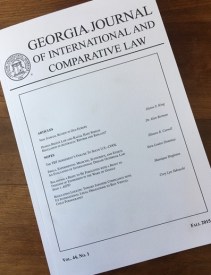
gjicl44_1Issues circling the globe are featured in  Volume 44 Issue 1 of the Georgia Journal of International and Comparative Law, or GJICL, just published and available online.

The volume begins with two articles, by scholars with ties to France, Australia, and New Zealand, as well as the United States:

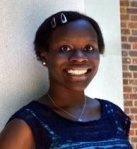
kingNew Judicial Review in Old Europe, by Alyssa S. King (right)

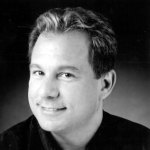
bermanHuman Rights Law and Racial Hate Speech Regulation in Australia: Reform and Replace?, by Dr. Alan Berman (left)

Four notes, by alums who received their Georgia Law J.D.s in 2016, also appear in the volume:

carrollThe TBT Agreement’s Failure To Solve U.S.–COOL, an analysis of a World Trade Organization dispute respecting country-of-original labeling, by Elinore R. Carroll (right)

domineyEbola, Experimental Medicine, Economics, and Ethics: An Evaluation of International Disease Outbreak Law, by Sara Louise Dominey (left)

singletonBalancing a Right to Be Forgotten with a Right to Freedom of Expression in the Wake of Google Spain v. AEPD, by Shaniqua Singleton (right)

► Regulating Lolicon: Toward Japanese Compliance with Its International Legal Obligations to Ban Virtual Child Pornography, by Cory Lyn Takeuchi

How will current and future conflicts test 2016 ICRC Commentary?

It’s our pleasure today to publish this post by Chanel Chauvet, a member of the Georgia Law Class of 2018 who serves as a Student Ambassador at our Dean Rusk International Law Center. This past summer, Chanel (below left) completed a summer course on international humanitarian law at Leiden Law School’s Grotius Centre for International Legal Studies at The Hague, Netherlands. While there, she accompanied Georgia Law Associate Dean Diane Marie Amann, who serves as the Special Adviser to International Criminal Court Prosecutor Fatou Bensouda on Children in & affected by Armed Conflict, at an NGO consultation on the draft Policy on Children, set for final release this autumn. In today’s post, one in a series on our recent conference on international humanitarian law, Chanel writes:
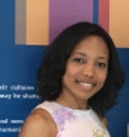
chanel_dianeicc1I feel honored to be able to attend the University of Georgia School of Law, not only for the premier education, but also for the incredible opportunities that are extended to students.

Most recently, the law school’s Dean Rusk International Law Center and Georgia Journal of International & Comparative Law, in conjunction with the International Committee of the Red Cross, coordinated “Humanity’s Common Heritage,” a conference on the 2016 ICRC Commentary on the First Geneva Convention. Organizers included Associate Dean Diane Marie Amann, Professor Harlan Cohen, and Kathleen Doty, the Center’s Director of Global Practice Preparation. Leading experts visited UGA Law to discuss this new development in the field of international humanitarian law, or IHL.

jean-marie-henckaertsFollowing introductions, the keynote speaker and UGA Law alumnus, Dr. Jean-Marie Henckaerts (right) delivered his lecture. To begin the conference, the Dean of University of Georgia School of Law, Peter “Bo” Rutledge, had given an introductory speech, in which he emphasized that UGA Law is a “home” to students and alumni. Personally, I thought it was great to have a distinguished alumnus working within the field of IHL return to our “home” to enrich the UGA Law community.

Dr. Henckaerts discussed three themes: his background; the foundations of international humanitarian law; and the process and methodology of updating the Commentaries to the four Geneva Conventions. This updating is needed, he said, because of advancements in technology and other forms of warfare that have developed since the Commentaries were last updated more than a half-century ago. The effort is significant because of its influence in enhancing the understanding of contemporary international law.

Background
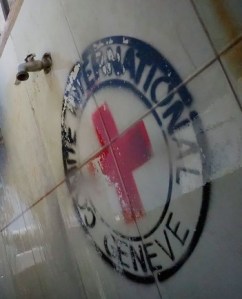
syria-water-aleppo-boy

Aleppo, Syria, 2015 (credit for ICRC photo)

Regarding his background, Dr. Henckaerts serves as the main editor to the Commentaries, and the Legal Adviser at the ICRC. A private organization that was established in 1863, the ICRC consists of 1,500 staff members in 80 different countries. They work to promote and implement IHL, in addition to other initiatives, such as assisting and protecting persons in and affected by armed conflicts. One of the ICRC’s most recent efforts to support this goal involved delivering water in Syria, a country currently plagued with an ongoing non-international armed conflict. Dr. Henckaerts noted that aside from the fact that water is a basic human need, it is also important to prevent the spread of disease.

Foundations

International humanitarian law essentially governs all aspects of war by regulating hostilities and protecting certain groups of people, including civilians and prisoners of war. It finds its basis in the four Geneva Conventions adopted in 1949, which are among some of the very few treaties that have been universally ratified or acceded to. I have listed below the primary purposes of each of the Geneva Conventions and the first two Additional Protocols:

  • GC 1: Conditions of the sick and wounded, medical personnel, medical units, medical transports, emblems, armed forces, rules on the missing, rules on the dead
  • GC 2: Conditions of the ship-wrecked and armed forces at sea
  • GC 3: Treatment of prisoners of war
  • GC 4: Protection of civilians in times of war

Additional Protocol I, which governs international armed conflicts, or IACs, and Additional Protocol II, which governs non-international armed conflicts, or NIACs, are also primary sources of international humanitarian law. These treaties are somewhat less regarded, though, demonstrated by the fact that they have not been ratified by all states.

According to Dr. Henckaerts, the value of 2016 ICRC Commentary on the First Geneva Convention is that it will serve as a tool and reference source on various topics of international humanitarian law.

Process & methodology

Jean S. Pictet (1914-2002),former ICRC Vice President, President of the Juridical Section and Director of General Affairs (photo credit)

With respect to the process and methodology of revising the Commentaries to the first Geneva Convention, he emphasized that the revision process was collaborative in nature. It was an effort between ICRC representatives and other IHL experts throughout the world to update the “Pictet Commentaries,” the Commentaries created shortly after the 1949 Geneva Conventions were adopted. Interestingly enough, the updated 2016 Commentary reflects diverging views extracted from various consultations between the experts.

Dr. Henckaerts also acknowledged that the Commentary cannot be regarded as the ultimate authority on the Geneva Conventions for a number of reasons:

  • First, states parties have not contributed to the clarification of the Commentaries. By the same token, there has not been a concerted public effort by any state to contribute its input to the updated Commentaries.
  • Second, the quality of the research and writing will determine the 2016 Commentary’s position of authority on the first Geneva Convention.

With regard to the process going forward, Dr. Henckaerts reported that the ICRC working group has both begun the revision process on the second Geneva Convention and implemented a timeline to complete the Commentaries to the remaining two Geneva Conventions.

Following this keynote address was a panel of IHL experts including Oxford Law Professor Dapo Akande, Emory Law Professor Laurie Blank, Major-General Blaise Cathcart, the Judge Advocate General of the Canadian Armed Forces, and New York University Law Professor Ryan Goodman. They offered their critiques on the 2016 Commentary. One question they asked was left unanswered: How did the ICRC determine that the Commentaries needed to be updated?

Other questions, posed by Professor Goodman, related to how the Commentaries would address the concept of transnational NIACS, and what would be the implications of this classification within the cyber realm. To illustrate this ideam he asked how the Commentaries would address people, spread across different states, who organized a coalition in the online realm and used cyber weapons.

There also seemed to be an overarching theme of the discussion. It centered on whether the Geneva Conventions should be interpreted through an originalist or an evolutionist perspective. The 2016 ICRC Commentary has provided enough deference to the original Commentaries, but it has evolved in a sense, in order to properly address the technological advances and military developments since the inception of the original Commentaries.

In any event, it is safe to say that all of the experts are curious to see how the current and future conflicts will test the 2016 ICRC Commentary.

For more information regarding the role of the Commentaries, please click here.

Professor West heads east: Upcoming media law lecture in Budapest

west-profileAmong the many University of Georgia School of Law professors whose work crosses national borders is Sonja R. West (right). In fact, Professor West will be traveling very soon to Hungary, to speak on Thursday, October 13, at the European Judicial Conference on Courts and Communication in Budapest, organized by Bíróság, Hungary’s National Office for the Judiciary.

Her talk, entitled “Improving Press Coverage of the Courts through Communication,” will examine various issues of failed communication between the press and the courts, as well as possible solutions.

It’s a topic well within her expertise. Professor West teaches courses in constitutional law, media law, and the Supreme Court at Georgia Law. Starting this spring, she will also teach media law at the university’s Grady College of Journalism, where she recently received a joint appointment. Her work on has been published in the reviews of Harvard, UCLA, Michigan law schools, among others. In recognition of her scholarship, the National Communication Association just awarded her its 2016 Franklyn S. Haiman Award for Distinguished Scholarship in Freedom of Expression.

She’s also has written for media outlets like Slate. Her other accomplishments include service as a law clerk to Supreme Court Justice John Paul Stevens and work as journalist in Illinois, Iowa, and Washington, D.C.

In addition to taking part in the judicial conference, Professor West plans to meet with Budapest-based alums of Georgia Law, and also with representatives from the Hungarian-American Fulbright Commission and faculty from the law faculty at Pázmány Péter Catholic University.

Become part of a 45-year tradition: Georgia Law Master of Laws (LLM)

2016brochure_coverwebIn 1973, a Belgian attorney became the first foreign-trained lawyer to earn a Master of Laws, or LLM, degree at the University of Georgia School of Law.

The tradition launched then continues today: Even as the our current LLM class of 2017 pursues studies, we work to build next year’s LLM student body. We welcome inquiries and applications for the Class of 2018.

As detailed in our brochure (online in booklet form here; in printable PDF here), Georgia Law LLMs may prepare to sit for a US bar examination, one among many concentrations:

  • Preparation for a U.S. Bar Examination
  • Business Law and Dispute Settlement
  • Family Law and Migration Law
  • Transnational, International, and Comparative Law
  • Public Institutions and the Law

It’s a vibrant program; see our Exchange of Notes blog posts here.

Members of that class will join an alumni/ae base of more than 450 Georgia Law LLMs, who have ties to 75 countries, on every continent in the world, and 10,000 alums overall. They include judges and law firm partners, leaders in governments and in intergovernmental and nongovernmental organizations, heads of corporate legal departments, and university professors.

Click here to join this tradition of excellence in international professional education, or here to apply now.

70 years ago, landmark international criminal law judgment at Nuremberg

This weekend marks the 70th anniversary of the Judgment of the International Military Tribunal at Nuremberg, a moment recorded in this New York Times front page:

at0070_7s

The judgment established that humans, and not only states, may be held responsible for violations of international law – a principle that the General Assembly endorsed in 1950. Recognition that individual acts mattered in the international law soon opened the way for recognition that acts committed against individuals also mattered. The Nuremberg Judgment thus stands as a foundational moment in the international human rights movement, as was recognized inter alia in a 1982 article by Georgia Law Professor Louis B. Sohn, when he was Emily & Ernest Woodruff Chair in International Law, a position I am now honored to hold.

Another Georgia Law professor who’s written about Nuremberg is my colleague Harlan Grant Cohen; these works include: ‘Undead’ Wartime Cases: Stare Decisis and the Lessons of History (2010); Historical American Perspectives on International Law (2009); The American Challenge to International Law: A Tentative Framework for Debate (2003).

My own writings, available here, include studies of the meaning of genocide and essays on women who worked as prosecutors, defense lawyers, and staff (no judges) at postwar trials in Nuremberg and Tokyo. “Women at Nuremberg” is a subject that many IntLawGrrls have addressed, not to mention many more posts on all aspects of international criminal law and international human rights law.

Seeking Global Practice Preparation Assistant: Georgia Law’s Dean Rusk International Law Center

sign2We’re looking for a great administrator here at the Dean Rusk International Law Center. To be precise, we’re looking for a Global Practice Preparation Assistant (aka Administrative Specialist I).

This person will support the Global Practice Preparation portfolio at the Center under the supervision of the Director for Global Practice Preparation and the Associate Dean for International Programs & Strategic Initiatives. The successful applicant will provide administrative, organizational, and logistical support for an array of Center programs, including conferences, lectures, and events, study abroad, Global Externships, faculty exchanges, visiting scholars, professional trainings, and research projects. Experience in event planning, demonstrated organizational ability, and social media or marketing skills are desirable.

The job includes the opportunity to interact with a diverse array of individuals, including students and scholars from the United States and abroad, distinguished visitors, faculty and staff, policymakers, and potential or actual donors. It also offers exposure to a wide range of international legal and policy issues. Accordingly, we particularly welcome applications from individuals with a demonstrated interest in international law, policy, and foreign affairs, and those with language skills and/or travel experience.

To apply, click here and follow registration/application instructions, inserting the posting number 20161972 in order to reach the vacancy.

We plan to fill this position asap, so if you’re interested, don’t delay!

Role of “commentaries” key to significance of ICRC project

The role of “commentaries” in the shaping of contemporary international law proved a recurring question in the just-concluded morning public plenary of today’s conference, “Humanity’s Common Heritage: 2016 Commentary on the First Geneva Convention.”

img_0266First broaching the issue was the keynote, Jean-Marie Henckaerts (right). A Georgia Law alumnus, he’s the Legal Adviser at the International Committee of the Red Cross who’s leading the ICRC’s multiyear effort to produce 21st C. commentaries on the meaning of the core instruments of international humanitarian law; that is, the four Geneva Conventions of 1949 and their subsequent Protocols Additional. Joining him were participants in the panel that followed: speakers Major-General Blaise Cathcart, Judge Advocate General of the Canadian Armed Forces, NYU Law Professor Ryan Goodman, Emory Law Professor Laurie R. Blank, and Oxford Law Professor Dapo Akande, plus the moderator, yours truly, Associate Diane Marie Amann. I’ve the honor of serving as director of the Dean Rusk International Law Center at the University of Georgia School of Law, which is sponsoring the event along with the ICRC and the Georgia Journal of International & Comparative Law.

Soon to appear in print, the 2016 Commentary is available online here. At that website, the 2016 Commentary is situated alongside an earlier version, published in the 1950s by ICRC jurist Jean Pictet – and there’s a rub.

“Commentaries are not unusual,” Henckaerts remarked, adding that tomes exist commenting on nearly all the world’s treaties. Though true, the observation pretermits the sui generis status of the author of the 2016 Commentary – the ICRC, since 1863 a Geneva-based private organization that has led developments related to the shaping and compliance with international humanitarian law.

The earlier volumes “are ‘capital C,’ or maybe all caps,” Blank said. Others agreed, pointing not only to the ICRC’s unique status, but also to the fact that the Pictet commentaries  occurred when the intentions of the negotiating states parties – to quote Goodman, “what the framers had in mind” – were well within memory. Continuing her analogy, Blank said she regarded the 2016 effort as a “small c” commentary –  an extraordinary collection of expert analysis, but not exactly the same thing” as the Pictet effort.

Akande broadened the conversation, examining the ICRC commentaries within the context of public international law and treaty interpretation. Pictet’s work may enjoy “unjustifiable authority,” he said, adding that the constitutive nature of the new effort might outweigh any resulting loss of authoritative status. He then called upon the ICRC consistently to be “upfront” about how and why it arrived at its interpretive conclusions.

The points provoked multiple questions: How are treaties to be interpreted? What individuals or entities have authority to engage in interpretation? What weight do interpretations of states parties deserve – and with regard to universally ratified treaties like these, which states parties? What weight to a private organization like the ICRC? Nongovernmental organizations? And what about the victims of armed conflict – do their voices matter in this interpretive effort, and if so, how can victims be given voice?

The search for answers to these and many other questions continues this afternoon. In 3 consecutive closed sessions, about 2 dozen experts are discussing: (1) the Common Article 1 obligation to “ensure respect” for the Geneva Conventions; (2) protection of the wounded, sick, and other specially protected persons; and (3) classification of armed conflict.

President taps Georgia Law alum for Cultural Property Advisory Committee

President Barack Obama is appointing Georgia Law alumnus James K. Reap to the U.S. Department of State Cultural Property Advisory Committee, according to a White House announcement issued Friday.

reap_web-150x150Reap, a Professor in the University of Georgia College of Environment + Design and affiliated faculty member of the university’s African Studies Institute, is a globally renowned expert on issues of cultural property and the protection of cultural heritage amid armed conflict and similar threats. He coordinates the university’s Master’s degree in Historic Preservation, as well as the dual J.D./M.H.P. Reap frequently takes part in initiatives of our Dean Rusk International Law Center; indeed, he’ll serve as an expert at this week’s Georgia Law-International Committee of the Red Cross conference entitled “Humanity’s Common Heritage: The 2016 Commentary on the First Geneva Convention.”

The many professional activities of Reap, a former Fulbright Scholar, include leadership positions in the International Council of Monuments and Sites, as well as the Lawyers’ Committee for Cultural Heritage Preservation and the U.S. Committee of the Blue Shield. He’s been active on preservation issues in Eastern and Southern Europe, Central Asia, Africa and the Middle East, and the Caribbean.

“Humanity’s Common Heritage”: Georgia Law-ICRC conference on Geneva Conventions Commentaries

gjicl_confposter

Humanity’s Common Heritage – norms codified in international humanitarian law treaties to which all countries of the world belong – will be the topic of a conference this Friday, September 23, at the University of Georgia School of Law in Athens, Georgia.

The conference title derives from this observation about those treaties, the four 1949 Geneva Conventions, by Peter Maurer, President of the International Committee of the Red Cross:

“We know that the values that found expression in the Geneva Conventions have become an essential part of our common heritage of humanity, as growing numbers of people around the world share a moral and legal conviction in them. These contradicting realities challenge us to act: to react to the suffering and violations of the law, and to prevent them from occurring in the first place.”

At the core of this daylong event will be the Commentaries on which the ICRC is now working. Published online earlier this year was the initial Commentary, covering the Convention (I) for the Amelioration of the Condition of the Wounded and Sick in Armed Forces in the Field, as well as the articles common to all 4 Conventions. (Prior posts here, here, and here.) Experts will examine this 2016 Commentary and its role in the development, promotion, and implementation of contemporary international humanitarian law.

thumbnail_p1130913We’re honored that the Georgia Law alumnus leading that project, Geneva-based ICRC legal adviser Jean-Marie Henckaerts (LLM 1990), will keynote our conference, and also that the ICRC is cosponsoring the conference, along with our Center and our Georgia Journal of International & Comparative Law. This student-run review, which celebrates its 45th anniversary this year, will publish papers by the assembled experts and Georgia Law student rapporteurs.
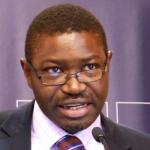
akandeDr. Henckaerts will be part of a public panel from 9:15 a.m.-12 noon in Georgia Law’s Hatton Lovejoy 0042401-14ABCourtroom. Speaking in that morning session will be: Oxford Law Professor Dapo Akande; Emory Law Professor Laurie R. Blank; Major-General Blaise Cathcart, Judge Advocate General of the Canadian Armed Forces; New York University Law Professor Ryan Goodman; and cathcartmoderator Diane Marie ryan_goodman_photo_horizontalAmann, Associate Dean for International Programs & Strategic Initiatives and Emily & Ernest Woodruff Chair in International Law at Georgia Law, and also the International Criminal Court Prosecutor’s Special Adviser on Children in & affected by Armed Conflict.

Joining them in closed sessions during the afternoon will be additional international humanitarian law experts experts: Georgia Law Professor Harlan G. Cohen; Houston College of Law Professor Geoffrey S. Corn; American University Law Professor Jennifer Daskal; Jonathan Davis, a University of Georgia international affairs graduates and U.S. Department of State Attorney-Advisor; Kathleen A. Doty, our Center’s Director of Global Practice Preparation; Julia Grignon, Université Laval Law; Rutgers Law Professor Adil Haque; Christopher Harland, Legal Adviser at the ICRC’s Washington, D.C., office; Eric Jensen, U.S. Department of Defense; Michael Meier, U.S. Army Judge Advocate General Corps; Naz K. Modirzadeh, Harvard Law; Nicholas W. Mull, U.S. Marine Corps Judge Advocate General Corps (ret.); Vanderbilt Law Professor Michael A. Newton; Sasha Radin, U.S. Naval War College; Professor James K. Reap (JD 1976) of the University of Georgia, who’s just been named to the State Department’s Cultural Property Advisory Committee; Georgia State Law Professor Shana Tabak; and Creighton Law Professor Sean Watts.

Full description and details about the conference here.

Former ambassador to talk on foreign policy and US Presidential election

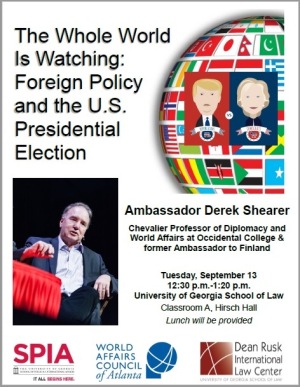
untitledIssues of foreign policy and national security remain foremost in many voters’ minds as the 2016 U.S. Presidential election has entered its final, post-Labor Day lap. We’re thus delighted to be welcoming an expert in this areas to our Athens campus next week:

Fresh from recent lectures in Oxford, Auckland, and Berlin, Ambassador Derek Shearer will deliver a public talk entitled “The Whole World Is Watching: Foreign Policy & the U.S. Presidential Election” at 12:30 p.m. this Tuesday, September 13, at the University of Georgia School of Law. Sponsoring the talk is Georgia Law’s Dean Rusk International Law Center; cosponsors are the World Affairs Council of Atlanta and the University of Georgia School of Public & International Affairs.

Shearer, whom I’ve long been privileged to call a colleague, is Chevalier Professor of Diplomacy and World Affairs at Occidental College in Los Angeles who served as an economics official in the U.S. Department of Commerce, and then as U.S. Ambassador to Finland from 1994 to 1997. He’s the author of several books and a frequent writer on and contributor to public policy discussions;  his articles have appeared in The New York Times, Wall Street Journal, and International Herald Tribune.

In addition to the talk, Shearer will speak to students in Election Law and Strategic Intelligence courses.

toigoWe’re also very pleased to welcome Sue Toigo (left), Chairman of Fitzgibbon Toigo Associates and Shearer’s wife. She’ll discuss corporate responsibility with Georgia Law Business Ethics students.

For additional details, e-mail ruskintlaw@uga.edu.

(Cross-posted from Diane Marie Amann)