University of Georgia School of Law Professor Peter B. “Bo” Rutledge presented “NextEra: The ‘Next Era’ of the Chromalloy Conundrum” as part of the Conference on Emerging Issues in International Arbitration at the Duke University School of Law during February.
Peter B. “Bo” Rutledge holds the Talmadge Chair of Law. From 2015 through 2024, he served as dean of the University of Georgia School of Law. He is the author of the book Arbitration and the Constitution and co-author with Gary Born of the book International Civil Litigation in United States Courts. His works have been published by the Yale University Press, the Oxford University Press and the Cambridge University Press, and his articles have appeared in a diverse array of journals such as The University of Chicago Law Review, the Vanderbilt Law Review and the Journal of International Arbitration. He also regularly advises parties on matters of international dispute resolution (litigation and arbitration).
Today, we welcome a guest post by Eleanor Cox, a member of the University of Georgia School of Law class of 2026. Cox is the eleventh Georgia Law student to participate in a semester-long international externship and the third recipient of a grant from the Halle Foundation to support her externship in Germany. The semester-long externships overseas initiative is an extension of the Center’s existing Global Externships Overseas and is offered jointly between the Center and the law school’s Clinical and Experiential Program. Cox’s post describes her experience as a legal extern with Bodenheimer, a German law firm specializing in international arbitration. Cox was based in Bodenheimer’s Berlin office, where she worked under Georgia Law alumnus Dr. Christof Siefarth (LL.M., ’86). Dr. Siefarth, who is also a member of the Dean Rusk International Law Center’s Advisory Council, is a Partner at Bodenheimer.
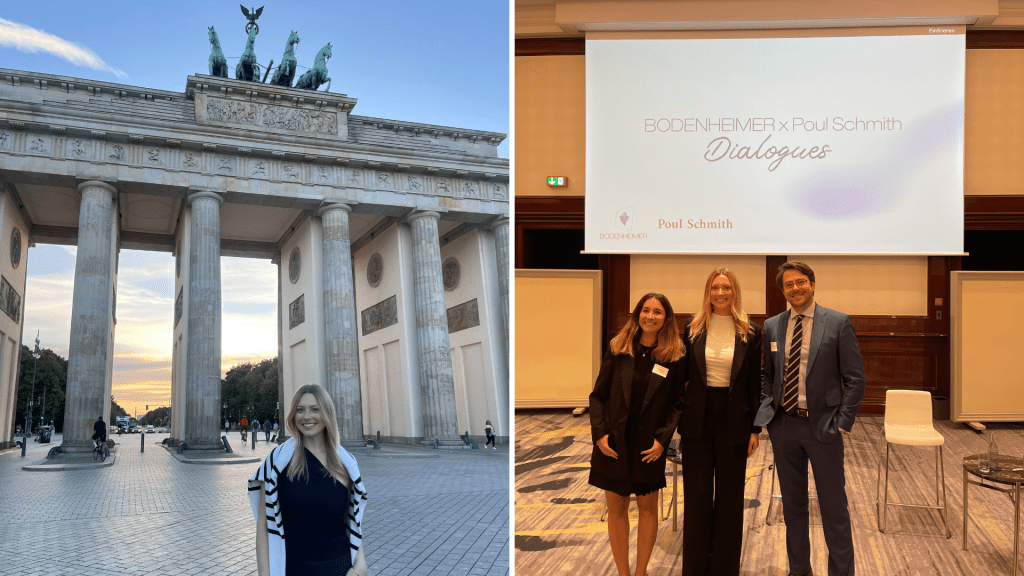
“Do it afraid.” That simple reminder became my mantra during my semester abroad. It is an acknowledgement that discovery rarely feels comfortable at the start. Stepping into a new country, a new legal system, and a new professional culture required me to move forward even when I felt unsteady. But the very discomfort I feared became the gateway to the most meaningful growth I have experienced. During the fall 2025 semester, I externed at BODENHEIMER Law Firm in Berlin—a firm specializing in international dispute resolution with offices also in Cologne.
Living in Berlin
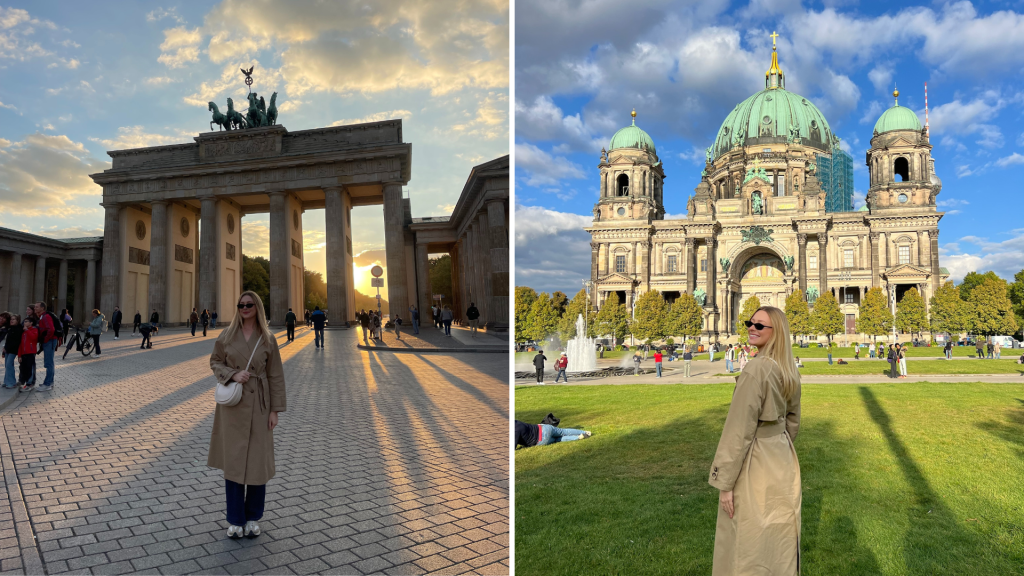
Berlin is a place that refuses to simplify itself. Its history is felt in every neighborhood, yet its present is defined by internationalism and constant reinvention. I met a woman who was nine years old when the wall fell, and she learned that the world had changed only when her family from the East knocked on her family’s front door for the first time. I also met a Syrian student working to adjust to the new language, culture, and that in-between feeling of starting over. Encounters like these reminded me that, as the most populated city in the European Union, Berlin cannot be described as one thing. It is one place that is also all places.
What I will miss most is the sense of community Berliners create without even trying: my morning conversations with a bakery owner on the way to the S-Bahn station, watching the city rush outside the second the sun appears, my favorite neighborhood dog Leo religiously greeting me at a local coffee shop, and never knowing whether a parade would materialize around the corner. It is both unpredictable and deeply human. One of my favorite things about Berlin is living in a city that constantly asks you to discover yourself and expand. It stretches you in small ways, like in the languages you hear, the people you meet, and the art tucked in quiet corners of the city.
Substantive Work and Office Culture
At BODENHEIMER, I worked on cross-border legal matters ranging from construction to inheritance. The international nature of the work required me to expand both my legal thinking and cultural awareness. I worked on matters involving different jurisdictions, which meant relying on machine-translated documents and learning the procedural rules of various arbitral institutions. Unsure of how much work would be available due to my limited German-language skills, I was surprised by how much opportunity being a native English speaker provided. I was able to assist in the drafting of statements of claim, attend case management conferences, and research cross-border enforcement.
With colleagues from four different continents, some of the most valuable learning happened outside of my actual assignments. Long lunches turned into lively conversations about world politics, personal histories, cultural differences, and the small absurdities that make international work so rich. These moments helped me understand the human side of international practice and reminded me how central curiosity is to this area.
Lessons to Carry Forward
The most challenging part of the placement was the constant unfamiliarity. But that challenge became the most rewarding part, too. Every day, I proved to myself, in small ways, that I could adapt and grow through trial and error. I learned to celebrate being unfamiliar rather than feel embarrassed by it. That shift in mindset is something I will carry with me.
Looking back, my semester in Berlin helped me see myself differently, personally and professionally. I became more confident, more flexible, and more willing to step into the unknown. What first felt foreign and intimidating slowly became more familiar. Living and working abroad showed me that the moments that feel uncomfortable are often the ones that push us forward the most. And for me, that made this experience not just educational, but truly transformative.
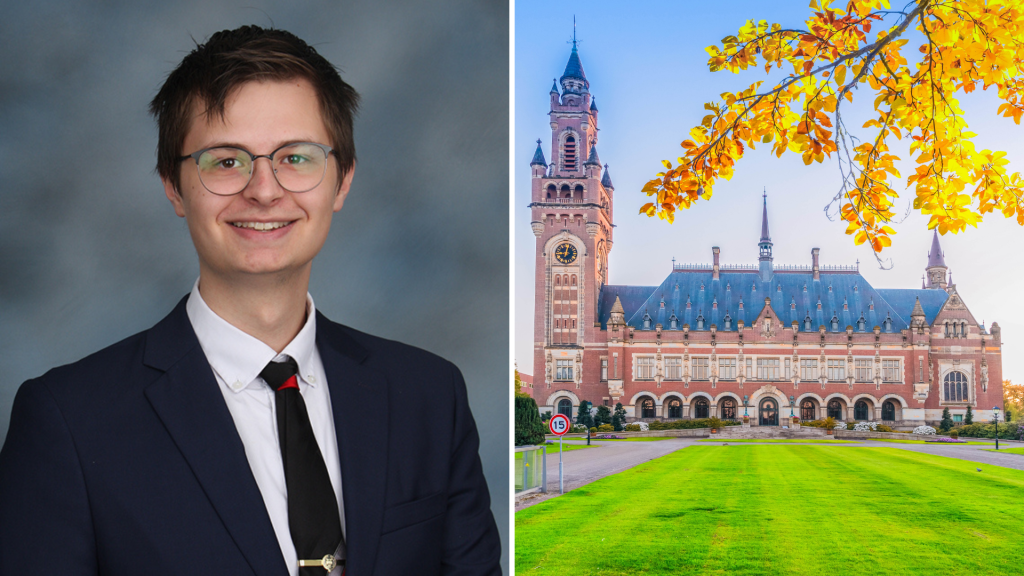
University of Georgia School of Law student Isaac Clement (J.D. ’27) was selected to participate in The Hague Academy of International Law‘s Private International Law summer course. This initiative will take place at the Peace Palace in The Hague, Netherlands.
Over the course of three weeks in the summer, Clement and others from around the world will engage in advanced study of international private law, international arbitration, and cross-border commercial transactions. These courses and lectures are taught by academics, practitioners, and diplomats from leading institutions around the world.
From The Academy’s website:
The Academy is a centre for teaching and research in public and private international law, with the aim of furthering the scientific study of the legal aspects of international relations. The United Nations General Assembly regularly expresses its appreciation “to the Hague Academy of International Law for the valuable contribution it continues to make to the Programme of Assistance, which has enabled candidates under the International Law Fellowship Programme to attend and participate in the Fellowship Programme in conjunction with courses at the Academy” and notes “the contributions of the Hague Academy to the teaching, study, dissemination and wider appreciation of international law, and calls upon Member States and interested organizations to give favourable consideration to the appeal of the Academy for a continuation of support and a possible increase in their financial contributions, to enable the Academy to carry out its activities, particularly those relating to the Summer and Winter Courses, regional courses and programmes of the Centre for Studies and Research in International Law and International relations.”
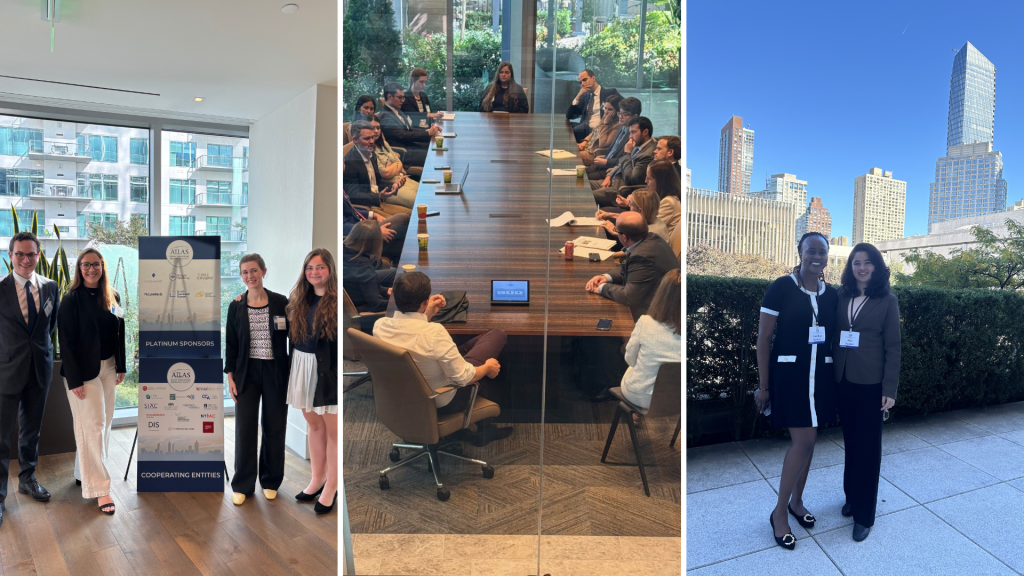
This fall, six University of Georgia School of Law students received Louis B. Sohn Professional Development Fellowships to support their attendance of international law conferences. Named after the inaugural holder of the Emily and Ernest Woodruff Chair in International Law at Georgia Law, Sohn Fellowships enable students to attend professional development opportunities related to international law. The Fellowships are administered by the Dean Rusk International Law Center.
Zhao was selected to be a 2025 Student Ambassador (detailed here). She was one of eight Ambassadors selected nationwide to assist with International Law Weekend.
Ross shared about her favorite panel from the AtlAS annual conference:
I really enjoyed the panel discussion on the impact of tariffs on international arbitration. This panel was addressing tangible issues regarding how businesses, countries, and counsel are adjusting with the current instability surrounding tariffs in the United States. This panel was applying concepts I recently learned about in my International Business Transactions class, including Incoterms and articles of the CISG, and discussing questions of interpretation and application that brought to life what I have been studying in a very real way.
Reflecting on the experience of attending the ABILA ILW, Paudel stated:
This conference has encouraged me to advance my academics and career in international law. Personally, it allowed me to gain hands-on insights on different arenas of international law. Hearing invaluable thoughts of international legal experts, law professors , judges, partners and directors has increased my in-depth knowledge on international law, that I couldn’t have acquired from any written book or article. Professionally, the conference allowed me to build strong networks with the panelists, and participants from other law schools.
Burns noted her biggest takeaway from the ABILA ILW:
My biggest takeaway was an increased confidence in the future of international law. Many, if not all, of the panelists we heard from were exasperated with recent blatant violations of international treaties and a lack of action from international tribunals. Their frustration and insistence on continuing to push for change was inspiring, and they gave me hope that there are still many high-level international professionals who have not thrown in the towel yet.
To read prior posts about Georgia Law students using Sohn Fellowships to attend professional development opportunities, please click here and here.
Today, we welcome a guest post by Elizabeth Ferguson, a member of the University of Georgia School of Law class of 2025. Ferguson participated in a semester-long international externship in spring 2025. The semester-long externships overseas initiative is an extension of the Center’s existing Global Externships Overseas and is offered jointly between the Center and the law school’s Clinical and Experiential Program. Ferguson’s post describes her experience as a legal extern with Bodenheimer, a law firm that handles disputes across jurisdictions, including cases in litigation, arbitration, and mediation and other ADR proceedings. Ferguson was based in Berlin, Germany, where she worked under Georgia Law alumnus Dr. Christof Siefarth (LL.M., ’86).
When I decided to participate in my semester-long Global Externship at Bodenheimer in Berlin, Germany I was looking for a new way to challenge myself academically. I concluded that taking myself far beyond the law school classroom I had spent two and a half years becoming familiar with would be the perfect opportunity. Although I was ready for a challenge, I didn’t anticipate how the lessons I learned in international arbitration would expand beyond its subject matter and into my professional life forever.
Bodenheimer is an international arbitration firm with a truly global scope. As a result, during my four months there, I researched many issues spanning multiple jurisdictions: I immersed myself in Chinese product quality standards, untangled questions of Indian law, and more.
When I received my first assignment, concerning a legal issue relying on law in an Asian country, the reality set in that I did not have the basic building blocks I needed to begin. When I received assignments on an unfamiliar issue while working at American law firms, I had a certain base knowledge to assist me because law school taught me the basics of the American civil and criminal systems and how to research them. However, in this situation, I quickly realized, I had none of those research tools or knowledge ready to go.
Although I conquered each task with the help of my colleagues, law school staff, and by familiarizing myself with the tools and knowledge used in international arbitration, I relived this fearful realization many times. Each time I received an assignment based in a jurisdiction I had not yet faced, I felt as though I was back at square one: navigating a new legal universe, where I didn’t speak the language, didn’t know the rules, and did not know where to begin. In American law firms, I had the comfort of a familiar legal system, a base knowledge to lean on, and research tools I used frequently. However, in Berlin, I often found myself staring at an assignment wondering, “Where do I even start?”
As a result, I began to struggle with something I’d never felt before: imposter syndrome. Imposter syndrome is a phenomenon where professionals experience feelings of inadequacy, despite evidence of their competence and achievements. I knew that I was given this opportunity for a reason, but nevertheless I could not shake this feeling of self-doubt and compare myself to my very impressive colleagues. Most of the attorneys in my office were fluent in at least three languages and were qualified attorneys in several countries! As someone who only spoke English and had not yet even graduated law school, I couldn’t help but compare myself to them and worry that I was simply not up to the task. As a result, my imposter syndrome began to eat away at my confidence.
But here’s the thing about throwing yourself into the deep end: you must learn to swim.
Over time, as I completed challenging assignments and learned from my helpful and knowledgeable colleagues, I developed strategies to identify, build, and promote my value as a young attorney in this unfamiliar environment which helped me combat my imposter syndrome. For example, one attorney frequently asked me to edit English language documents and made the observation that I was the only native English speaker in the office. At this moment, I realized that I was too busy comparing myself to my colleagues, who could all speak three to five languages, to recognize that my native English skills were a unique asset in my office when my colleagues needed someone to edit or translate documents into English. By the end of the semester, I was able to recognize my value in many ways and recognize the meaningful contributions I made through my work product.
Working at Bodenheimer taught me more than just the inner workings of international arbitration: it taught me how to quiet the inner critic, embrace uncertainty, and how to identify and promote my value, rather than focus on perceived shortcomings.
Berlin will always hold a special place in my heart, not just for its beautiful cathedral, the delicious Franzbrötchen, and the amazing colleagues I met, but for the reminder that growth often comes disguised as discomfort.
As I head into my next professional chapter, I’ll carry with me the lesson that the doubts you feel today will become issues you will conquer tomorrow.
***
Applications are open for spring 2026 semester-long Global Externships Overseas (GEOs). All current 2Ls and 3Ls are invited to submit an application by September 15. For more information and the application, please email: ruskintlaw@uga.edu
Two students will work in private law settings: Bartholomew with extern Gleiss Lutz in Stuttgart, Germany, while Cox will extern with Bodenheimer in Berlin, Germany, under the supervision of Dr. Christof Siefarth (LL.M. ’86). Reed has a public interest placement and will extern with the Office of the Privacy Commissioner of Bermuda under the supervision of Alexander White (J.D. ’09). Through their GEOs, students will gain experience in practice areas such as international arbitration and data privacy.
Cox has been selected as the recipient of a grant from the Halle Foundation to support her externship in Germany. Based in Atlanta, The Halle Foundation seeks to promote understanding, knowledge and friendship between the people of Germany and the United States. Cox is the third Georgia Law student to receive this grant to support a semester-long GEO in Germany, following Jack Buckelew (J.D. ’25) and Pace Cassell (J.D. ’26).
Since spring 2021, eight Georgia Law students have participated in semester-long GEOs, an extension of the Center’s existing GEO initiative that is offered jointly between the Center and the law school’s Clinical and Experiential Program. Professor Jessica L. Heywood, Clinical Associate Professor and Washington, D.C., Semester in Practice Director, teaches and directs students externing abroad in partnership with Taher Benany, Associate Director of the Dean Rusk International Law Center, who oversees the GEO initiative. Like Georgia Law’s summer GEOs, semester-long GEOs are legal placements placements around the world that offer all law students the opportunity to gain practical knowledge and experience in an international setting. They are typically supervised in their work by Georgia Law alumni/ae. Students return to Athens with new colleagues and mentors, legal practice skills that set them apart from their peers, and a deeper appreciation of the global legal profession.
***
The Center is currently accepting applications for spring 2026 semester-long GEOs; all 1L and 2L students are eligible to apply. Applications are due September 15. For more information and to access the application, please email Taher Benany: taher.benany@uga.edu
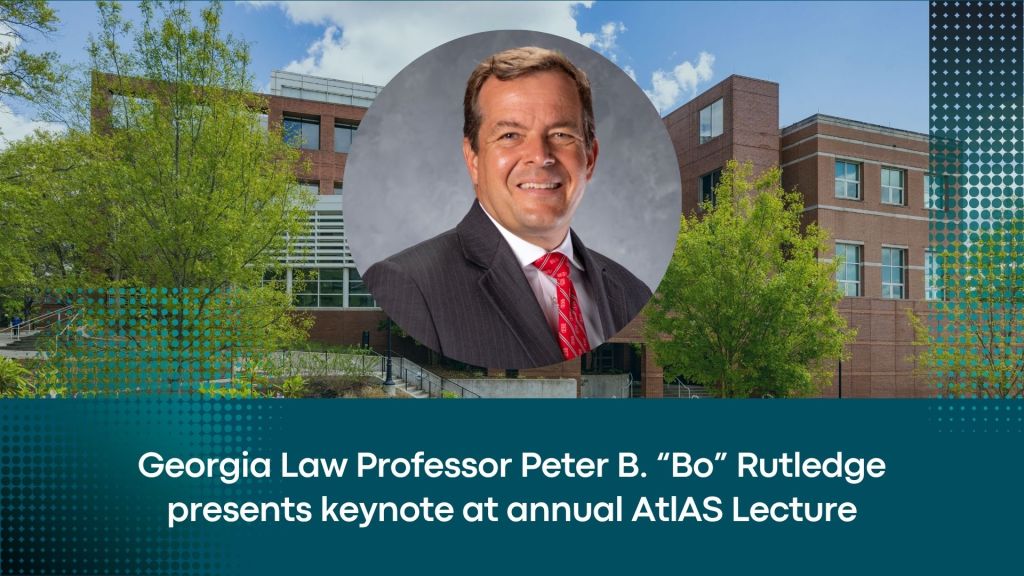
University of Georgia School of Law Professor Peter B. “Bo” Rutledge presented “Perpetual Peace Reconsidered: Arbitration and International Law in the 21st Century” as the keynote speaker at the 10th Annual Atlanta International Arbitration Society Lecture earlier this month. In his lecture, Rutledge considered the use of arbitration and alternative dispute resolution to resolve cross-border conflicts in the 21st century.
Rutledge holds the Talmadge Chair of Law. From 2015 through 2024, he served as dean of the University of Georgia School of Law. He is the author of the book Arbitration and the Constitution and co-author with Gary Born of the book International Civil Litigation in United States Courts. His works have been published by the Yale University Press, the Oxford University Press and the Cambridge University Press, and his articles have appeared in a diverse array of journals such as The University of Chicago Law Review, the Vanderbilt Law Review and the Journal of International Arbitration. He also regularly advises parties on matters of international dispute resolution (litigation and arbitration).
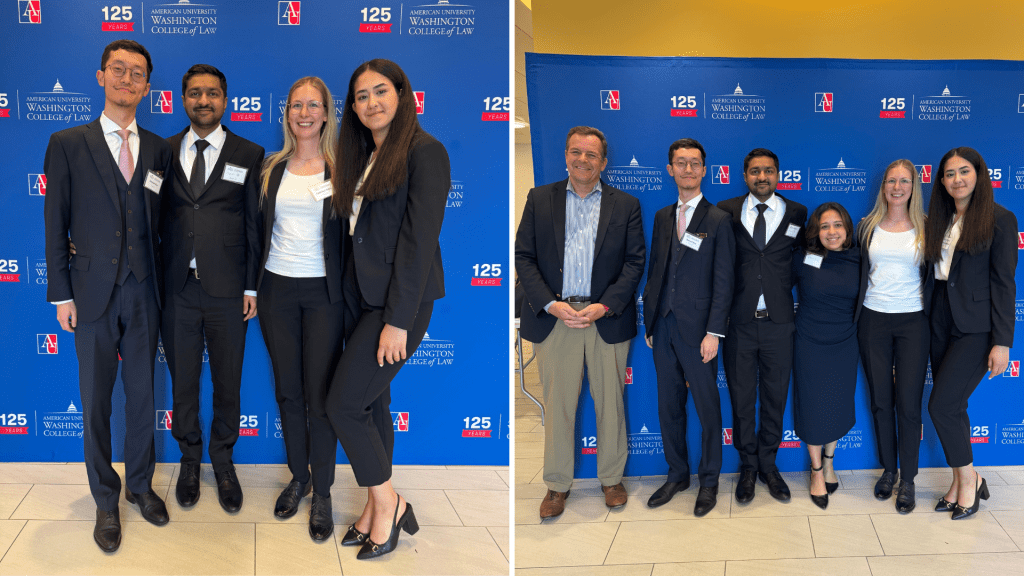
Members of the University of Georgia School of Law LL.M. Class of 2025 won the 12th International Commercial & Investment Arbitration Moot Competition hosted by American University Washington College of Law in Washington, D.C. earlier this month. This event was created specifically for LL.M. students to foster the study of international arbitration for the resolution of international business and investment disputes.
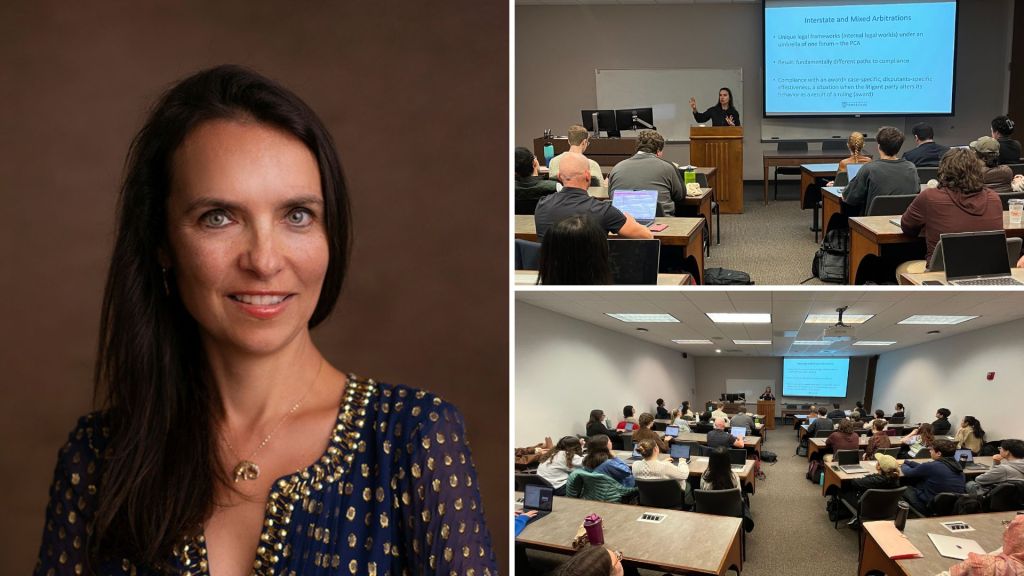
Emilia Justyna Powell, Professor of Political Science and Concurrent Professor of Law at the University of Notre Dame, presented a talk entitled “Compliance with Decisions of the Permanent Court of Arbitration” at the University of Georgia School of Law earlier this week.
Powell presented her findings on the Permanent Court of Arbitration’s award compliance. She presented (qualitatively and quantitively) the underlying reasons for the difference in award compliance in State vs State disputes and Investor vs State Disputes.
Powell has written extensively on international law, international courts, territorial and maritime disputes, international dispute resolution, the Islamic legal tradition, and Islamic constitutionalism. Her prominent publications include a book published in Oxford University Press (2020) entitled Islamic Law and International Law: Peaceful Resolution of Disputes, a Cambridge University Press (2011) book, Domestic Law Goes Global: Legal Traditions and International Courts (with Sara McLaughlin Mitchell). Her new book, The Peaceful Resolution of Territorial and Maritime Disputes (with Krista E. Wiegand) has been published with Oxford University Press in 2023. Currently, professor Powell is working on several research projects devoted to international law, the global order, and constitutional studies: the Permanent Court of Arbitration (with Aníbal Pérez-Liñán), the International Maritime Organization (with Michael J. Atkins, JAG, US Coast Guard), human values in constitutions around the world (with Jarek Nabrzyski and Agnieszka Marczak-Czajka), the evolution of Afghan constitutional order (with Josh Paldino, JAG, US Army), customary law and international law in the world constitutions (with Christina Bambrick and Eric Lease Morgan), and Islamic militant groups’ behavior in the context of humanitarian law (with Jessica Stanton and Tanisha Fazal).




 exchange of notes