 I had the pleasure of spending last week at the United Nations headquarters in New York City, attending the 63d session of the Commission on the Status of Women (CSW). CSW is an intergovernmental body “dedicated to the promotion of gender equality and the empowerment of women.” It was established by the Economic and Social Council (ECOSOC) of the United Nations in 1946. I am grateful to have served as an NGO observer on behalf of the American Society of International Law, which holds special consultative status to ECOSOC.

CSW takes place annually over a two-week period. This year, CSW was chaired by Ambassador Geraldine Byrne-Nason of Ireland, and focused on the theme of “social protection systems, access to public services and sustainable infrastructure for gender equality and the empowerment of women and girls.” During the course of CSW, state delegates negotiate recommendations, or agreed conclusions, related to this theme. The draft agreed conclusions that were discussed during the 63d CSW urge states, as well as other relevant organizations and institutions, to:
- strengthen the normative, legal, and institutional environment for gender equality;
- address gender gaps and biases in social protection;
- transform public services for gender equality and women’s empowerment;
- make infrastructure investment work for women and girls; and
- mobilize resources, strengthen accountability, and improve evidence related to the experiences of women and girls.
 Beyond the formal meetings and negotiations, participating states and organizations present a dizzying array of side and parallel events during the commission. I attended many robust sessions, in particular those that dealt with women, peace, and security (WPS). These ranged from from conversations about increasing women’s participation in peace processes, to discussions on challenges facing the implementation of National Action Plans in the Arab Region, to presentations by national and NGO representatives on the challenges to the WPS Agenda ahead of its 20th anniversary next year.
 This was my first time attending CSW. It was an incredible gathering, at which impassioned people from around the world worked to improve the the status of women and girls in a range of roles and contexts: participants included government officials, advocates and activists, religious leaders, teachers, and students.
The energy of the week was tremendous: at a town-hall meeting for NGO representatives with UN Secretary-General António Guterres, delegations took turns singing songs from their home countries while we waited for the Secretary-General to arrive. It was profoundly inspiring to see such a diverse collection of people – people with the common goal of achieving gender equality – connecting, building alliances, and sharing experiences.

 We at the University of Georgia School of Law Dean Rusk International Law Center are delighted to welcome Benjamin Zawacki, a Bangkok-based human rights researcher and advocate, to campus to discuss his recently-released book,
  Professor


 The Legal Unit of the HRC uses several legal and policy strategies to achieve this purpose. These include: filing domestic complaints against Israeli Defense Forces orders; filing complaints with various international human rights bodies; conducting international awareness campaigns; and directly educating Palestinians about their rights. I had the opportunity to work on several of these complaints. On one filed with the
  We are deeply honored to announce that one of our distinguished international law alumnae,
  She returned to Georgia Law’s Athens campus last month to receive our alum association’s
 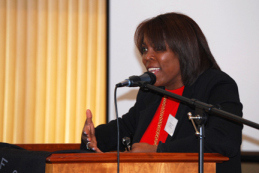 Among our most distinguished Georgia Law alumnae is
 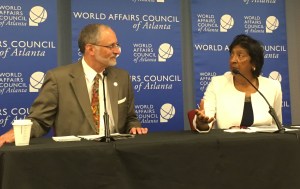 “The biggest violators of human rights are states themselves, by commission or omission.”
 I was honored to give welcoming remarks at the breakfast. Georgia Law’s
  On this and other issues, she said, advocates endeavor to encourage states first to obligate themselves to respect and ensure human rights, and then to implement the undertakings they have made in this regard:
 Beginning this year, Georgia Law’s annual
  CIFAL Atlanta joins an International Judicial Training partnership forged in the late 1990s by Georgia Law’s
 “dedicated to the promotion of peaceful and inclusive societies for sustainable development, the provision of access to justice for all, and building effective, accountable institutions at all levels.”
 exchange of notes