
“Africa’s time”: Team members reflect on SE Model African Union summit

logoIt’s our pleasure today to publish this post, jointly written by the Georgia Law team that last week was named Best Delegation at the Southeast Model African Union, and so is eligible to compete in the 35th annual national competition in February in Washington, D.C. The 6 students on the team each won individual achievement awards at the event, which was hosted by the University of Georgia African Studies Institute and cosponsored by the law school’s Dean Rusk International Law Center. They write:

Introduction

“This is Africa’s time.”

So said the keynote speaker and Honorary Consul of Sierra Leone, Cynthia Jarrett-Thorpe, to delegates at the 20th Annual Southeast Model African Union, This was the beginning of what turned out to be an eventful competition. Over the course of the next 2-1/2 days we would be tasked with working together in various negotiations, in order to provide solutions to complex situations on behalf of the country we represented, the Republic of Niger.

wackym_lgr

► Rebecca Wackym left, listens to statement by delegate from South Sudan

Rebecca Wackym, 1L, Executive Council

My role as a delegate for the Republic of Niger in the Executive Council was not only as an advocate for the interests of Niger, but also a servant to the interests of the entirety of the African Union. As a member of the Executive Council, I was not required to draft or advocate for a resolution. I introduced a hypothetical crisis situation caused by Boko Haram to the committees, who then had to create resolutions to solve the crisis.

Regarding the process, I had to work with other delegates in the Executive Council to first decide on how to setup the crisis in a way that would guide them to a solution while simultaneously, allowing each committee to achieve the goals set forth in the Union’s Agenda 2063.

The Executive Council ferociously debated how we wanted to achieve these goals in the context of the Boko Haram crisis. For example, we contemplated:

  • Would we ask the Committee on Peace and Security to involve states with more resources to combat Boko Haram?
  • Would we rather rely on our own resources, even though we had far less than the Americans?

I had to advocate for a position that struck a balance between safety and sovereignty of Niger and the goals of the Agenda. We eventually negotiated an agreement to ask the committees to formulate plans in a tiered manner, which put the African Union’s sovereignty first, but allowed for support outside of the Union.

However, our work did not end with tasking the committees. We also were tasked with creating a final report, called a “communiqué.” We had discretion to adopt an entire committee’s resolution, or certain parts, or to scrap the entire resolution and draft our own. At this point, we divided into groups so that we could discuss the edits, if any, that we wanted to make to the resolution. I was asked to look over the Committee on Democracy, Governance, and Human Rights’ resolution because the other delegates believed that my whole t3 months in law school afforded me more expertise in regards to judicial reform in the African Union. Drafting the communiqué might have been one of most hectic couple of hours, but with exceptional teamwork we churned out a comprehensive report.

My takeaway from this experience is that the diplomatic system works well when all the parties decide put the interest in solving the crisis above their own individual interests. The Executive Council ran efficiently when we all saw each other as colleagues working towards a common goal rather than a competition of whose interest would be given most prominence.

20161105_120118

From left, team members Shummi Chowdhury, Amanda Hoefer, and Chanel Chauvet

Amanda Hoefer, 1L, Committee on Democracy, Governance and Human Rights

I was fortunate enough to be able to participate in the 2016 Southeastern Model African Union Competition held at UGA, with the support of both the Dean Rusk International Law Center and the UGA Department of African Studies. I represented the Republic of Niger in the Committee on Democracy, Governance, and Human Rights, and helped with the drafting of four resolutions, addressing a wide spectrum of issues, including the scope and jurisdiction of the African Court on Human and Peoples’ Rights, the use of transitional justice as a means of compensating victims of human rights abuses, the reduction of corruption throughout the continent, and the African Union’s role in promoting economic growth throughout the diaspora.

The most rewarding aspect of this experience was working with undergraduate students with little experience in mock diplomacy; having participated in Model United Nations in high school, I was able to use my rusty knowledge of parliamentary procedure to help steer my fellow delegates to a rewarding and enriching resolution. Diplomacy competitions are an incredible opportunity to flex your teamwork muscles and to collaborate on creative solutions to complex problems; in a word, competitions like SEMAU are empowering. I enjoyed watching those in my committee who had never participated in a similar competition become increasingly confident in their public speaking and critical thinking skills, and loved having a chance to dig into complicated diplomatic problems myself.

I also enjoyed having the chance to learn about African culture and politics, having never had a particular opportunity to immerse myself in the topic before this competition. While preparing for the competition during the Fall semester of my 1L year was a bit stressful, my inner-diplomacy nerd jumped at the opportunity to do some research about Niger and the AU, and to delve into the complex policy problems that we were asked to face. I’m incredibly grateful to both Georgia Law’s Dean Rusk International Law Center and the University of Georgia African Studies Institute for their patronage and support in this endeavor, and look forward to competing again at the national competition in February.

img_0855

On behalf of Niger, Johann Ebongom (center) joins in discussion

Johann Ebongom, LLM, Committee on Economic Matters

The Model African Union is known as a competition in which student delegates represent their selected countries and develop an understanding of African issues from an African perspective. Practically speaking, the Model African Union is a simulation of the African Union Summit which occurs twice a year in Africa.

At the 20th annual Southeastern Model African Union competition, I had the opportunity to participate in the Economic Matters Committee. We convened on the afternoon of November 3, to discuss on two main agenda topics:

  • Promoting a balanced and inclusive economic growth: aspirations and implementation
  • Promoting a sustainable ecosystem and climate resilient economies: aspirations and implementation

The objective was to debate and engage in diplomatic principles and standards to ultimately resolve major economic issues currently harming African countries. Some of these issues include concerns of water resources and agricultural development, management of mineral resources, debt relief, energy and development, multilateral trade negotiations, and food security. The committee created a resolution that represented the majority opinion of the different countries present. Following negotiations, we presented the resolution to Heads of State and Government during the General Assembly on the last day of the event for their final approval.

The Delegation of Niger recognized that despite a sustained agricultural productivity growth, a large number of households continue to face food insecurity and malnutrition problems due to on-site effects of soil degradation and the mismanagement of revenues from the exportation of the continent’s natural resources. At this point, it was clear that our challenge would not only be that of enhancing our agricultural production to meet the increased food demands of the expanding population, but also to focus on the judicious use of soils in order to promote a sustained productivity in the foreseeable future.

Niger promoted the implementation of a tax, on the total revenue from natural and agricultural resources exportation, which would be deposited and managed at the level of the African Union through an African Fund for Development. The funds would then be distributed back across the continent to support integration-related projects which will lead to the inclusive economic growth of the continent. Niger supported this motion using the slogan:

“Give what you own for the benefit of the continent!”

Niger also reminded the delegation about the importance of a collective solution that would benefit the 54 African countries. We also urged the honorable house to vote for a resolution that will take into account the effects of the current Boko Haram security issue, which directly affects the economy of a number of western African countries, including Nigeria, Cameroon, Chad, and Niger. Niger was leading the negotiations and after long hours, a compromise was found! The resolution was adopted by a 2/3 majority of the house.

I had the honor of being promoted by the organizers of the competition as a “Parliamentarian Dais” for the rest of the session. As such, my role was to ensure the respect of for the rules and proceedings during the working session, and advise the Chair in maintaining the parliamentary order during the debates. I also had the opportunity to fill this role during the General Assembly of Heads of State and Government on November 5, 2016.

img_0851

► Nelly Ndounteng, right, seeks to intervene on behalf of Niger

Nelly Ndounteng, LLM, Committee on Social Matters

The 20th Southeast Model African Union (SEMAU) competition was a noble experience for me. I am delighted to have represented the law school as the Republic of Niger in this conference. As the representative for the Committee on Social Matters, I was tasked with the responsibility of providing a solution to:

  • Empowering the African Woman and Eliminating All Forms of Violence and Discrimination (Social Economic, Political) Against Women and Girls.
  • Eliminating Youth Unemployment and Promoting the Creativity, Energy and Innovation of African Youth as the Driving Force Behind the Continent’s Transformation.

I was especially excited to work on the sub-topic that dealt with African women because it required the committee to resolve matters concerning hardship, inequality and degradation suffered as a result of male counterparts.
It was my first experience using parliamentary procedure, and I must say I enjoyed every bit of it. During the first session, I decided to observe the proceedings in order to see how procedure was carried out. Once I was comfortable, I began participating, and later, took the lead, which made the whole experience more exciting for me.

My sincere appreciation goes to the founder of SEMAU, the organizers and most importantly, the Dean Rusk International Law Center for allowing me this great opportunity to promote Africa’s development.

Shummi Chowdhury, 1L, Committee on Pan-Africanism and Continental Unity

The Southeast Model African Union Competition (SEMAU) proved to be an eventful and rich learning experience to kick off my 1L career. I participated on the Pan-Africanism Committee as the delegate for the Republic of Niger. One of the important tasks we faced on the first two days of the competition was to read and scrutinize the resolutions from all the countries represented, and then engage in debate over the merits and drafting of the resolutions. Having been exposed to the concise and effective style of legal writing, I took an active role in drafting the two main consolidated resolutions that passed through our committee. This competition helped me reflect on my newly acquired skills and for the first time appreciate that all the work spent on my courses thus far actually have substantial application outside the classroom.

nigerThe part I enjoyed most during the competition however was in the negotiations that occurred. Everyone had a resolution, or an idea that they wished to promote. For me, I focused on human trafficking as it affects Niger, particularly in light of the Boko Haram crisis. In order to get my ideas drafted into a resolution, I had to work the room and speak to different delegates to find common ground and similar interests. I thoroughly enjoyed the process of negotiating and coming together with distinct parties to draft a resolution that satisfactorily acknowledged differing goals in a coherent manner.

Though the competition occurred in November, which is a very busy time for 1L students, I have no regrets and am thankful to have had the opportunity to participate. It really forced me to manage my time, so that I could focus on the competition and also stay on top of all the schoolwork and studying that is required to be successful in law school.

Chanel Chauvet, 2L, Committee on Peace and Security

As the delegate for the Republic of Niger in the Committee on Peace and Security, I was engaged in the intricate task of educating and debating my fellow delegates about the impact of Boko Haram and al-Qaeda within my state. According to the United Nations, more than 20,000 people have been killed, and 2.2 million people have been internally displaced as a result of the Boko Haram and al-Qaeda.

My primary focus however, involved the potential remedies that the African Union could provide through the use of education. One of the solutions that Niger emphasized in accordance to the “Achieving Freedom From Armed Conflict, Terrorism, Extremism and Intolerance by 2063: Aspirations and ecowasImplementation” topic was the implementation of international humanitarian law (IHL) within school and military curriculums. The International Committee of the Red Cross (ICRC) and Economic Community of West African States (ECOWAS) have considered how treaties related to IHL can be strengthened through the legal system, as detailed here; however, the organizations have yet to explore these other avenues of implementation. Educating the youth about the legal protections and obligations of parties involved and affected by conflict would ultimately serve to generate respect for treaties that promote IHL and prevent conflict.

Perhaps, what was the most difficult part about the committee process for me was the need to use of parliamentary procedure in order to communicate my points effectively to the other delegates. This required extensive knowledge of the rules and procedure, in order to redirect the committee to certain point favorable to my country. Fortunately, our team had laboriously practiced parliamentary procedure in the weeks leading up to the competition, so we were well-prepared.

Conclusion

Overall, we are grateful for this experience, and pleased with our team performance. We managed to earn the “Best Delegation” award, in addition to numerous individual awards.

We would like to express our sincere gratitude to the Dean Rusk International Law Center at the University of Georgia School of Law and our faculty advisor for extending this opportunity to us. We would also like to thank the African Studies Institute at UGA and its Director for his assistance.

Between the Law of Force and the Law of Armed Conflict

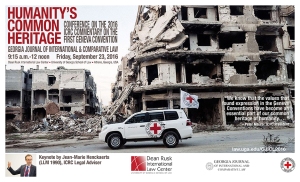
adhaque_img“Between the Law of Force and the Law of Armed Conflict” by Adil Ahmad Haque, originally published on Just Security Blog on October 13, 2016. We are grateful for permission to reprint this as part of our series inspired by “Humanity’s gjicl_confposterCommon Heritage,” our recent conference on the 2016 ICRC Commentary on the First Geneva Convention. The author, Rutgers Law Professor Haque, was a conference participant; this post is the 3d of 3 he prepared soon after the conference. He writes:
Last week, I argued in favor of the ICRC’s position that if one state uses armed force in the territory of another state then an international armed conflict (IAC) arises between the two states, unless the territorial state consents to that use of force. Accordingly, the treaty and customary law of IAC protects the civilian population of the territorial state as well as the armed forces of the intervening state. For example, on this view, the customary law of IAC applies to US operations in Syria, while Additional Protocol I (to which the US is not a party) applies to UK operations in Syria.

Importantly, the ICRC’s approach applies even if the target of the armed force is an organized armed group operating on the territory­—but not under the control—of the territorial state. Accordingly, the treaty and customary law of non-international armed conflict (NIAC) may also apply to such uses of armed force, for example, by governing the targeting and detention of armed group members.

In this post, I’ll respond to some criticisms of the ICRC’s position. Along the way, I’ll make some more general comments on the relationship between the law of force (jus ad bellum) and the law of armed conflict (jus in bello).

Here on Just Security, Sean Watts and Ken Watkin have criticized the ICRC’s position (see here, here, and here). Perhaps the most sustained critique of the ICRC’s position comes from Terry Gill, in a recent article for International Law Studies. There is much to admire in Gill’s article (indeed, I recently assigned it to my students). However, I found his criticisms of the ICRC’s position unpersuasive.

First, Gill rejects “the argument that non-consensual military intervention automatically constitutes a violation of sovereignty and is therefore directed against the territorial State” on the grounds that the intervention may be a lawful exercise of self-defense or may be authorized by the UN Security Council.

This objection seems misdirected. The ICRC does not refer to a violation of sovereignty but instead to an interference or intrusion into the territorial state’s sphere of sovereignty. By definition, a violation of sovereignty is unlawful. In contrast, an interference or intrusion into a state’s sphere of sovereignty may lawful or unlawful. According to the ICRC, an armed interference or intrusion into a state’s sphere of sovereignty—whether lawful or unlawful—will trigger an armed conflict with that state. More on this below.

Second, and relatedly, Gill writes that “there is no reason to assume that the classification of an armed conflict is dependent upon— or even influenced by—the question of whether a violation of the ius ad bellum has occurred.”

This objection also seems misplaced. On the ICRC’s view, the classification of an armed conflict does not depend upon the lawfulness or unlawfulness of the use of force, but instead depends on the fact that force is used by one state on the territory of another without its consent.

Of course, if the territorial state consents to the use of force then (i) the use of force is lawful under the jus ad bellum and (ii) there is no armed conflict between the two states. However, the reason that there is no armed conflict between the states is not that the use of force is lawful but rather that there is no conflict between the states, armed or otherwise. There is no dispute, difference, opposition, or hostile relationship between the two states. Put another way, the fact that consent has been given or withheld is independently relevant to both the jus ad bellum and the jus in bello.

In his second post, Watkin writes that the ICRC’s “reliance on State consent, as the basis for conflict categorization, makes it difficult, if not impossible, to separate it from the law governing the recourse to war.” I respectfully disagree.

The jus ad bellum and the jus in bello are independent in the sense that a use of force may be lawful under one body of law but unlawful under the other. A war of aggression may strictly conform to the law of armed conflict, while a war of self-defense may flagrantly violate the law of armed conflict. At the same time, we do not conflate jus ad bellum andjus in bello simply by recognizing that certain factual circumstances (such as consent or non-consent) may be relevant to both bodies of law.

(For example, if one state exercises effective control over part of the territory of another state then this will ordinarily give rise to a belligerent occupation. Of course, if the territorial state consents then there is no belligerent occupation, not because the occupation is lawful but because there is no belligerency. The same logic applies to the use of armed force and the existence of armed conflict.)

Third, Gill notes that “neither the text of the relevant provisions in the Geneva Conventions (Common Articles 2 and 3) nor the original ICRC commentaries thereto contain any reference to violation of sovereignty as a criterion for determining the character of the armed conflict.” Nor does the ICTY’s Tadić judgment, which Gill rightly describes as “the leading judicial decision on the classification of armed conflicts.”

Since the Geneva Conventions do not tell us when an armed conflict between states exists, we must interpret their terms in light of their context, object, and purpose. The original ICRC commentaries state that “[a]ny difference arising between two States and leading to the intervention of members of the armed forces” gives rise to an armed conflict between those states. It is hard to imagine a more serious difference arising between two States than a difference regarding whether one may use armed force on the territory of the other. If such a difference leads to intervention by the armed forces of either state, then an armed conflict automatically arises.

In Tadić, the ICTY stated that “an armed conflict exists whenever there is a resort to armed force between States.” Importantly, “armed force between States” does not require that two states use armed force against one another but instead requires that one state uses armed force against another.

Now we approach the heart of the matter. What does it mean for one state to use force “against” another?  On the ICRC’s view, an armed interference in a state’s sphere of sovereignty is a use of force against that state.

Why invoke the concept of sovereignty in this context? States are legal persons, not physical persons or objects. Strictly speaking, one cannot use physical force against a legal person, such as a state or corporation. One can, however, use physical force against a physical entity—a person, place, or object—over which a legal person has legal rights. There is nothing else that physical force against a legal person could sensibly mean. On this approach, physical force is used against a state when physical force is used against a physical entity within that state’s sphere of sovereignty. There is nothing else that physical force against a state could sensibly mean.

Fourth, and most importantly, Gill identifies several examples involving extraterritorial force targeting armed groups in which “the States concerned [n]either verbally [n]or factually conduct themselves as if they were involved in an armed conflict, even though they may not have consented to the interventions and may have considered them a violation of their sovereignty (irrespective of whether they did constitute such violations).” These examples include military operations by the United States inside Pakistan and Yemen; by Turkey inside Iraq; by Kenya inside Somalia; and by Colombia inside Ecuador.

Admirably, Gill allows that “the lack of hostilities between the intervening and territorial States in these examples may be in whole or in part due to other factors.” But what should we make of the fact that these states may not claim to be in armed conflict with one another?  Is the absence of such claims, or the denial of such claims, “subsequent practice in the application of the treaty [in this case, the Geneva Conventions] which establishes the agreement of the parties regarding its interpretation?”

In my view, state silence is inherently ambiguous. Accordingly, we should consider only the explicit legal opinions of states that the law of IAC applies or does not apply. For example, Syria might announce that it is not in an IAC with the UK and that, accordingly, UK forces captured in Syria are not entitled to combatant immunity for acts preceding their capture. The UK would no doubt respond with its own legal opinion, based on its own classification of the conflict and identification of applicable legal rules.

Until subsequent practice establishes the agreement of the parties to the Geneva Conventions (that is, of all states) regarding their interpretation in such cases, we should interpret the terms of the Conventions in light of their object and purpose. As I discussed in my previous post, the object and purpose of the law of IAC is the protection of civilians, civilian objects, and combatants from hostile foreign states. As the ICRC puts it:

it is useful to recall that the population and public property of the territorial State may also be present in areas where the armed group is present and some group members may also be residents or citizens of the territorial State, such that attacks against the armed group will concomitantly affect the local population and the State’s infrastructure. For these reasons and others, it better corresponds to the factual reality to conclude that an international armed conflict arises between the territorial State and the intervening State when force is used on the former’s territory without its consent.

Strangely, in his first post on Just Security, Watkin objects that, by adverting to this factual reality, the ICRC “prioritizes form over substance” because the harm to civilians “may be a mere possibility.” Instead, Watkin suggests that conflict categorization should be based on “an assessment of what actually happens.” On this view, it seems that we will not know what law applies to a use of force until after the use of force is carried out. Among other things, we will not know which legal protections civilians enjoy until it is too late. This seems like an unattractive view.

For his part, Gill acknowledges that “an intervention may impact portions of a State’s population or its national resources,” but writes that

when a population and public property are under the control of an [organized armed group] and not under the effective control of the territorial State, they can no longer be identified with that State for purposes of determining the legal constraints on the conduct of hostilities. In the event the intervening State’s action resulted in occupation of territory, this would change the situation and trigger the regime pertaining to IACs.

Watkin seems to make a similar claim in his first post on Just Security.

Strikingly, Gill provides no support for the first sentence, which is hardly self-evident. Indeed, the first sentence seems to implicitly concede that persons and public property under the effective control of the territorial State can be identified with that State for purposes of conflict classification. Accordingly, if a member of an armed group travels through an area under the effective control of the territorial state then an attack in that area, potentially impacting nearby persons and property, would seem to constitute an attack on the state itself.

Moreover, the second sentence seems to undermine the first. According to Gill, territory under the control of an armed group remains sufficiently identified with the territorial state such that, if the intervening state occupies part of that territory, then an IAC arises between the two states. However, according to Gill, territory under the control of an armed group is not sufficiently identified with the territorial state such that, if the intervening state uses force on that territory, then an IAC arises between the two states. Since control never passes back to the territorial state, it is hard to see the legal or logical basis for this apparently incongruous result.

Finally, Gill observes that “most [academic] authorities take the position that the classification of armed conflicts primarily (but not exclusively) turns on the nature of the parties . . . .” In my view, it begs the question to say that, in the cases under discussion, the two states are not parties to an armed conflict. After all, if the ICRC is correct, then the two states are parties to an armed conflict.

In this post, I have tried to address the most substantial criticisms of the ICRC’s position. No doubt, other objections have been and will be raised. We should expect no less. The controversy that the ICRC’s position has elicited is, perhaps, the best evidence that conflict classification remains highly relevant to the legal regulation of armed conflict.

Whose Armed Conflict? Which Law of Armed Conflict?

adhaque_img“Whose Armed Conflict? Which Law of Armed Conflict?” by Adil Ahmad Haque, originally published on Just Security Blog on October 4, 2016. We are grateful for permission to reprint this as part of our series inspired by “Humagjicl_confposternity’s Common Heritage,” our recent conference on the 2016 ICRC Commentary on the First Geneva Convention. The author, Rutgers Law Professor Haque, was a conference participant; this post is the 2d of 3 he prepared soon after the conference. He writes:
When one state, say, the United States, uses military force on the territory of another state, say, Syria or Pakistan, without the consent of that state, what legal rules constrain that use of military force?  What if the attacking state does not target the armed forces or institutions of the other state but instead targets an organized armed group (say, ISIL or the Taliban) operating in the other state?

According to the International Committee of the Red Cross (ICRC) 2016 Commentary on the First Geneva Convention, if one state uses military force on the territory of another state then the use of force triggers an international armed conflict (IAC) between the two states, unless the territorial state consents to the use of force.  Accordingly, the law of IAC applies to, and constrains, all such uses of force.

Importantly, the law of IAC applies even if the intervening state exclusively targets an organized armed group operating in the territorial state. If there is a non-international armed conflict (NIAC) between the intervening state and the armed group then the law of NIAC may apply in parallel.

The ICRC’s position has attracted substantial criticism, including on Just Security (see here, here, and here).  I hope to respond to some of these criticisms in a future post.  For now, I will try to explain why I find the ICRC’s view persuasive.  This post, like my previous one, emerged from a terrific recent event at the University of Georgia School of Law that examined a number of issues raised by the Commentary.

Before we begin, let’s remember why the question is worth asking, and why the answer matters.  Conflict classification can seem dry and technical, but it affects both protection and accountability in armed conflict.

First, the treaty law of IAC is far more detailed and robust than the treaty law of NIAC.  Most importantly, the Geneva Conventions and Additional Protocol I are far more protective of both civilians and combatants than either Common Article 3 or (with respect to internal conflict) Additional Protocol II.

Second, the customary law of IAC remains distinct from the customary law of NIAC, though the gap has certainly narrowed since the 1990s. For its part, the ICRC identifies 23 customary rules applicable in IAC but not in NIAC. States that take a more conservative approach to customary international law may conclude that the gap between IAC and NIAC remains even wider than the ICRC maintains.

Finally, the Statute of the International Criminal Court recognizes 34 war crimes in IAC but only 19 war crimes in NIAC. Notably, the Statute recognizes knowing violation of the proportionality rule as a war crime when committed in IAC but not when committed in NIAC.

To fix ideas, consider the following scenario:

No Consent: State A launches an airstrike against organized armed group G on the territory of State T, foreseeably killing several civilians. State T exercises no control over group G, but also does not consent to State A’s strike.

According to the Commentary, State A’s strike triggers an IAC with State T to which the law of IAC applies.  If there is, in addition, a NIAC between State A and group G then these two conflicts occur in parallel.

(Note that conflict classification does not depend on the lawfulness of State A’s attack under the jus ad bellum. For these purposes, it does not matter whether State A is lawfully defending itself against an armed attack by group G or unlawfully using military force to eliminate a possible future threat.)

In my view, the ICRC’s position fully reflects the text, object, and purpose of the Geneva Conventions and their Additional Protocols. An international armed conflict is a dispute (‘conflict’) between states (‘international’) involving the use of military force (‘armed’).  It is hard to imagine a more serious dispute between states than a dispute regarding the use of military force by one on the territory of the other.

Indeed, States adopted the law of IAC in order to protect their civilians and armed forces from extraterritorial force by foreign states. States using force beyond their borders may not recognize many legal, ethical, or political constraints on their conduct. Accordingly, when State A uses force on the territory of State T, we need the law of IAC to protect the civilian population of State T from the military operations of State A and (as we shall see) to protect the armed forces of State A from criminal prosecution by State T.

In contrast, States adopted the law of NIAC primarily to regulate internal armed conflicts within their own territory.  States using force on their own territory may feel constrained by domestic law, human rights law, concern for their own citizens, and internal politics. Accordingly, the need for robust protection by the law of armed conflict may have seemed less urgent.

The alternative view—that no IAC exists and that the law of IAC does not apply—seems deeply implausible.

First, the law of NIAC may not apply either.  On the prevailing view, including that of the ICRC, the law of NIAC applies only to protracted armed confrontations between state armed forces and organized armed groups or between such groups.  If group G is not organized in the right way, or if fighting between State A and group G is not sufficiently intense, then a gap in protection would exist that no state would accept.  (As Just Securityreaders know, I partially reject the prevailing view and partially disagree with the ICRC on this point.)

Second, it is hard to believe that states would want legal protection for their civilians from foreign forces to depend on what those foreign forces choose to target.  If an intervening state targets the armed forces of the territorial state then civilians may receive robust protection under Additional Protocol I.  In contrast, if an intervening state targets an organized armed group then civilians may receive only the minimal protections of Common Article 3 (which, arguably, does not regulate the conduct of hostilities at all).  Defenders of the alternative view must explain why states would accept such limited protection for their civilians from foreign forces in such cases.

Third, in internal NIACs, states may be constrained in their treatment of their citizens by human rights law and by domestic law.  In contrast, in cross-border cases, IHL is the primary (though not exclusive) constraint on the intervening state’s conduct.  Accordingly, in cross-border cases, we should not rely on the law of NIAC to provide civilians with the level of protection envisioned by the parties to the Geneva Conventions and Protocols.

In my view, the customary law of NIAC now offers civilians protection comparable to that offered by the customary law of IAC.  However, in my view, we should interpret Common Articles 2 and 3 of the Geneva Conventions in light of the customary law of NIAC as it existed when those treaties were adopted and entered into force.  At that time, no state would have relied on the customary law of NIAC to protect their civilians from foreign states operating on their territory without their consent.

Fourth, the alternative view exposes the forces of the intervening state to criminal prosecution by the territorial state.  There is no combatant immunity in NIAC and, on the alternative view, there is no IAC.  It follows that, if State T captures State A’s pilot, then State T may prosecute the pilot for killing its civilians under State T’s domestic criminal law even if the strike did not violate the targeting rules of the customary law of NIAC.

In my view, State T’s capture of the pilot may itself trigger an IAC between the two states, such that the law of IAC would regulate his detention.  However, the strike occurred prior to capture and therefore, on the alternative view, before an IAC began.  Hence, the pilot would not be entitled to combatant immunity with respect to the strike.  Since combatant immunity exists to protect combatants from prosecution by foreign states for acts that do not violate the law of armed conflict, it is hard to see why states would deny their own forces such protection in such cases.

Finally, the alternative view seems ad hoc.  If one state uses military force against anything else in another state—citizens, state armed forces, or foreign visitors, private property, state institutions, or refugee camps—then it seem clear that an IAC exists and that the law of IAC applies.  Defenders of the alternative view must justify carving out an exception to this general rule for strikes directed at armed groups.  Given the evident need to protect civilians from the intervening state, and to protect captured combatants from the territorial state, such a justification seems hard to imagine.

For these reasons, I favor the ICRC’s position over the alternative view.  The use of force by one state on the territory of another should be constrained by the law of IAC, even if that force targets an organized armed group on that territory, unless the territorial state consents to that use of force.  As mentioned earlier, the ICRC’s position has attracted criticism, some of which I hope to address in a future post.

Triggers and Thresholds of Non-International Armed Conflict

adhaque_img“Triggers and Thresholds of Non-International Armed Conflict” by Adil Ahmad Haque, originally published on Just Security Blog on September 29, 2016. We are grateful for permission to reprint this as part of our series inspired by gjicl_confposter“Humanity’s Common Heritage,” our recent conference on the 2016 ICRC Commentary on the First Geneva Convention. The author, Rutgers Law Professor Haque, was a conference participant; this post is the 1st of 3 he prepared soon after the conference. He writes:

When and where does the law of non-international armed conflict apply?  Since most contemporary armed conflicts are fought between states and organized armed groups, or between such groups, these are important questions for both international lawyers and policy makers.  The answers may affect the jurisdiction of U.S. military commissions, the detention of Taliban commanders and ISIL members, legal constraints on Saudi-led military operations in Yemen, and accountability for war crimes in Syria.

In this post, I’ll discuss the trigger and threshold of non-international armed conflict (NIAC). My point of departure is the much-discussed 2016 Commentary on the First Geneva Convention recently released by the International Committee of the Red Cross (ICRC).  The University of Georgia School of Law recently hosted a fantastic event examining a number of issues raised by the Commentary, including the duty to “ensure respect” for the Convention by other Parties, incidental harm to sick and wounded combatants, and the classification of conflicts.  This post grows out of that rich discussion.

The ICRC’s Commentary clearly states that an international armed conflict (IAC) “can arise when one State unilaterally uses armed force against another State even if the latter does not or cannot respond by military means.”  Accordingly, the law of armed conflict constrains the first use of armed force by one state against another.  Let’s call this a unilateral trigger.

In addition, “there is no requirement that the use of armed force between the Parties reach a certain level of intensity before it can be said that an [international] armed conflict exists.”  Accordingly, minor skirmishes between state armed forces, or the capture of a single soldier, “would spark an international armed conflict and lead to the applicability of humanitarian law.” Let’s call this a nominal threshold.

Unfortunately, the Commentary is not so clear with respect to non-international armed conflict.  The Commentary endorses the view that NIACs “are protracted armed confrontations occurring between governmental armed forces and … one or more armed groups, or between such groups.”  This passage, as well as some cited authority, seem to suggest a bilateral trigger, requiring “armed clashes,” “combat zones,” or, simply, “fighting.”

The Commentary also states that, for the law of NIAC to apply, “[t]he armed confrontation must reach a minimum level of intensity.”  Read alongside the Commentary’s discussion of IAC, it seems that this “minimum level of intensity” would not be met by minor skirmishes or by the capture of a single soldier or fighter.

The Commentary seems to accept a unilateral trigger and nominal threshold for IAC (quadrant 1) but a bilateral trigger and significant threshold for NIAC (quadrant 4).

screen-shot-2016-09-29-at-10-31-17-am

In my view, we should accept a unilateral trigger and nominal threshold for both IAC and NIAC.

First, if an armed group is sufficiently organized, then a first use of armed force by or against that group should trigger a NIAC.  Consider the following case:

Daesh:  Daesh fighters pour over the Syria-Iraq border, killing Iraqi civilians, capturing Iraqi territory and taking over Iraqi government institutions.  Iraqi forces flee, offering no resistance.

If we accept a bilateral trigger for NIAC, then the law of armed conflict does not apply until Iraqi forces “respond[s] by military means,” resisting Daesh’s advance.  Until that time, Daesh fighters do not violate the law of armed conflict or commit war crimes.  This result seems deeply unattractive.  Although the Daesh fighters violate Iraqi criminal law, it seems hard to accept that they do not violate the law of armed conflict.

Now consider the following scenario:

Consent:  State A attacks organized armed group G on the territory of State T, with the consent of State T.  There is no pre-existing armed conflict between State A and group G.  State A does not take feasible precautions in attack and recklessly kills many civilians.

If we accept a bilateral trigger for NIAC, then the law of NIAC does not apply until group G responds with military force, resulting in “armed clashes.”  Since State T consents, the law of IAC does not apply either.  It follows that State A does not violate the law of armed conflict or commit war crimes.  This result seems intolerable.

Importantly, human rights law may not be sufficient to protect civilians or armed forces in cross-border cases like those described above.  On most views, human rights law does not apply to the conduct of non-state armed groups that do not yet exercise territorial control and fulfill government-like functions.  Moreover, according to some militarily active states, human rights law does not constrain extraterritorial lethal targeting by state armed forces.  Yet, in my view, such conduct should be constrained by international law.

We should also accept only a nominal intensity threshold for NIAC.  Consider the following case:

Capture:  Members of organized armed group G mistakenly cross the unmarked border between State T, in which they normally operate, and State A.  They encounter a unit of State A’s soldiers, and a minor skirmish ensues.  No one is killed, but one group member is captured by the soldiers while one soldier is captured by the group and taken back across the border into State T.

In this case, it seems that both the group member and the soldier should be entitled to humane treatment under Common Article 3 of the Geneva Conventions.  Moreover, if there are civilians present when the skirmish occurs, then it seems that the conduct of the skirmish should be constrained by customary rules including distinction, precautions, and proportionality  If those rules are flagrantly violated, then those violations should amount to war crimes.

In my view, if an organized armed group has the capacity to sustain military operations then any military operation by or against that group should be constrained by the law of armed conflict.  The organization and capacity of the group is sufficient to distinguish military operations by or against the group from “internal disturbances and tensions, such as riots, isolated and sporadic acts of violence and other acts of a similar nature.”

Some might worry that applying the law of armed conflict to first uses of low intensity force will displace or reduce the protections of human rights law.  Fortunately, that is not the case.  Even during armed conflict, states may choose not to derogate from their ordinary human rights obligations.  Alternatively, derogation may be strictly required only with respect to certain measures, or only in certain parts of a state’s territory, or only in certain situations, even if the law of armed conflict provides additional constraints on all acts with a sufficient nexus to the conflict.

Most importantly, killings that are not prohibited by the law of NIAC may be prohibited by human rights law.  In particular, “[w]here military necessity does not require parties to an armed conflict to use lethal force …, but allows the target for example to be captured rather than killed, the respect for the right to life can be best ensured by pursuing this option.”  In situations of armed conflict, the law of NIAC may aid the interpretation of human rights law but does not exhaust the content of human rights law.

Finally, the law of armed conflict cannot authorize what human rights law forbids.  As the ICRC observes elsewhere, “[t]he law relating to the conduct of hostilities is primarily a law of prohibition: it does not authorize, but prohibits certain things.”  Human rights law and the law of NIAC do not conflict with each other but instead complement one another, as both impose constraints on violence rather than licenses to commit violence.  As Additional Protocol II makes clear, human rights law “offer[s] a basic protection to the human person” while the law of NIAC aims “to ensure a better protection for the victims of [] armed conflicts.”

Now available online, chapter on international criminal law & children

I’ve just posted at SSRN the chapter I published at the beginning of the year in The Cambridge Companion to International Criminal Law, edited by Professor William A. Schabas.

The chapter, entitled “Children,” policyaims to look back at developments in the area since World War II, and then to cast a forward glance at the comprehensive approach now under way at the International Criminal Court – where, incidentally, the ICC Office of the Prosecutor Policy on Children will be launched on November 16, 2016. I was privileged to help with drafting in my capacity as Special Adviser to the Prosecutor on this issue. (prior posts) The date coincides with the start of the annual meeting of the ICC Assembly of States Parties.

Here’s the abstract for my article:

cambridgeThis chapter, which appears in The Cambridge Companion to International Criminal Law (William A. Schabas ed. 2016), discusses how international criminal law instruments and institutions address crimes against and affecting children. It contrasts the absence of express attention in the post-World War II era with the multiple provisions pertaining to children in the 1998 Statute of the International Criminal Court. The chapter examines key judgments in that court and in the Special Court for Sierra Leone, as well as the ICC’s current, comprehensive approach to the effects that crimes within its jurisdiction have on children. The chapter concludes with a discussion of challenges to the prevention and punishment of such international crimes.

SSRN e-journals where this abstract may be found (thanks to always-welcome assistance from TJ Striepe of Georgia Law’s Alexander Campbell King Law Library) include the University of Georgia School of Law Legal Studies Research Paper Series and the Dean Rusk International Law Center Research Paper Series.

Critique of ICRC’s 2016 Commentary to Geneva Convention I: Arming medical personnel, loss of protected status

mullIt’s our pleasure to publish this post as part of our series inspired by “Humanity’s Common Heritage,” our recent conference on the 2016 ICRC Commentary on the First Geneva Convention. The author is Nicholas W. Mull, a Columbia Law LL.M. candidate who served till mid-2016 at the Pentagon, as an International & Operational Law Attorney, Head Operational Law Department, U.S. Marine Corps, Office of the Judge Advocate General of the Navy. Mull, a conference participant, writes:

The protected status of medical personnel and their units, transports, and establishments, when addressed by commentators, is typically focused on affirmative duties of combatants not to target medically protected persons and objects. However, equally important is the affirmative duty of medically protected persons to refrain gjicl_confposterfrom “acts harmful to the enemy” and the extent of the right of self-defense. These are the concerns of medical providers in the field at the tactical level that are typically ignored.

These concerns are directly addressed in the ICRC’s recent updated commentary for the first Geneva Convention (GC I). While there are several opinions in the commentary that are, arguably, in error, for brevity, this post will only touch on one tactical concern. The commentary asserts that medical personnel may only carry “light individual weapons” without losing protected status, which is in error for several reasons:

  1. It purports a limit on the type of weapons to be used in self-defense; and
  2. It opines that protected status can be lost by virtue of an act that only presents a remote hypothetical harm to the enemy that can only come to fruition if the medical personnel purposefully engage in offensive hostilities.

As a preliminary issue, it is vital to interpret Article 21 of GC I, which provides for the sole reason by which protected medical personnel and establishments may lose protected status: commission, “outside their humanitarian duties, [of] acts harmful to the enemy.” The operative condition of “harmful to the enemy” requires a purposeful act that in of itself has caused harm to the enemy’s ability to conduct legitimate military operations. This is not to say that it is a high threshold to meet, but merely that it must actually cause a real definable present harm to the enemy and that it is intended to cause such harm, e.g. utilizing a field hospital to shelter “able-bodied combatants.” This standard should also be understood as more expansive than the direct participation in hostilities (DPH) standard used for determining the loss of protected status of civilians, specifically as it includes both direct and indirect actions. The generally expansive nature of this standard necessitated Article 22 of GC I, which covers actions that may not be considered as “acts harmful to the enemy” such as, inter alia, arming medical personnel.

Turning to the issue of arming medical personnel, the updated commentary concludes that medical personnel are only authorized to carry “light individual weapons” and that to possess crew-served weapons (CSW) results in the “loss of specific protection of the military medical unit.” The qualification of “light” and “individual” is a noticeable addition in the 2016 commentary that is absent from the 1952 Pictet Commentary. This addition presents unnecessary danger to medical personnel in contemporary conflicts of which reciprocity can no longer be presumed.

From a textual analysis, Article 22 makes no condition regarding the quality or quantity of the arms that medical personnel may posses; it only presents a limitation on the employment of the weapons for self-defense. Looking to the 1952 Pictet Commentary, it focuses exclusively on the purpose and permissible use of the arms.

Despite the clear meaning of the text of Article 22, which is free from ambiguity, the 2016 commentary draws an inappropriate analogy to Article 13 of Additional Protocol I (AP I), which states that the equipping of civilian medical personnel with “light individual weapons” would not be considered an act harmful to the enemy. Article 13 of AP I was not an attempt to clarify any ambiguity of Article 22, but was instead pertaining to a completely different class of personnel. Further, it is a highly illogical inferential leap to assume that States would want civilians being armed to the same degree as military medical personnel that are subject to the high standards of discipline of a uniformed service.

States must be able to arm their medical personnel to the degree as they see fit to counter the likely threats to medical personnel in a theatre of operations. Certainly, such arms may only be used in self-defense, but to limit medical personnel to side arms and small assault rifles while the enemy or “marauders” attack them with CSW and other anti-material weapons is unjust. commentary-e1458062747572To paraphrase Pictet in his Commentary, it is not proper to require medical personnel to be the sacrificial lamb to unlawful actions of the enemy or criminals.

It is not hard for a combat experienced individual to envision situations in which medical personnel may have a need to defend themselves with CSW and anti-material weapons. For example, field hospitals may be present in a combat zone in which enemy tactics could include suicide vehicle borne improvised explosive devices (SVBIEDs). To personally defend themselves as well as their patients this scenario may require the use of a .50 caliber machine gun—a weapon primarily designed for anti-material purposes—to subdue the imminent threat to life.

Lastly, as previously noted, to lose the protected status medical personnel must purposefully commit an act that in of itself creates a present harm to the enemy. Arming medical personnel with CSW or other heavier weapons as necessary to counter likely threats to save their lives and the lives of their patients does not result in a present harm to the enemy. In fact, the only way it could be a present harm to the enemy is to presume that the medical personnel intend to violate the law by engaging in offensive hostilities. In reality, this only presents a remote hypothetical harm that does not meet the standard of being harmful to the enemy.

armletIt may not be the best policy choice to heavily arm medical personnel for the risk of confusion that can be created as to their protected status, especially if the situation is one in which medical personnel are not displaying Red Cross armlets, as is often the case with U.S. military medical personnel. But, this is ultimately a policy choice that should not be confused with status of law.

How will current and future conflicts test 2016 ICRC Commentary?

It’s our pleasure today to publish this post by Chanel Chauvet, a member of the Georgia Law Class of 2018 who serves as a Student Ambassador at our Dean Rusk International Law Center. This past summer, Chanel (below left) completed a summer course on international humanitarian law at Leiden Law School’s Grotius Centre for International Legal Studies at The Hague, Netherlands. While there, she accompanied Georgia Law Associate Dean Diane Marie Amann, who serves as the Special Adviser to International Criminal Court Prosecutor Fatou Bensouda on Children in & affected by Armed Conflict, at an NGO consultation on the draft Policy on Children, set for final release this autumn. In today’s post, one in a series on our recent conference on international humanitarian law, Chanel writes:

chanel_dianeicc1I feel honored to be able to attend the University of Georgia School of Law, not only for the premier education, but also for the incredible opportunities that are extended to students.

Most recently, the law school’s Dean Rusk International Law Center and Georgia Journal of International & Comparative Law, in conjunction with the International Committee of the Red Cross, coordinated “Humanity’s Common Heritage,” a conference on the 2016 ICRC Commentary on the First Geneva Convention. Organizers included Associate Dean Diane Marie Amann, Professor Harlan Cohen, and Kathleen Doty, the Center’s Director of Global Practice Preparation. Leading experts visited UGA Law to discuss this new development in the field of international humanitarian law, or IHL.

jean-marie-henckaertsFollowing introductions, the keynote speaker and UGA Law alumnus, Dr. Jean-Marie Henckaerts (right) delivered his lecture. To begin the conference, the Dean of University of Georgia School of Law, Peter “Bo” Rutledge, had given an introductory speech, in which he emphasized that UGA Law is a “home” to students and alumni. Personally, I thought it was great to have a distinguished alumnus working within the field of IHL return to our “home” to enrich the UGA Law community.
Dr. Henckaerts discussed three themes: his background; the foundations of international humanitarian law; and the process and methodology of updating the Commentaries to the four Geneva Conventions. This updating is needed, he said, because of advancements in technology and other forms of warfare that have developed since the Commentaries were last updated more than a half-century ago. The effort is significant because of its influence in enhancing the understanding of contemporary international law.

Background

syria-water-aleppo-boy

Aleppo, Syria, 2015 (credit for ICRC photo)

Regarding his background, Dr. Henckaerts serves as the main editor to the Commentaries, and the Legal Adviser at the ICRC. A private organization that was established in 1863, the ICRC consists of 1,500 staff members in 80 different countries. They work to promote and implement IHL, in addition to other initiatives, such as assisting and protecting persons in and affected by armed conflicts. One of the ICRC’s most recent efforts to support this goal involved delivering water in Syria, a country currently plagued with an ongoing non-international armed conflict. Dr. Henckaerts noted that aside from the fact that water is a basic human need, it is also important to prevent the spread of disease.

Foundations

International humanitarian law essentially governs all aspects of war by regulating hostilities and protecting certain groups of people, including civilians and prisoners of war. It finds its basis in the four Geneva Conventions adopted in 1949, which are among some of the very few treaties that have been universally ratified or acceded to. I have listed below the primary purposes of each of the Geneva Conventions and the first two Additional Protocols:

  • GC 1: Conditions of the sick and wounded, medical personnel, medical units, medical transports, emblems, armed forces, rules on the missing, rules on the dead
  • GC 2: Conditions of the ship-wrecked and armed forces at sea
  • GC 3: Treatment of prisoners of war
  • GC 4: Protection of civilians in times of war

Additional Protocol I, which governs international armed conflicts, or IACs, and Additional Protocol II, which governs non-international armed conflicts, or NIACs, are also primary sources of international humanitarian law. These treaties are somewhat less regarded, though, demonstrated by the fact that they have not been ratified by all states.

According to Dr. Henckaerts, the value of 2016 ICRC Commentary on the First Geneva Convention is that it will serve as a tool and reference source on various topics of international humanitarian law.

Process & methodology

Jean S. Pictet (1914-2002),former ICRC Vice President, President of the Juridical Section and Director of General Affairs (photo credit)

With respect to the process and methodology of revising the Commentaries to the first Geneva Convention, he emphasized that the revision process was collaborative in nature. It was an effort between ICRC representatives and other IHL experts throughout the world to update the “Pictet Commentaries,” the Commentaries created shortly after the 1949 Geneva Conventions were adopted. Interestingly enough, the updated 2016 Commentary reflects diverging views extracted from various consultations between the experts.

Dr. Henckaerts also acknowledged that the Commentary cannot be regarded as the ultimate authority on the Geneva Conventions for a number of reasons:

  • First, states parties have not contributed to the clarification of the Commentaries. By the same token, there has not been a concerted public effort by any state to contribute its input to the updated Commentaries.
  • Second, the quality of the research and writing will determine the 2016 Commentary’s position of authority on the first Geneva Convention.

With regard to the process going forward, Dr. Henckaerts reported that the ICRC working group has both begun the revision process on the second Geneva Convention and implemented a timeline to complete the Commentaries to the remaining two Geneva Conventions.

Following this keynote address was a panel of IHL experts including Oxford Law Professor Dapo Akande, Emory Law Professor Laurie Blank, Major-General Blaise Cathcart, the Judge Advocate General of the Canadian Armed Forces, and New York University Law Professor Ryan Goodman. They offered their critiques on the 2016 Commentary. One question they asked was left unanswered: How did the ICRC determine that the Commentaries needed to be updated?

Other questions, posed by Professor Goodman, related to how the Commentaries would address the concept of transnational NIACS, and what would be the implications of this classification within the cyber realm. To illustrate this ideam he asked how the Commentaries would address people, spread across different states, who organized a coalition in the online realm and used cyber weapons.

There also seemed to be an overarching theme of the discussion. It centered on whether the Geneva Conventions should be interpreted through an originalist or an evolutionist perspective. The 2016 ICRC Commentary has provided enough deference to the original Commentaries, but it has evolved in a sense, in order to properly address the technological advances and military developments since the inception of the original Commentaries.

In any event, it is safe to say that all of the experts are curious to see how the current and future conflicts will test the 2016 ICRC Commentary.

For more information regarding the role of the Commentaries, please click here.

Role of “commentaries” key to significance of ICRC project

The role of “commentaries” in the shaping of contemporary international law proved a recurring question in the just-concluded morning public plenary of today’s conference, “Humanity’s Common Heritage: 2016 Commentary on the First Geneva Convention.”

img_0266First broaching the issue was the keynote, Jean-Marie Henckaerts (right). A Georgia Law alumnus, he’s the Legal Adviser at the International Committee of the Red Cross who’s leading the ICRC’s multiyear effort to produce 21st C. commentaries on the meaning of the core instruments of international humanitarian law; that is, the four Geneva Conventions of 1949 and their subsequent Protocols Additional. Joining him were participants in the panel that followed: speakers Major-General Blaise Cathcart, Judge Advocate General of the Canadian Armed Forces, NYU Law Professor Ryan Goodman, Emory Law Professor Laurie R. Blank, and Oxford Law Professor Dapo Akande, plus the moderator, yours truly, Associate Diane Marie Amann. I’ve the honor of serving as director of the Dean Rusk International Law Center at the University of Georgia School of Law, which is sponsoring the event along with the ICRC and the Georgia Journal of International & Comparative Law.

Soon to appear in print, the 2016 Commentary is available online here. At that website, the 2016 Commentary is situated alongside an earlier version, published in the 1950s by ICRC jurist Jean Pictet – and there’s a rub.

“Commentaries are not unusual,” Henckaerts remarked, adding that tomes exist commenting on nearly all the world’s treaties. Though true, the observation pretermits the sui generis status of the author of the 2016 Commentary – the ICRC, since 1863 a Geneva-based private organization that has led developments related to the shaping and compliance with international humanitarian law.

The earlier volumes “are ‘capital C,’ or maybe all caps,” Blank said. Others agreed, pointing not only to the ICRC’s unique status, but also to the fact that the Pictet commentaries  occurred when the intentions of the negotiating states parties – to quote Goodman, “what the framers had in mind” – were well within memory. Continuing her analogy, Blank said she regarded the 2016 effort as a “small c” commentary –  an extraordinary collection of expert analysis, but not exactly the same thing” as the Pictet effort.

Akande broadened the conversation, examining the ICRC commentaries within the context of public international law and treaty interpretation. Pictet’s work may enjoy “unjustifiable authority,” he said, adding that the constitutive nature of the new effort might outweigh any resulting loss of authoritative status. He then called upon the ICRC consistently to be “upfront” about how and why it arrived at its interpretive conclusions.

The points provoked multiple questions: How are treaties to be interpreted? What individuals or entities have authority to engage in interpretation? What weight do interpretations of states parties deserve – and with regard to universally ratified treaties like these, which states parties? What weight to a private organization like the ICRC? Nongovernmental organizations? And what about the victims of armed conflict – do their voices matter in this interpretive effort, and if so, how can victims be given voice?

The search for answers to these and many other questions continues this afternoon. In 3 consecutive closed sessions, about 2 dozen experts are discussing: (1) the Common Article 1 obligation to “ensure respect” for the Geneva Conventions; (2) protection of the wounded, sick, and other specially protected persons; and (3) classification of armed conflict.

President taps Georgia Law alum for Cultural Property Advisory Committee

President Barack Obama is appointing Georgia Law alumnus James K. Reap to the U.S. Department of State Cultural Property Advisory Committee, according to a White House announcement issued Friday.

reap_web-150x150Reap, a Professor in the University of Georgia College of Environment + Design and affiliated faculty member of the university’s African Studies Institute, is a globally renowned expert on issues of cultural property and the protection of cultural heritage amid armed conflict and similar threats. He coordinates the university’s Master’s degree in Historic Preservation, as well as the dual J.D./M.H.P. Reap frequently takes part in initiatives of our Dean Rusk International Law Center; indeed, he’ll serve as an expert at this week’s Georgia Law-International Committee of the Red Cross conference entitled “Humanity’s Common Heritage: The 2016 Commentary on the First Geneva Convention.”

The many professional activities of Reap, a former Fulbright Scholar, include leadership positions in the International Council of Monuments and Sites, as well as the Lawyers’ Committee for Cultural Heritage Preservation and the U.S. Committee of the Blue Shield. He’s been active on preservation issues in Eastern and Southern Europe, Central Asia, Africa and the Middle East, and the Caribbean.

“Humanity’s Common Heritage”: Georgia Law-ICRC conference on Geneva Conventions Commentaries

gjicl_confposter

Humanity’s Common Heritage – norms codified in international humanitarian law treaties to which all countries of the world belong – will be the topic of a conference this Friday, September 23, at the University of Georgia School of Law in Athens, Georgia.

The conference title derives from this observation about those treaties, the four 1949 Geneva Conventions, by Peter Maurer, President of the International Committee of the Red Cross:

“We know that the values that found expression in the Geneva Conventions have become an essential part of our common heritage of humanity, as growing numbers of people around the world share a moral and legal conviction in them. These contradicting realities challenge us to act: to react to the suffering and violations of the law, and to prevent them from occurring in the first place.”

At the core of this daylong event will be the Commentaries on which the ICRC is now working. Published online earlier this year was the initial Commentary, covering the Convention (I) for the Amelioration of the Condition of the Wounded and Sick in Armed Forces in the Field, as well as the articles common to all 4 Conventions. (Prior posts here, here, and here.) Experts will examine this 2016 Commentary and its role in the development, promotion, and implementation of contemporary international humanitarian law.

thumbnail_p1130913We’re honored that the Georgia Law alumnus leading that project, Geneva-based ICRC legal adviser Jean-Marie Henckaerts (LLM 1990), will keynote our conference, and also that the ICRC is cosponsoring the conference, along with our Center and our Georgia Journal of International & Comparative Law. This student-run review, which celebrates its 45th anniversary this year, will publish papers by the assembled experts and Georgia Law student rapporteurs.
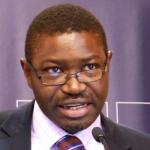
akandeDr. Henckaerts will be part of a public panel from 9:15 a.m.-12 noon in Georgia Law’s Hatton Lovejoy 0042401-14ABCourtroom. Speaking in that morning session will be: Oxford Law Professor Dapo Akande; Emory Law Professor Laurie R. Blank; Major-General Blaise Cathcart, Judge Advocate General of the Canadian Armed Forces; New York University Law Professor Ryan Goodman; and cathcartmoderator Diane Marie ryan_goodman_photo_horizontalAmann, Associate Dean for International Programs & Strategic Initiatives and Emily & Ernest Woodruff Chair in International Law at Georgia Law, and also the International Criminal Court Prosecutor’s Special Adviser on Children in & affected by Armed Conflict.

Joining them in closed sessions during the afternoon will be additional international humanitarian law experts experts: Georgia Law Professor Harlan G. Cohen; Houston College of Law Professor Geoffrey S. Corn; American University Law Professor Jennifer Daskal; Jonathan Davis, a University of Georgia international affairs graduates and U.S. Department of State Attorney-Advisor; Kathleen A. Doty, our Center’s Director of Global Practice Preparation; Julia Grignon, Université Laval Law; Rutgers Law Professor Adil Haque; Christopher Harland, Legal Adviser at the ICRC’s Washington, D.C., office; Eric Jensen, U.S. Department of Defense; Michael Meier, U.S. Army Judge Advocate General Corps; Naz K. Modirzadeh, Harvard Law; Nicholas W. Mull, U.S. Marine Corps Judge Advocate General Corps (ret.); Vanderbilt Law Professor Michael A. Newton; Sasha Radin, U.S. Naval War College; Professor James K. Reap (JD 1976) of the University of Georgia, who’s just been named to the State Department’s Cultural Property Advisory Committee; Georgia State Law Professor Shana Tabak; and Creighton Law Professor Sean Watts.

Full description and details about the conference here.