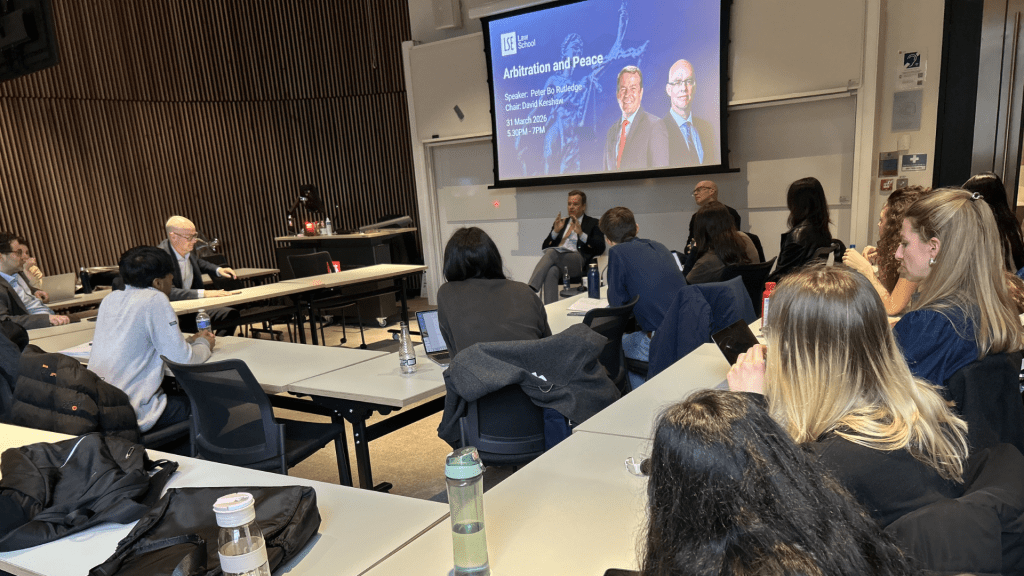
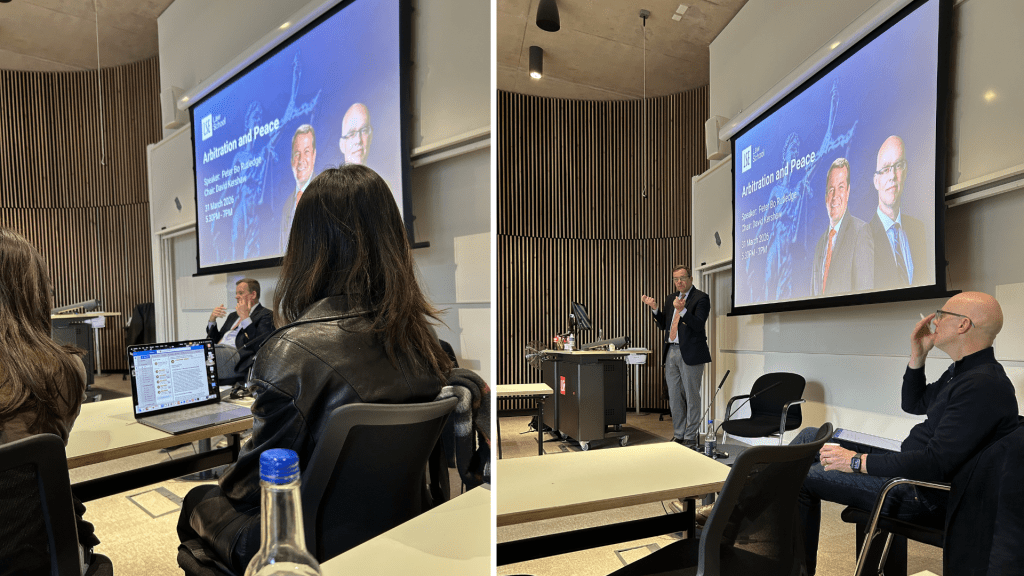
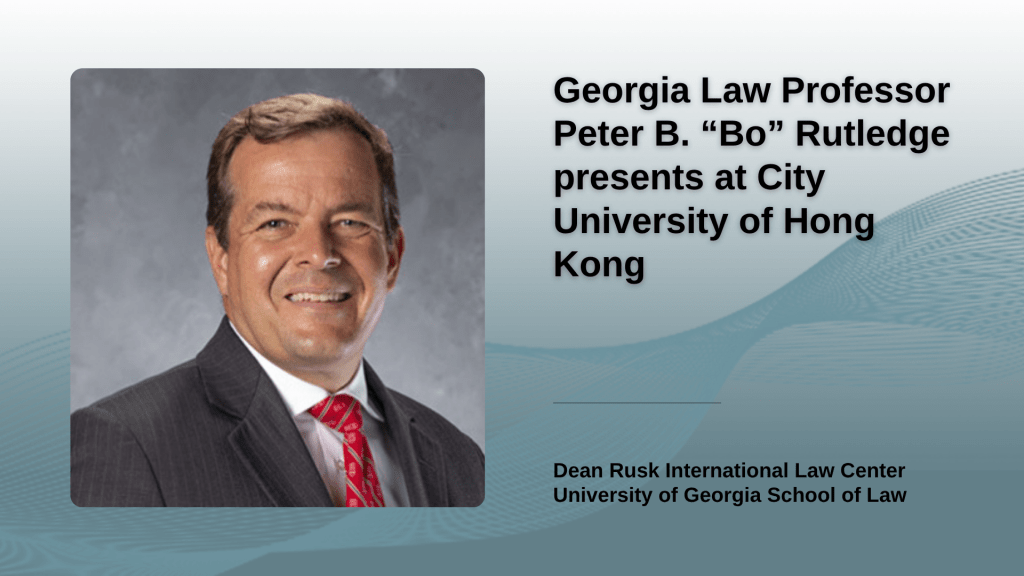
Peter B. “Bo” Rutledge holds the Talmadge Chair of Law. From 2015 through 2024, he served as dean of the University of Georgia School of Law. He is the author of the book Arbitration and the Constitution and co-author with Gary Born of the book International Civil Litigation in United States Courts. His works have been published by the Yale University Press, the Oxford University Press and the Cambridge University Press, and his articles have appeared in a diverse array of journals such as The University of Chicago Law Review, the Vanderbilt Law Review and the Journal of International Arbitration. He also regularly advises parties on matters of international dispute resolution (litigation and arbitration).
Last month, the University of Georgia School of Law hosted its fourth annual International Law Hackathon, led by Professor Natalia Pires De Vasconcelos.
The International Law Hackathon is one-credit mini-course on a selected topic in international law that concludes with an intensive, day-long collaborative exercise. The theme of this year’s hackathon was the international human rights of incarcerated people, with particular emphasis on their right to health and the prohibition of cruel, inhuman, or degrading treatment under international law.
Working in five interdisciplinary teams of four, students spent the morning developing creative and persuasive solutions to a complex scenario involving the death of an incarcerated woman following delays in emergency medical care in a U.S. prison. Teams were tasked with designing legal and advocacy strategies to seek accountability, obtain reparations, and promote broader structural reforms, drawing on both international human rights treaties and norms (such as the Mandela Rules, the Bangkok Rules, and the ICCPR) as well as U.S. Eighth Amendment doctrine.
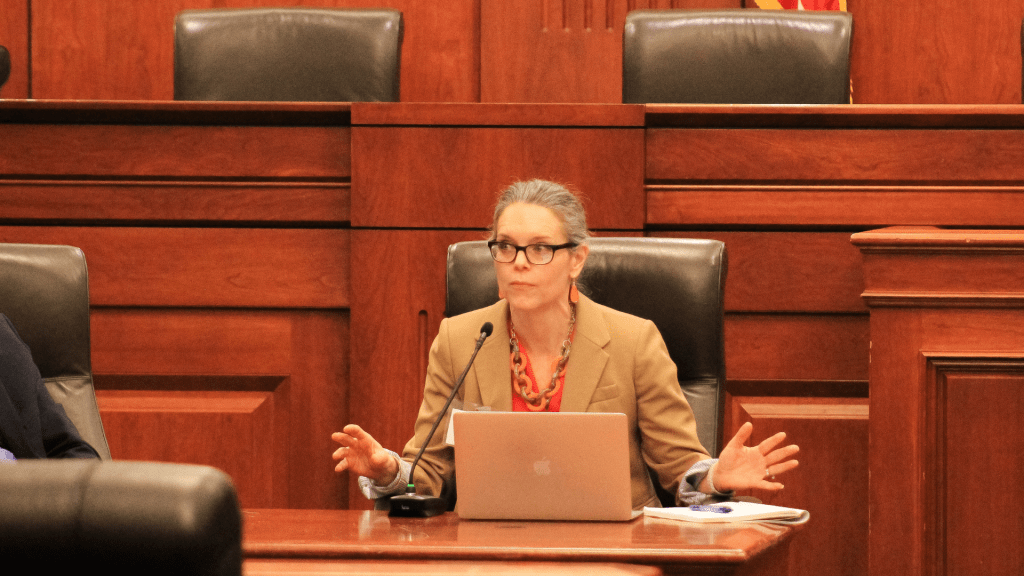
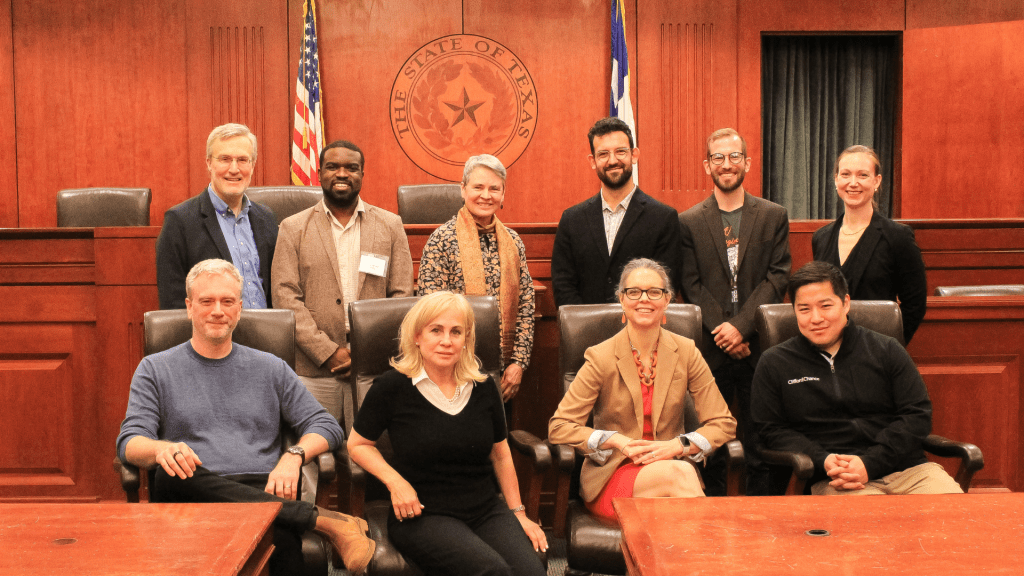
In the afternoon, teams presented their proposals to a distinguished panel of four judges with expertise spanning international law, prison studies, criminal law, and legal theory:
Taher S. Benany, Associate Director, Dean Rusk International Law Center, Georgia Law
Judges evaluated presentations based on the teams’ ability to mobilize legal frameworks, engage human rights principles, and propose innovative and transformative solutions that make international human rights language relevant to incarcerated people’s rights cases in the United States. The presentations were of exceptionally high quality, and the judges noted the depth, creativity, and rigor across all teams. In fact, selecting first and second place proved challenging: when asked individually, each judge identified different top teams, and all five teams were recognized as top choices by at least one judge.
After thoughtful deliberation, the judges selected the top two teams:
The hackathon showcased students’ ability to think across disciplines, engage critically with legal tools, and address urgent questions surrounding health, accountability, and the rights of incarcerated populations. The creativity and rigor demonstrated by all participants made this year’s event a great success.
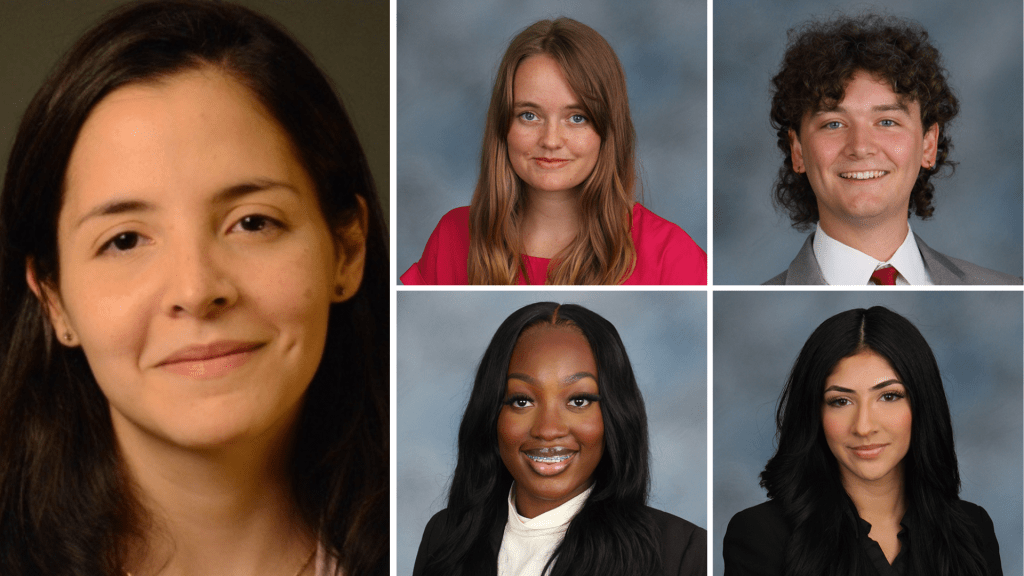
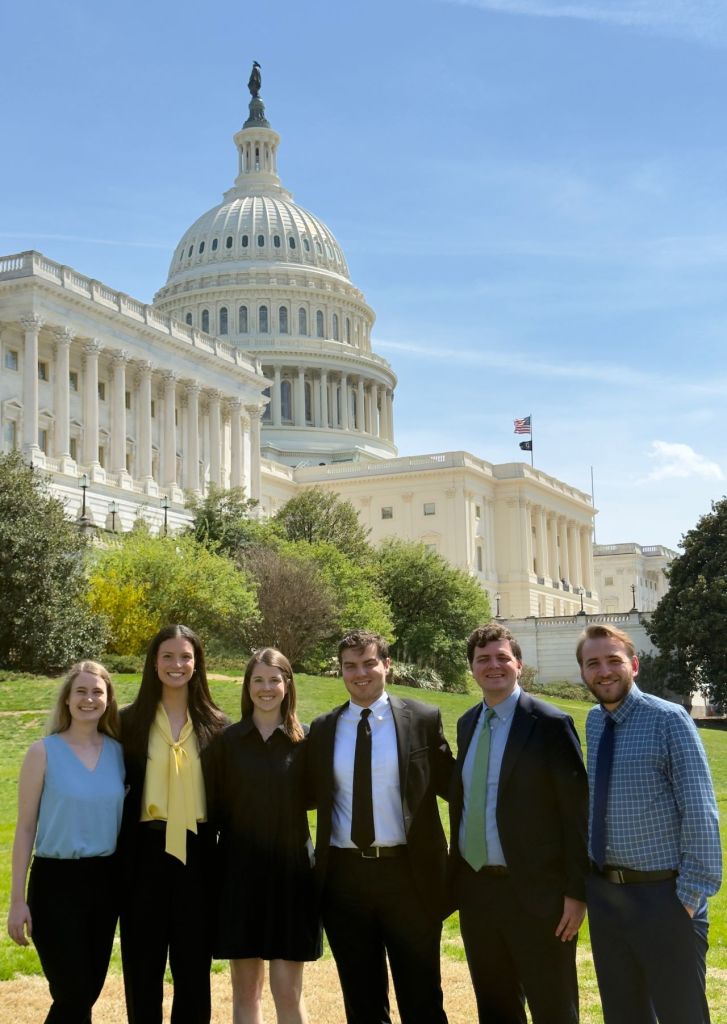
Earlier this month, the University of Georgia School of Law finished in the top half of the international rounds and in the top 10% worldwide of the 2026 Philip C. Jessup International Law Moot Court Competition. Their memorial ranked in the top third at the international rounds. This year’s team included Georgia Law students Emma Hopkins (J.D. ’27), Jacob Levy (J.D. ’27), Lionel Rubio (J.D. ’27), Nathan Whisamore (J.D. ’27), and Morgan Pfohl (J.D. ’26). Jessup is the world’s largest moot court competition, bringing together students from across the globe to engage with pressing international legal challenges.
Georgia Law student Marion Kronauge (J.D. ’26) served as a student coach, while Caleb Grant (J.D. ’23) served as the alumni coach. Taher Benany, Associate Director of the Dean Rusk International Law Center, also served as a coach for the team.
The Jessup competition is the world’s largest moot court tournament that typically fields teams from roughly 800 law schools in 100 countries and jurisdictions around the globe. Georgia Law’s past performances in Jessup competitions can be found here.
Peter B. “Bo” Rutledge holds the Talmadge Chair of Law. From 2015 through 2024, he served as dean of the University of Georgia School of Law. He is the author of the book Arbitration and the Constitution and co-author with Gary Born of the book International Civil Litigation in United States Courts. His works have been published by the Yale University Press, the Oxford University Press and the Cambridge University Press, and his articles have appeared in a diverse array of journals such as The University of Chicago Law Review, the Vanderbilt Law Review and the Journal of International Arbitration. He also regularly advises parties on matters of international dispute resolution (litigation and arbitration).
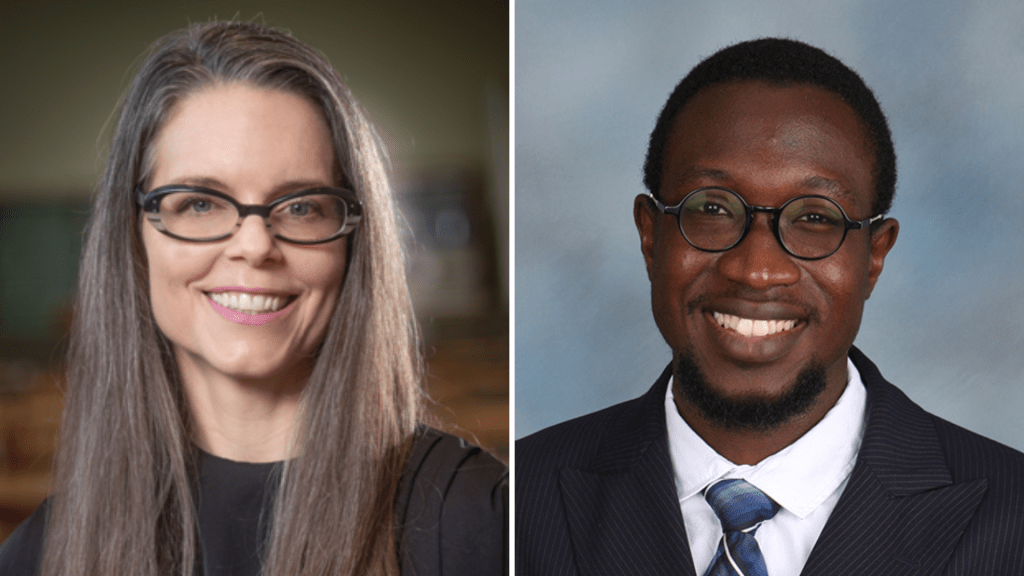
LeClercq joined the University of Georgia School of Law in 2024 as an assistant professor. She teaches Contracts, International Trade and Workers Rights, International Labor Law, U.S. Labor Law, and Public International Law. She also serves as a faculty co-director of the Dean Rusk International Law Center and as the faculty adviser for the Georgia Journal of International and Comparative Law and the Labor and Employment Student Association.
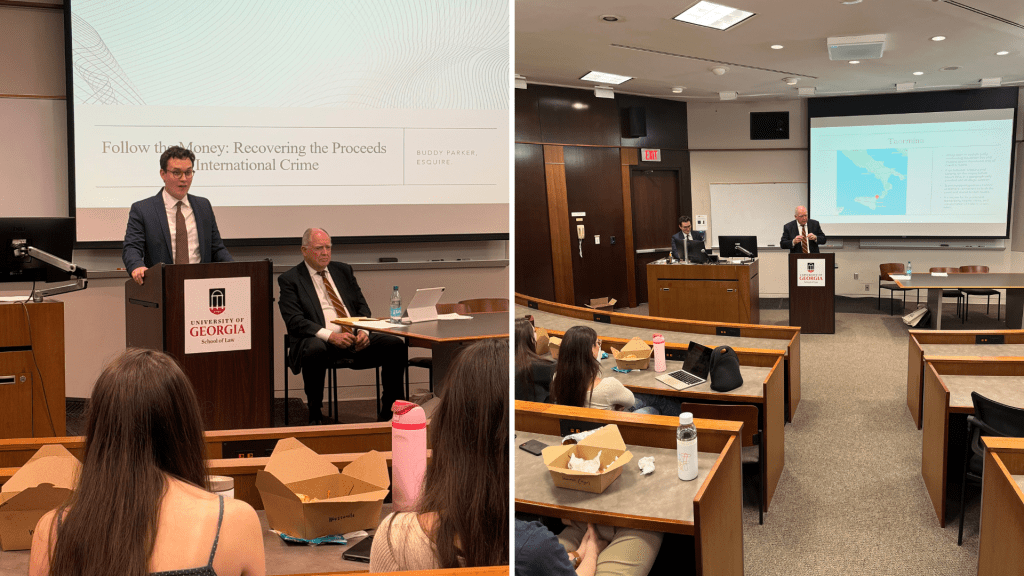
After being introduced by Georgia Law student Andrei Niveaux (LL.M. ’26), Parker reflected on the shifting landscape of global asset recovery throughout his fifty plus years of experience in the field. He talked about his professional background and career trajectory litigating high profile criminal cases for both the United States Department of Justice and as a private defense attorney. Parker’s talk spanned the history of asset recovery and discussed contemporary issues in fraud, money-laundering, and forfeiture matters.
Parker entered Government service in 1978 in Washington, D.C., as a Trial Attorney with the Criminal Section of the Tax Division of the Department of Justice. He participated in investigations and prosecutions of tax and related frauds across the country. In 1983, Parker transferred to the U.S. Attorneys office for the Northern District of Georgia. During his tenure as an Assistant United States Attorney in Atlanta, Parker participated in hundreds of investigations and prosecutions of complex financial activities involving money laundering/fraud and racketeering, and international narcotics trafficking. Parker became a supervising Assistant U.S. Attorney managing cases as well as maintaining his own trial calendar. From his investigations in the Atlanta U.S. Attorneys office, he became one of the pioneers of U.S. money laundering prosecutions with their attendant forfeitures. Through the international aspects of these investigations, he became a recognized expert on money laundering and U.S. forfeiture law, making numerous presentations throughout Europe, North America and the Caribbean.
Since 1997, Parker has primarily represented individuals and corporations in far-reaching criminal investigations and prosecutions throughout the United States and internationally. He has also represented individuals in complex civil litigation. He has represented both public and private corporations, lawyers, accountants, corporate officers, bankers and other professionals in various mail and wire fraud, securities fraud, bank fraud, healthcare fraud, tax fraud, money laundering, immigration, public corruption, commercial bribery, RICO and forfeiture investigations and prosecutions. He has also participated in investigations before the Serious Fraud Office (United Kingdom) and acted as a consultant to European lawyers in international matters.
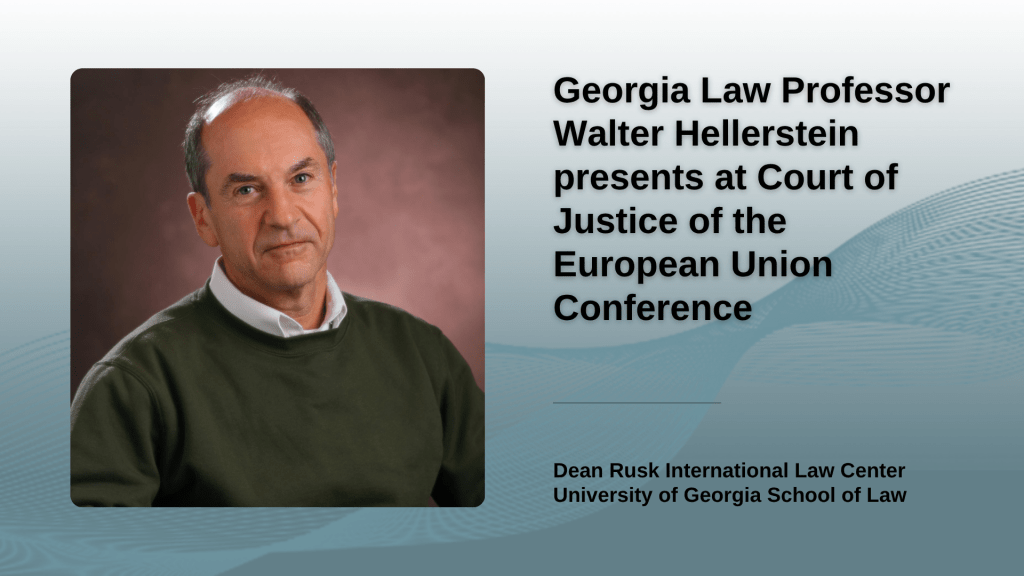
University of Georgia School of Law Professor Emeritus Walter Hellerstein presented as part of a panel on taxable persons and related issues in VAT law at the Court of Justice of the European Union Conference held at the Vienna University of Economics and Business in Austria during March.
Hellerstein is the Distinguished Research Professor & Francis Shackelford Distinguished Professor in Taxation Law Emeritus. He is a recipient of the National Tax Association’s Daniel M. Holland Medal for outstanding lifetime contributions to the study and practice of public finance, is widely regarded as the nation’s leading academician on state and local taxation. He has authored numerous books, textbooks, and law review articles, and has practiced extensively in the field. Hellerstein is currently a Visiting Professor at the Vienna University of Economics and Business, and he remains actively involved in his scholarship, consulting, and, in particular, his work as an academic advisor to the OECD.
LeClercq joined the University of Georgia School of Law in 2024 as an assistant professor. She teaches Contracts, International Trade and Workers Rights, International Labor Law, U.S. Labor Law, and Public International Law. She also serves as a faculty co-director of the Dean Rusk International Law Center and as the faculty adviser for the Georgia Journal of International and Comparative Law and the Labor and Employment Student Association.
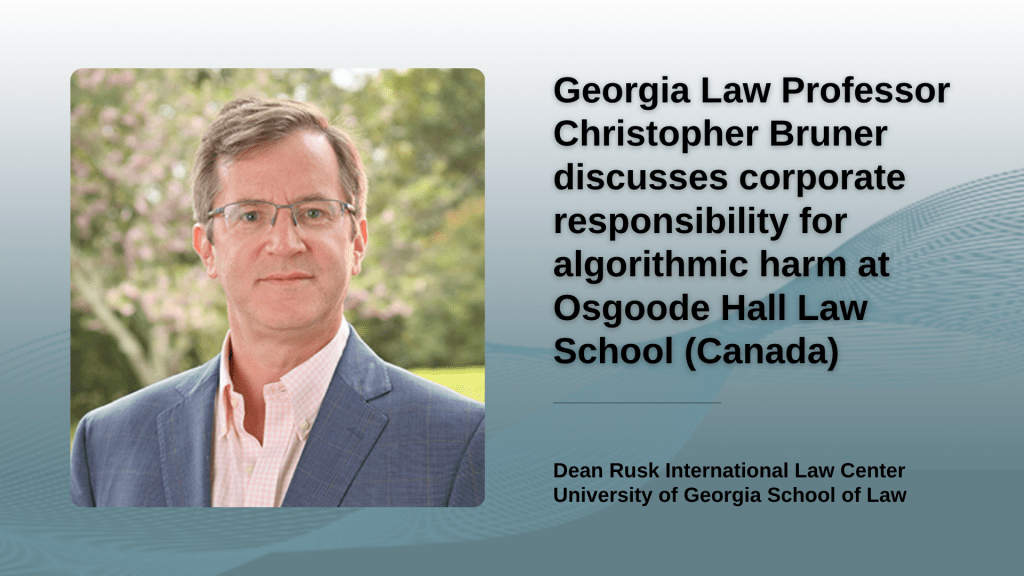
Bruner is the Stembler Family Distinguished Professor in Business Law at the University of Georgia School of Law and serves as a faculty co-director of the Dean Rusk International Law Center.
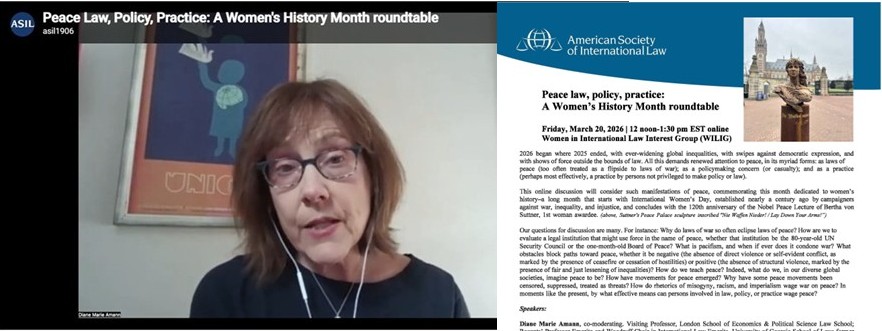
Amann served as co-organizer and co-moderator along with Jaya Ramji-Nogales, who is the Sheller Family Professor in Public Law at Temple Beasley School of Law. Also on the panel were Megan Donaldson, an Associate Professor at University College London Faculty of Laws; Annelise Riles, Professor of Law at Northwestern Pritzker School of Law; and Anna Spain Bradley, MacArthur Foundation Chair in International Justice & Human Rights and Faculty Director of the Promise Institute of Human Rights at UCLA School of Law.
Together, they explored a variety of issues related to peace. These included: imagining peace, as an ongoing, relational, community-grounded practice committed to ending both violence and its socioeconomic causes; histories of peace movements and the challenges those movements have faced; foundations of peace law and the role of law in peace-building; and strategies for centering peace in the present moment. A video of the event is available here.
Amann is Regents’ Professor Emerita and Emily & Ernest Woodruff Chair in International Law Emerita at Georgia Law, and served for many years as a Faculty Co-Director of our Dean Rusk International Law Center. She is currently a Visiting Professor at the London School of Economics and Political Science Law School.
 exchange of notes